Hey there, thanks for stopping by! If you’re in the construction game—whether you’re a general contractor, a small developer, or even someone tackling a huge infrastructure project—you’ve probably asked yourself, “What’s the deal with truck mounted concrete pump transportation costs?” I’ve been deep in this world for over a decade, running a truck mounted concrete pump supply business, and let me tell you, it’s not a flat rate you can just pull up on a Google search. There are so many moving parts (pun totally intended) that factor into this, and I want to break it down for you like I would for my regulars at the job site. Truck Mounted Concrete Pump

First off, let’s get one thing straight: this isn’t like shipping a couch or a pallet of bricks. A truck mounted concrete pump isn’t a tiny piece of gear—we’re talking about a rig that’s basically a heavy-duty truck with a massive hydraulic arm (that’s the boom, for the uninitiated) mounted on the back. Some are 30 meters, some are 60 meters, and the bigger the boom, the more it weighs and the harder it is to move. So right out the gate, size and model are huge. Let’s start there because that’s the baseline.
If you go with a smaller, compact truck mounted pump—say, a 24-meter boom for residential jobs, like pouring a foundation for a new house or a small pool—transportation is way cheaper than a 56-meter behemoth for high-rises or highway bridges. Why? Smaller rigs weigh less (usually under 25,000 kg) and don’t require as many permits, and they can fit on regular flatbed trucks without too much hassle. On average, moving a compact pump within 50 miles of the job site might run you anywhere from $300 to $600. But wait, that’s just the base. If the distance is longer—like 100 to 200 miles—that jumps to $800 to $1,500, and beyond that, it’s more per mile. I recently moved a 28-meter pump 120 miles for a customer in a rural town, and the transport cost alone was $950. No surprises, because we planned it out.
Now, the big boys—those 40-meter-plus booms—they’re a different story. These rigs weigh 35,000 kg or more, sometimes even 50,000 kg if they have extra attachments. That means you can’t just hitch them to any old flatbed. You need a specialized lowboy trailer, sometimes with two or three axles, because regular trailers can’t handle that weight without risking the road or getting a ticket. Plus, you have to get oversize load permits, and those aren’t cheap—especially if you’re crossing state lines. In some areas, oversize permits can run $100 to $500 per state, depending on the length and weight of the pump. If you’re moving a 52-meter pump 50 miles, that’s probably going to set you back $1,800 to $2,800. Last year, I had a client who needed a 56-meter pump moved 300 miles for a hospital construction project, and we calculated the transport cost at $4,200. That included the lowboy, permits, and even a pilot car to escort the rig on parts of the highway where oversize loads can’t go alone. You can’t skip that pilot car, by the way—most states require it for loads over a certain length, and it’s a non-negotiable cost.
Speaking of permits and routes, that’s another big factor a lot of first-time buyers don’t think about. If the job site is in a city with narrow streets—like downtown Chicago or New York City—you might have to get special moving permits just to get the pump through residential areas, or even remove traffic signs temporarily to fit the boom. We once had a customer in Brooklyn who needed a pump for a 10-story apartment building. The transport cost ended up being $1,200 just because we had to get three different city permits and route the lowboy through side streets instead of the highway to avoid overpasses that were too low for the boom. Low clearances are a nightmare too—if the boom can’t fit under a bridge or a power line, you either have to find a different route or temporarily adjust the boom (but that’s extra labor, not just transport).
Then there’s time of year and demand. Construction is seasonal, right? In most parts of the US, spring and summer are peak times—March to October. During those months, transport companies are swamped, so their rates go up. We’ve seen transport costs jump by 15-25% in July and August because every contractor is moving gear at the same time. If you can plan your project for the fall or early spring, you might save a few hundred bucks on transport alone. Also, if you need the pump moved on short notice—like tomorrow instead of next week—you’re looking at an “urgency fee” of $200 to $500. I can’t tell you how many times a customer has called me at 5 PM needing a pump for a pour the next morning, and I have to scramble to get a transport truck out. That last-minute request always costs more, no way around it.
Wait, let’s not forget about offloading and setup. A lot of people lump that into “transport cost,” and honestly, it makes sense because you need both to get the pump ready to use. When the lowboy arrives at the job site, the driver has to carefully offload the pump, which requires space—you can’t do that on a crowded site with cranes and other gear everywhere. Some sites charge you for “site access” if the transport truck has to wait for a spot to open up, or if the driver has to use a crane to lift the boom into position because the site is too tight. That can add anywhere from $100 to $800 to your total, depending on the site. We once had a customer in a suburban development where the lot was really small, so the driver had to take 45 minutes to position the boom, and that delay cost an extra $350 on top of the transport fee.
Another thing: if you’re renting vs. buying the pump, wait—no, hold on, this is if you’re transporting a pump you already own. But if you’re renting, some rental companies include basic transport in the rental rate, but not always long-distance moves or oversize loads. I’ve had clients get burned by that—they see a “$500 a day” rental rate, not realizing that transport 200 miles is extra $1,000. So always read the fine print, or ask your supplier straight up: “Is transport included, and if so, what’s the distance and size limit?”
Now, let’s talk about average numbers to give you a real sense, not just random estimates. For compact pumps (20-30 meters), transport within 50 miles: $300-$700; 50-200 miles: $800-$1,600. For mid-size pumps (30-45 meters), 50 miles: $1,000-$1,800; 200 miles: $2,500-$3,800. For full-size boom pumps (45-65 meters), 50 miles: $2,000-$3,000; 200+ miles: $4,000-$6,000. And those are ballpark—every project is different.
Let me give you a recent example that’s super relatable. Last month, I had a couple of guys building a 10-home subdivision in Austin, TX. They needed a 26-meter pump for all the foundation pours. We moved the pump from our lot in San Antonio to the job site, which is 75 miles away. It’s a compact pump, so no lowboy needed, no pilot car, just a regular flatbed. The total transport cost was $550, plus offloading that took 20 minutes, so total was $620. That was straightforward. But then, a week later, the same customer had a friend building a 15-story office building in downtown Houston, 180 miles from our lot. We had to move a 52-meter pump there. We used a triple-axle lowboy, got 2 state permits, and a pilot car for the highway stretch where oversize loads need escorts. That transport, plus offloading, was $3,900. Huge difference, right? Just because of size and distance.
What about hidden costs? Oh, there are a few. If the job site is in a remote area—like way out in the countryside, no major roads, so the transport truck has to take back roads—that might add $200-$400 because the route is slower and less convenient. Or if the pump has to be moved on a holiday weekend, some transport companies charge double time, so add another 50%. I once had a customer who insisted on moving his pump on Memorial Day weekend, and the transport cost was an extra $450 for that. It’s worth asking about that stuff upfront so you don’t get sticker shock later.
Now, as someone who sells and rents these pumps, here’s my advice to you: don’t just look at the transport cost alone. Look at the whole package. A pump that’s $1,000 cheaper to buy or rent might have $1,500 in extra transport costs because it’s way bigger or needs special permits. That’s a bad deal. Always communicate the exact details of your job site to your supplier: where is it? How far is it from their lot? What’s the access like—can a big truck get in? Do you have enough space for offloading? What size pump do you actually need (a 60-meter boom is overkill for a 2-story house, trust me)? The more info you give, the more accurate the transport quote will be, no hidden fees.
Also, if you’re planning multiple jobs, maybe consider buying your own pump instead of renting every time. I know that’s a big investment, but over the long run, you’ll save on transport because you won’t have to pay someone else to move a rental every time. And if you’re a small contractor, there are good used pumps out there that don’t require as big an upfront cost.
Wait, let’s address a common myth I hear all the time: “Can’t I just drive the pump to the job site instead of putting it on a flatbed?” No, not really. Truck mounted concrete pumps are heavy, but driving them on public roads requires special licensing, and most of them can’t go on highways at full speed because they’re not designed for that—they’re built for pouring concrete, not long hauls. Also, you’d have to get a special license, and you’d risk damaging the pump if you drive it too far. It’s way safer and cheaper to hire a professional transport company that specializes in moving construction gear.
At the end of the day, transportation cost for a truck mounted concrete pump isn’t a number you can guess. It’s all tied to size, distance, permits, site access, demand, and timing. I’ve been in this long enough that I can give you a pretty solid quote after just a few questions, but I always make sure to break down every part so you know exactly what you’re paying for—no fine print, no surprise charges.
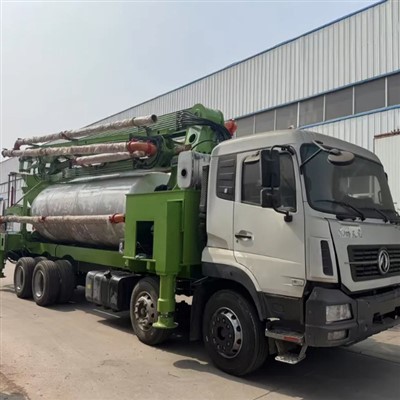
If you’re currently planning a project and need an accurate transport quote, or if you’re looking to buy or rent a truck mounted concrete pump, hit me up. I’ll walk you through every step, answer all your questions, and make sure you get the right gear at a fair total cost. Don’t let transport costs derail your project before it even starts—let’s sort this out together.
Transit Mixer Reference
- National Heavy Vehicle Transport Association. (2023). Oversize Load Permitting and Route Guidelines for Construction Equipment.
- Construction Equipment Guide. (2022). 2022 Cost Analysis: Transporting Specialized Construction Machinery.
- American Society of Concrete Contractors. (2021). Best Practices for Site Preparation and Equipment Transport for Concrete Pumping Projects.
Shandong Fuxin Automobile Technology Co., Ltd.
We’re well-known as one of the leading truck mounted concrete pump manufacturers and suppliers in China, featured by quality products and good price. Please rest assured to buy advanced truck mounted concrete pump made in China here from our factory. Contact us for more details.
Address: West of Nanshou Road, Beihai Road, Weifang City, Shandong Province
E-mail: h17616861003@gmail.com
WebSite: https://www.fuxinautomobile.com/
