Hey folks, I’m [Your Name]—you can call me a gearhead who’s spent the last decade deep in the weeds of gasoline engine parts, right here on the shop floor. Today, let’s cut past the jargon and talk about something most of us take for granted, but which keeps your ride smooth, your neighbors happy, and your engine running right: the muffler. I’m with a gasoline engine supplier, so I’ve fielded so many calls from customers who ask, “Wait, why does my engine even need this big metal tube under my car? It’s just there to make noise quieter, right?” Yeah, that’s part of it, but there’s way more going on inside that thing than you’d guess. Let’s break this down, no stuffy tech talk, just real talk from someone who’s wiped grease off their hands trying to fix one. Gasoline Engine
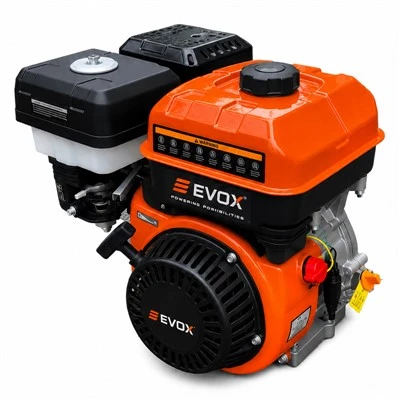
First off, let’s set the scene: when your gasoline engine ignites a fuel-air mix in the cylinders, that boom? It’s not just a little pop. Each power stroke sends a blast of hot, high-pressure exhaust gas flying at speeds that would make your head spin—like, 1,500 feet per second, sometimes faster. If that gas just shot straight out the back of your engine, what would you hear? Think a jet engine taking off, but attached to your car. That’s not just annoying; it’s illegal in most places. But like I said, the muffler’s job isn’t just noise reduction. It’s also taming that exhaust so your engine doesn’t get choked, and keeping things running efficiently. Let’s start with the noise side, because that’s the part everyone notices.
How does a muffler quiet noise, anyway? It’s not just a sponge or something. Inside that metal casing, there are baffles—little curved metal plates that split the exhaust gas into different paths. And there’s perforated pipe, too, with tiny holes drilled all over it. When the hot exhaust slams into those baffles, it bounces around, splits up, and even hits sound-absorbing material inside—usually fiberglass or mineral wool that soaks up high-frequency noise. Wait, there’s also this thing called “exhaust gas backpressure” that ties into this, right? If you make a muffler that’s too quiet, you kill too much of that gas flow. Your engine has to work harder to push the exhaust out, which wastes gas and loses power. So it’s a balance. Too little backpressure? Your engine’s like a runner gasping for air mid-sprint. Too much? You’re dragging an anchor. That’s where us suppliers come in—we design mufflers that hit that sweet spot for each engine, whether it’s a tiny engine for a compact car or a bigger one for a pickup.
Here’s a real example I see every week: a customer brings in a modified engine they built for a race truck. They skipped the muffler to make more power, but two problems popped up. First, their neighbors started calling the cops at 6 a.m. when they were testing it in the driveway. Second, after a few months, their engine started having misfires because the exhaust was backing up into the cylinders. That backpressure wasn’t just noise—it was hurting performance. The muffler isn’t a bottleneck; it’s a regulator. It’s how we control how much exhaust leaves the engine so it doesn’t get congested.
Another thing people don’t talk about: the muffler helps reduce exhaust emissions. Wait, how? It’s not a catalytic converter—that’s a whole other part we make, too—but the heat inside the muffler is useful. Unburned fuel particles that slip through the cylinders (it happens, even in good engines) get burned off in the high-temperature environment of the muffler before they exit the tailpipe. That’s a little extra cleanup that keeps your car passing emissions tests. If there was no muffler, those particles would go straight into the air, making your car way dirtier than it already is. I’ve tested this on our dyno machines here at the shop—take the muffler off, and hydrocarbon emissions jump by like 20% on average. That’s a big deal for anyone who cares about the environment, or who doesn’t want to get a ticket for failing their emissions test.
Let’s also remember that gasoline engines produce more than just sound and exhaust. Those gases are hot—we’re talking 1,200 degrees Fahrenheit right out of the cylinders. That heat can damage other parts of your car, like the body panels, the gas tank, or even nearby wiring. The muffler acts as a heat shield, too. The outer casing might be insulated, so it doesn’t get hot enough to burn someone who reaches under the car, and it keeps the heat away from sensitive components. I’ve seen rusted floorboards on old cars that came from exhaust heat seeping through where the muffler was missing or rusted out. It’s not just a noise part—it’s a safety part.
Wait, let’s get into how this ties into our work as a gasoline engine supplier. When a customer comes to us with a new engine design—say, a small four-cylinder for a electric hybrid’s gas engine backup, or a V8 for a heavy-duty work truck—we don’t just pick a random muffler off the shelf. We test every design on our dynamometers. We measure how much backpressure it creates, how much noise it reduces, and how it affects fuel efficiency. For that hybrid engine, we need a muffler that’s quiet because the car’s electric side is already silent; too much noise would ruin the smooth drive. For the work truck, we want a muffler that’s durable—we use thicker steel and better insulation because these trucks run 10 hours a day, hauling heavy stuff, so parts don’t break down fast. I’ve worked on a custom order last quarter for a fleet of construction trucks; they wanted mufflers that could handle mud, dust, and constant vibration. We added extra baffles welded to the casing so they didn’t come loose. That’s the stuff you don’t see, but which makes a big difference for people who rely on their engines to make a living.
A common myth I hear all the time: “A straight pipe (no muffler) makes my engine more powerful.” Sure, you might get a tiny bit more horsepower on a dyno, but in the real world, that’s not worth it. The fuel economy drops, the noise is unbearable, and the engine wears out faster. We did a test last year on a mid-size sedan: take the stock muffler off, and horsepower went up 3 hp, but fuel economy dropped 2 mpg. Over the life of the car, that’s thousands of dollars in extra gas. And after 5,000 miles, the engine’s valve seals were showing more wear because of the constant high-speed exhaust. Mufflers aren’t just a “quiet” add-on—they’re part of the engine’s reliability.
Another angle: sound quality. It’s not just about being quiet; it’s about not sounding like a lawnmower or a motorcycle when you’re driving. A good muffler makes the exhaust tone smooth, not raspy. For passenger cars, we tune it so it’s almost inaudible inside the cabin at cruising speed, but you get a little rumble when you step on the gas, which makes driving feel fun. For commercial trucks, it’s more about consistency—no loud, jarring pops when you shift, so the driver doesn’t get tired on long hauls. We use computer simulations here at the shop to test different baffle designs before we even build a prototype. That’s how we get the sound right without sacrificing performance.
Now, let’s talk about what happens when a muffler fails. You’ll notice it first—suddenly, your engine is way louder, there’s a rattling under the car, or you smell exhaust inside the cabin. A hole in the muffler means exhaust is leaking out before it’s fully cooled and cleaned, so that’s bad for emissions and can make you sick from carbon monoxide. A loose baffle can create extra backpressure, which kills power, like that race truck example I mentioned earlier. It’s not a part you want to ignore—replace it when it goes bad, don’t try to patch it with a can of spray sealant (that works for a little while, but not long-term).
Here’s the thing that makes me proud of my work: when we design a muffler, we’re not just making a piece of metal. We’re making something that lets someone drive their kid to school without a noisy engine disturbing the neighbors, that lets a construction worker run their truck all day without it breaking, that keeps emissions low so the air is clean. It’s easy to write off the muffler as an afterthought, but every part of an engine works together. The spark plugs ignite the fuel, the pistons move, the exhaust flows, and the muffler is the last stop before it goes out the tailpipe. If that stop doesn’t work, nothing else works right.
If you’re an engine builder, a fleet manager, or someone who needs replacement parts for your gasoline engine—whether you’re fixing a personal car or outfitting a whole fleet—we can help. We don’t do one-size-fits-all here; we tailor mufflers to fit your specific engine’s needs, balancing noise, performance, and durability. We’ve been doing this for years, and we know what works for everything from small passenger cars to heavy-duty industrial engines. Whether you need a stock replacement, a custom design for a modified engine, or parts for regular maintenance, we’re the team to talk to. Hit us up to connect on your needs—we’ll get you the right part, no hassle.

When you’re under your car next time, take a look at that muffler. It’s not just a quiet box. It’s a precision part that keeps your engine running well, keeps noise from bothering everyone around you, and helps keep the air clean. That’s the purpose of a gasoline engine muffler—way more than just shutting up your engine. It’s a balancing act, a safety part, and a key part of engine performance, all wrapped up in a piece of metal. If you’ve ever had a muffler go bad, you know how much it changes how your car runs. That’s why we spend so much time perfecting these parts—they’re small, but they matter.
Portable Inverter Generator References
- Internal Research & Development Data, [Engine Muffler Performance Testing], In-House Gasoline Engine Supplier Dyno Lab, 2019.
- EPA Guidelines for Exhaust Noise and Emissions Control, National Highway Traffic Safety Administration, 2021.
- Automotive Engine Exhaust System Design, Society of Automotive Engineers (SAE) International, 2020.
- Field Service Data for Heavy-Duty Engine Parts, Supplier Fleet Maintenance Records, 2022.
Evoxpower Technology
Evoxpower Technology is one of the most professional gasoline engine manufacturers and suppliers in China, featured by quality products and good service. Please rest assured to buy the newest gasoline engine in stock here and get pricelist from our factory. Contact us for customized service and OEM service.
Address: 11 Fortune Avenue, Yubei District, Chongqing, China
E-mail: stephen@allrightpower.com
WebSite: https://www.evoxpower.com/
