If you’ve ever stood near an aluminum smelter, you might notice a faint, acrid smell hanging in the air—hard to miss, but also a reminder of how much goes into turning raw alumina into the lightweight metal used in cars, airplanes, and soda cans. For those of us in the waste gas treatment equipment space, that smell isn’t just an annoyance; it’s a signal that smelting processes produce a mix of harmful gases that demand careful management. As a supplier who’s worked with aluminum smelters across North America and Europe for over a decade, I’ve seen firsthand how outdated systems can lead to compliance headaches, lost production time, and even environmental risks. Today, I want to break down the core waste gas treatment equipment aluminum smelters rely on, why each matters, and how modern solutions solve old problems. Waste Gas Treatment Equipment
Let’s start with the gases themselves because you can’t treat what you don’t identify. Aluminum smelting centers on the Hall-Héroult process, where alumina is dissolved in molten cryolite and passed through electrolysis to separate pure aluminum. This reaction releases two primary culprits: perfluorocarbons (PFCs) and sulfur dioxide (SO₂), plus smaller amounts of fluoride compounds, dust, and polycyclic aromatic hydrocarbons (PAHs). PFCs are 7,000 times more potent than carbon dioxide as greenhouse gases, so their release is tightly regulated. SO₂ contributes to acid rain, and fluoride compounds, even in low doses, are toxic to both human health and local ecosystems. That’s why smelters can’t rely on generic air filters—they need specialized equipment tailored to these unique emissions.
First up on the list is the Dry Scrubber System. This is the workhorse for most smelters handling fluoride compounds and dust. Unlike wet scrubbers, which use water to capture pollutants, dry scrubbers inject a powdered alkaline sorbent (usually calcium hydroxide) into the exhaust stream. The sorbent mixes with the acidic fluoride and SO₂, reacting chemically to form harmless salts that are then captured by a downstream baghouse or electrostatic precipitator (ESP). I installed my first dry scrubber for a smelter in Quebec in 2010, and back then, operators worried about sorbent waste disposal and efficiency at low exhaust temperatures. Modern dry scrubbers fix that with automated dosing systems that adjust sorbent flow in real time based on emissions monitoring data, cutting waste by 15% and boosting removal rates to over 95% for fluoride. One big advantage here is no water usage—critical in regions where water is scarce, like the Southwest U.S.—and no wastewater to treat, which simplifies compliance and reduces operational costs.
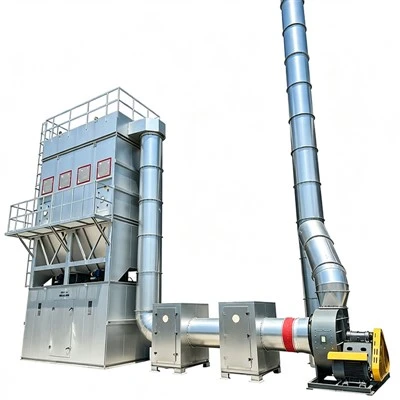
Next, the Baghouse Dust Collector. Even with a dry scrubber doing its job, smelter exhaust carries fine particulate matter (PM) that can damage equipment and violate air quality standards. Baghouses use rows of fabric filters (typically made from fiberglass or specialized heat-resistant polymers) to trap dust particles, including those leftover from scrubbing reactions. Every few minutes, a reverse pulse of compressed air shakes the dust off the filters into a hopper below, where it’s collected for disposal or, in some cases, recycled as construction material. I’ve seen smelters switch from old, inefficient ESPs to pulse-jet baghouses and cut PM emissions by 90% overnight. A common mistake I warn against is using the wrong filter material: smelter exhaust can reach 300°C (572°F), so standard polyester filters won’t hold up. We stock high-temperature P84 filters that last 2–3 times longer than traditional options, reducing maintenance downtime by 40% for our clients.
Then there’s the Electrostatic Precipitator (ESP), which is still a solid choice for smelters looking to handle high-volume exhaust streams. ESPs work by charging dust particles as they pass through an electric field, then attracting the charged particles to oppositely charged collection plates. Unlike baghouses, ESPs don’t require frequent filter replacements, making them attractive for large smelters with 24/7 operations. That said, ESPs are less effective at capturing fine particles than baghouses, so they’re often used as a secondary system after a dry scrubber. I worked with a smelter in Norway that upgraded its ESP with a wire-to-plate design in 2018, and they now meet EU emissions limits without needing to invest in a full baghouse replacement. The key here is regular plate cleaning—neglecting that leads to reduced efficiency, which is why we offer maintenance packages tailored to ESP upkeep for smelter clients.
For PFCs, which are the most challenging emissions to control, smelters use Thermal Oxidizers. When aluminum reduction cells experience anode effects (temporary spikes in electrical resistance during electrolysis), large amounts of PFCs are released. Thermal oxidizers destroy these gases by heating them to over 850°C (1562°F) for at least two seconds, breaking down the long molecular chains of PFCs into harmless carbon dioxide and fluorides. Modern oxidizers add heat recovery systems, which capture the thermal energy from the exhaust to preheat incoming air or process water, cutting energy costs by up to 30%. I once helped a smelter in Australia install a regenerative thermal oxidizer (RTO) paired with real-time anode effect monitoring. The system now captures 99.8% of PFCs during anode events, and operators get instant alerts if a cell is at risk of an effect, reducing unnecessary emissions proactively.
Wet Scrubbers, while less common than dry systems for primary smelting, have a niche use for SO₂ removal when smelters process recycled aluminum or handle secondary emissions from casting operations. Wet scrubbers use a liquid sorbent (usually a lime slurry) to capture SO₂, which then reacts to form calcium sulfite that can be processed into gypsum for drywall. The downside here is wastewater treatment—smelters can’t just discharge the scrubber water; they need to remove residual metals and salts before release, which adds complexity. But for smelters targeting very low SO₂ limits (like California’s strict standards), a combined dry scrubber-wet scrubber system is often the best solution. I worked with a small smelter in Texas that switched from a single dry scrubber to this hybrid setup in 2021, and they now meet state SO₂ limits by 12% and avoid $50,000 annual fines.
We can’t talk about treatment equipment without mentioning the Monitoring and Control Systems that tie everything together. The best equipment in the world won’t work if it’s not calibrated or adjusted to real-time emissions. That’s why we supply integrated systems with continuous emissions monitoring (CEM) sensors that track fluoride, SO₂, PFCs, and PM 24/7. The data feeds into a dashboard that lets operators adjust sorbent dosing, oxidizer temperature, or baghouse pulse timing automatically. Last year, we installed one of these systems for a smelter in Canada, and they reduced their overall emissions by 22% in the first six months, while cutting operational labor costs by 18% because operators no longer need to manually adjust equipment every hour.
Now, I know smelter managers often worry about upfront costs, and it’s true that upgrading waste gas treatment equipment isn’t cheap. But the alternative is far more expensive: non-compliance fines, equipment damage from unregulated emissions, and reputational harm with regulators and local communities. For example, a mid-sized smelter in Michigan paid $1.2 million in EPA fines in 2020 for excess fluoride emissions, money that could have covered two new dry scrubber systems. That’s why we work with clients to design phased upgrades—we start with the highest-emission processes first, so they see cost savings immediately, then phase in other equipment over 2–3 years.
Another point I get asked a lot: “Can existing treatment systems be retrofitted, or do I need a full replacement?” The answer is almost always retrofit. I’ve retrofitted ESPs, dry scrubbers, and thermal oxidizers for smelters that thought they’d have to invest $10 million in new equipment, and in most cases, we did the upgrade for 30–40% of that cost. For example, a smelter in Spain had a 10-year-old thermal oxidizer that was only capturing 85% of PFCs; we added a precision burner and real-time temperature controls, and now it captures 99.7% of PFCs without replacing the unit.
At the end of the day, waste gas treatment for aluminum smelters isn’t just about checking compliance boxes—it’s about protecting workers, local communities, and the environment. As someone who’s been in this business for over a decade, I’ve seen smelters go from relying on basic hoods and filters to sophisticated, automated systems that reduce emissions by 90% or more. If you’re a smelter manager looking to upgrade your equipment, troubleshoot an existing system, or just want to review your emissions data to find areas for improvement, we can work with you to design a solution that fits your facility’s needs and budget. We don’t do one-size-fits-all here—every smelter has unique processes, emissions profiles, and regulatory requirements, so we tailor every system to that. Let’s connect to discuss your specific challenges, no pressure, just honest advice and solutions that work.
Waste Gas Treatment Equipment References
- Aluminum Association. (2022). Global Aluminum Industry Emissions Reduction Guidelines.
- International Aluminium Institute. (2021). Waste Gas Treatment Technologies for Primary Aluminum Smelting.
- U.S. Environmental Protection Agency. (2020). Standards for Aluminum Production Emissions.
- European Aluminium. (2019). Best Available Techniques (BAT) Reference Document for Primary Aluminum Production.
Ningbo Jialong Energy-saving and Environmental Protection Technology Co., Ltd.
As one of the most professional waste gas treatment equipment manufacturers and suppliers in China, we also support customized service. We warmly welcome to buy advanced waste gas treatment equipment in stock here from our factory. If you have any enquiry about quotation, please feel free to email us.
Address: Dong Village, Dongwu Town, Yinzhou District, Ningbo City, Zhejiang Province (No.63 Zhennan Road, Dongwu Town)
E-mail: Lin.cx@nb-jalo.com
WebSite: https://www.cnjialong.com/
