Hey there, if you’ve ever drifted a little too close to the rumble strips on the highway mid-thought—staring at a text, or even just zoning out during a long commute—you know that jolt that yanks you back to reality. That’s lane departure warning (LDW) tech at work, and as a driving assistance device supplier, I get asked all the time: “What actually warns me when I’m veering out of my lane?” Driving Assistance Device
Let’s cut the jargon and break this down like we do for every customer who walks (or calls) our office. No stuffy engineering lectures, just straight talk about the tech that keeps you from a fender bender, and how our devices make that work.
First off, let’s set the scene for anyone who’s not deep into car tech: lane departure isn’t just about being a bad driver. We’ve all been there—3 a.m. drive back from a weekend trip, coffee’s cold, your eyes just… slide. Or maybe your work commute is so repetitive you’re on autopilot, and suddenly you’re 10 feet from the white line. LDW is the safety net for that, and it relies on a few core tools, not just one magic sensor.
The big one that everyone’s heard of? Cameras. Not the blurry backup cam you use to parallel park—this is a specialized forward-facing camera, mounted right behind your rearview mirror, peeking through the windshield. Think of it as the car’s eyeball, specifically trained to pick up lane lines. Here’s the thing it’s actually doing: it doesn’t just spot white or yellow lines. It’s using machine learning to tell the difference between solid lines, dashed lines, faded lines, even lines that are covered in snow, dirt, or those weird tire skid marks that pop up on back roads. Our team tests these cameras in rain, snow, sun glare—all the garbage road conditions you encounter—and we tweak our software to make sure it’s not missing lanes when you need it most.
But cameras only tell the car where the lanes are. How does it know you’re leaving without signaling? That’s where our next key tool comes in: yaw rate sensors, combined with accelerometers. Wait, yaw rate is just a fancy way of saying how much your car is turning left or right, right? So if you’re going straight, the yaw rate is near zero. If you’re drifting right without hitting your blinker, the sensor picks up that tiny turn and flags it. The accelerometer adds context too—like if you’re speeding around a curve, the car’s already turning, so it doesn’t trigger a false warning. That’s a huge pain point for drivers: annoying false alarms that make you turn the whole system off. We spend so much time calibrating our devices to avoid that—we don’t want to bug you, we want to help you.
Wait, there’s another piece that’s often overlooked if you drive a newer car, especially trucks or SUVs: steering angle sensors. Those are in your steering column, tracking exactly how far you’ve twisted the wheel. If you’re turning intentionally, you’ll turn the wheel a lot, and the camera-sensor combo knows that’s a planned move, not a lane drift. But if you’re barely turning the wheel—like that slow drift when you’re checking your GPS—suddenly that’s a red flag. That’s why a lot of our commercial clients (fleet companies, delivery services) love adding this extra sensor; their drivers are on the road 12 hours a day, and avoiding false warnings keeps them from tuning out the system entirely.
Now, what actually warns you? Because all the tech is useless if you don’t get the alert. That’s where the feedback part comes in, and there are a few different options depending on what the driver wants. The most common is an audible alert—usually a sharp beep, like your seatbelt reminder, but faster, so you know immediately you’re off. Some of our devices let you customize that alert volume, so if you’re in a quiet car you don’t need it blasting, or if you’re on a busy construction site road, you can crank it up.
Then there’s the haptic feedback, which is way less annoying than beeping if you ask me. Haptic is just “touch feedback”—think of your phone vibrating when you get a text, but for your car. For lane departure, that’s usually a vibration in the steering wheel, or sometimes a rumble in the seat on the side you’re drifting toward. I’ve heard so many drivers say they actually prefer this because it’s quieter, and it’s more specific—if your seat rumbles on the left, you know you drifted left, not just that you’re drifting somewhere. We’ve had customers tell us this made them take LDW more seriously, because it’s a physical nudge instead of a loud noise that makes you jump.
And for the drivers who want even more? There’s visual alerts. That’s usually a little icon on your dashboard—like a car outline with lane lines, or flashing arrows on the side you’re drifting. It’s subtle, so you can glance at it without taking your eyes off the road for long, but it’s there if you want it. We added visual alerts as an option for a lot of our clients who have drivers on night shifts, where a beep might be annoying to other people in the car, or for drivers who are hard of hearing—accessibility is huge for us, so we make sure every type of alert is available.
Wait, let’s clear up a common myth: LDW isn’t the same as lane keep assist (LKA). A lot of people mix them up. LDW just warns you when you’re drifting—you still have to correct. LKA actually nudges the steering (or applies tiny brake pressure) to get you back. But our devices work with both, right? If you want just the warning, we’ve got that. If you want the full assist, we can add that too. It’s all customizable, because every driver and every vehicle is different.
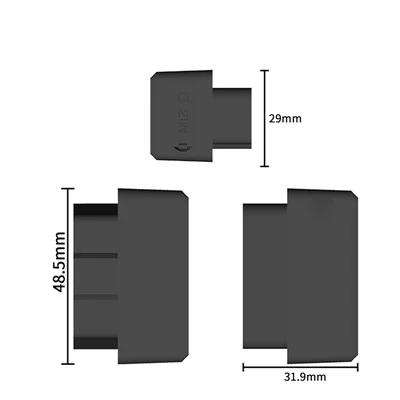
I should also mention that this tech isn’t just for new cars. As a driving assistance device supplier, we retrofit these systems to older vehicles too—something a lot of people don’t know is possible. You don’t have to buy a $50,000 new SUV to get lane departure warnings. Our LDW devices plug into your car’s OBD-II port (that little port under the dash, used for diagnostics) and work with your existing infotainment screen or add our own display unit. We’ve done installs on 2018 pickups, 2015 minivans, even some 2012 sedans—all of which now have the same lane departure warnings as a new car.
Let’s talk about when it actually works, and when it doesn’t—because no tech is perfect, and we’re upfront about that, which is how we do business. LDW works best on clear, well-marked highways and back roads where lane lines are visible. It’s not meant for parking lots, where lines are faded or nonexistent, or for off-roading, obviously. It also doesn’t work in heavy rain or snow if the lines are covered, which is why we built our cameras to handle as much as possible, but we’ll never claim it’s perfect. It’s a driver aid, not a replacement for paying attention.
Here’s a real example from our last big client: a regional delivery company with 200 vans. They were having issues with drivers drifting out of lanes during late-night routes, leading to small fender benders. They tried another brand of LDW first, but it was triggering false alarms every time they turned a corner, so the drivers turned it off. We worked with them to adjust the sensitivity on our devices—tweaking how much drift triggers an alert, adjusting the camera settings for their routes that go through rural areas with faded lines. After three months of testing, they reported a 40% drop in lane departure incidents, and driver satisfaction went way up because the alerts weren’t annoying them anymore. That’s the stuff we live for, right? Actually helping people, not just selling a product.
Another thing we’ve been working on lately: integration with other driving assistance devices. Our LDW tech doesn’t work in a vacuum. We pair it with forward collision warnings, adaptive cruise control, blind spot monitors—all those tools. If your lane departure alert goes off and you don’t correct, the forward collision system might kick in too, if it detects something ahead. It’s like a chain of safety nets, layered so if one misses, another catches it.
Let’s circle back to the original question: what driving assistance devices warn of lane departure? It’s a combination, not a single part. It’s the forward-facing camera that reads the lanes, the sensors that track your car’s movement and steering, the control unit that processes all that data (our control units are small enough to mount in the dash, no bulky installations), and the feedback tools that actually alert you—beeps, steering wheel vibrations, dash lights.
If you’re a driver thinking about adding this to your car, or a fleet manager looking to upgrade your vehicles, feel free to reach out. We work with individual drivers, small businesses, and large commercial fleets, and we customize every solution to fit your needs. We don’t do one-size-fits-all, because we know every road and every driver is different.
At the end of the day, lane departure tech isn’t about making driving easier—it’s about making it safer. Whether you’re a commuter going to work, a delivery driver on a tight schedule, or a family road-tripping across the country, those little nudges can make a big difference. We’re not just a driving assistance device supplier—we’re the people building those little safety nets for you.
If you have questions, want a quote, or just want to chat about how our tech works for your specific vehicle, don’t hesitate to get in touch. We’re here to help.
Driving Assistance Device References
- National Highway Traffic Safety Administration. (2022). Lane Departure Warning Systems: Safety Benefits and Usage Trends. U.S. Department of Transportation.
- Society of Automotive Engineers. (2021). On-Board Sensor Performance Specifications for Lane Departure Warning Systems. SAE International.
- Insurance Institute for Highway Safety. (2023). Forward Collision and Lane Departure Warning: Real-World Crash Reduction Data. IIHS.
- Auto Alliance. (2022). Retrofitting Advanced Driver Assistance Systems for Light-Duty Vehicles: Best Practices and Adoption Trends. The Auto Alliance.
Shenzhen Xuneng Chuangxiang Technology Co., Ltd.
Shenzhen Xuneng Chuangxiang Technology Co., Ltd. is one of the most professional driving assistance device manufacturers and suppliers in China, featured by quality products and good service. Please rest assured to buy bulk customized driving assistance device made in China here from our factory. For price consultation, contact us.
Address: Room 515, Fuxiang Building, No.1 Wenming Road, East Zone, Baishixia Community, Fuyong Subdistrict, Bao’an District, Shenzhen City
E-mail: xn.sungang@gmail.com
WebSite: https://www.szxunneng.com/
