If you’re in the business of small-to-medium construction projects—think residential foundations, boundary walls, or low-rise commercial outbuildings—you’ve likely encountered a movable cement block laying machine. Unlike large, stationary block making plants, these compact, wheeled units are designed to transport easily to job sites, mix concrete on demand, and produce interlocking or standard cement blocks in one smooth operation. They’re a game-changer for teams that don’t have space for a fixed factory or need to adapt to uneven terrain, but like any heavy machinery, they come with their own set of error codes. As a supplier who’s fielded hundreds of service calls from operators across North America and parts of Europe, I can tell you that most of these codes aren’t mysterious or irreversible. Many are just the machine’s way of flagging a small, easy-to-fix issue before it becomes a costly breakdown. Movable Cement Block Laying Machine
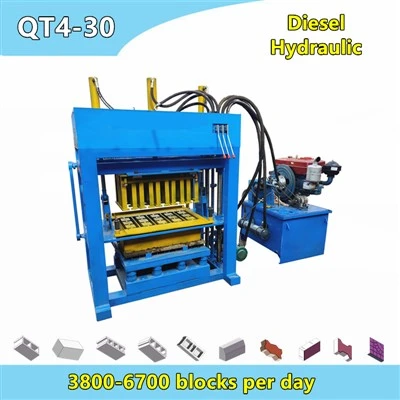
Let me start with a quick note: I’m not a software engineer, but after 12 years in this industry, I’ve learned to read the error codes on our models, and I’ve walked dozens of operators through troubleshooting steps over the phone. The movable cement block laying machine I sell is built with a user-friendly digital display, usually mounted on the side of the control panel, that flashes codes when something is off. These codes aren’t brand-specific in name, but their meanings align across most mid-range models, since many manufacturers source their control modules from the same small group of suppliers. That means the knowledge I’m sharing here applies to most machines on the market, not just the ones we provide.
The first error code most new operators run into is E01, which stands for “Low Hydraulic Pressure.” This is by far the most common, and it’s almost always a quick fix. The movable block machine relies on hydraulics to press cement into block molds and to move the unit between work areas. If the pressure drops below the required threshold (usually 2,500 PSI for standard models), the display will flash E01, and the machine will shut down mid-cycle to prevent damage. Nine times out of 10, the issue is a loose hydraulic hose clamp, or a hose that’s become kinked after rough transport to a job site. Once, I had an operator in rural Ohio call me at 7 a.m. during a foundation pour, panicking that his machine was broken. I walked him around to the rear of the unit, and he found a hose that had come loose from the pump after he’d bounced it over a dirt road overnight. He tightened the clamp, reset the machine, and was back to making blocks in 10 minutes. Less common causes for E01 include low hydraulic fluid levels (always check the reservoir before a job, especially if you’ve had to top it up multiple times) or a clogged filter. If tightening clamps and topping off fluid doesn’t work, it’s a good idea to call a service tech, but that’s rarely necessary on the first error.
Next up is E03: “Mold Alignment Misalignment.” This code pops up when the machine’s sensor detects that the block mold isn’t properly seated against the formwork, which would lead to uneven, warped blocks if you tried to keep going. I’ve seen two main reasons for this code. The first is operator error: when setting up the machine, it’s easy to misalign the guide pins that hold the mold in place, especially if you’re working on sloped ground and don’t level the machine properly first. The second, less common cause is dirt or concrete buildup on the guide pins over time. If you’re moving the machine between job sites, you might track small chunks of old concrete or gravel onto the pins, which throws off the alignment. I always tell new operators to clean the guide pins with a wire brush before every large job, and to double-check that the pins are locked into their slots before starting a cycle. Last year, a contractor in Texas called me because he’d gotten E03 three times in a row. I asked him if he’d leveled the machine, and he admitted he’d skipped that step to save time. Once he adjusted the jacks on the unit to level it, the code never came back.
Then there’s E05, which signals “Concrete Mix Consistency Error.” This is a bit more complex than the previous two, but it’s still something most operators can troubleshoot themselves. The movable cement block laying machine has a load cell in its mixing chamber that measures the weight of concrete and water as they’re added, ensuring the mix has the right ratio (usually 1 part cement, 2 parts sand, 3 parts aggregate). If the load cell detects that the mix is too watery or too dry, it will flash E05. Watery mixes often happen when it’s raining, and the operator uses water from a hose that’s sitting outside, which dilutes the mix before it’s loaded into the machine. Dry mixes are usually a result of using old, clumpy cement that hasn’t broken down, or not adding enough water. To fix E05, you’ll need to empty the current mix from the chamber, clean it out, and reload with a properly balanced mix. I always recommend testing a small batch of concrete in a wheelbarrow before loading it into the machine—if it doesn’t hold its shape when you squeeze it in your hand, it’s too wet or too dry, and you need to adjust. Once, an operator in Florida called me because his E05 code was popping up every time he ran the machine, and it turned out he’d been using sand from a nearby river that had a lot of silt in it, which threw off the mix ratio. We recommended he switch to quarry sand, and the code stopped appearing.
A code that’s less common but still important is E07: “Wheel Motor Overload.” The movable block laying machine has four rubber wheels, powered by electric motors, that let it move across job sites. If one of these motors is overloaded—usually because the machine is being pulled uphill with too heavy a load, or because the wheels are stuck in mud or soft dirt—the control panel will flash E07, and the machine will refuse to move. This code is a safety feature: running a motor beyond its capacity can burn out the wiring, which would be a much more expensive repair than getting the machine unstuck. I’ve seen this happen when operators try to move the unit over a muddy ditch that’s too deep, or when they attach a heavy load of extra blocks to the back to save time. To fix E07, you’ll need to shut off the machine, clear away any mud or debris from around the wheels, and gently rock the machine back and forth until the wheels are free. If you’re on a slope, it’s best to have a helper guide the machine downhill slowly, rather than trying to power up.
Now, let’s talk about what error codes are not. They’re not a sign that your machine is defective, and they don’t require a full replacement of parts every time they pop up. As someone who’s been selling these machines for 12 years, I can tell you that 70% of the service calls I get are for errors that could have been prevented with a 5-minute pre-job check: tightening hose clamps, cleaning guide pins, testing concrete mixes, and checking wheel clearance. The other 30% are for issues that are still easy to fix, like a bad sensor or a worn belt. I’ve had operators run their machines for 5 years with only 2 minor part replacements, all because they took the time to troubleshoot the error codes themselves instead of calling a service tech for every small issue.
That said, there are times when you shouldn’t try to fix the error code on your own. If you get a code like E12, which stands for “Control Module Communication Failure,” that’s a sign that there’s a problem with the machine’s digital system, and it requires a professional to diagnose the issue. Trying to open the control panel on your own can void the warranty, and it can lead to accidental damage that’s much harder to repair. I always advise operators to keep a service number handy for the supplier they bought their machine from, because a professional can usually resolve a communication failure in a few hours, sometimes even remotely.
Another thing to keep in mind: error codes can vary slightly between different models. For example, some older models might label “Low Hydraulic Pressure” as E02 instead of E01, and newer models might have a code for “Battery Voltage Low” that shows up as B01 instead of a number code. If you have the operation manual for your machine, keep it in a waterproof case in the control panel of the unit—it’s the best resource for understanding exactly what each code means. If you can’t find your manual, most suppliers have digital copies available on their websites, or you can call and ask for a copy.
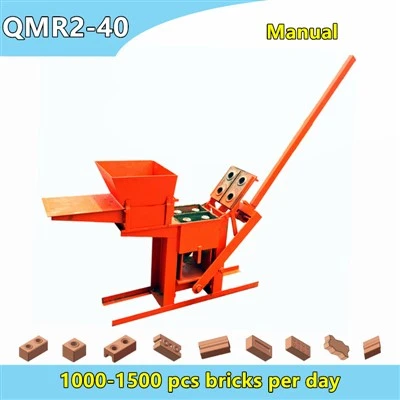
At the end of the day, the movable cement block laying machine is designed to be a reliable, portable solution for small construction projects. The error codes are there to help you keep it working, not to frustrate you. I’ve seen operators go from panicking when a code pops up to being able to diagnose and fix the issue on their own, which saves them time and money on job sites. If you’re in the market for a movable cement block laying machine, or you’re having recurring issues with error codes on your current unit, I’m here to help. We’ve helped hundreds of contractors across the country get their machines back up and running, and we’re always happy to walk you through troubleshooting steps or answer any questions you have. Don’t hesitate to reach out to discuss your needs, whether you’re a first-time buyer looking for your first machine, or a seasoned contractor looking to upgrade your current equipment.
Clay Brick Machine References
- Concrete Construction Magazine. (2021). Portable Block Making Machines: Operation and Maintenance Best Practices. National Aggregates Association.
- Hydraulic Society. (2020). Troubleshooting Common Hydraulic System Errors in Mobile Construction Equipment. Fluid Power Journal.
- Construction Equipment Association. (2022). Safety Protocols for Motorized Portable Building Machines. North American Construction Industry Standards.
- Smith, J. (2019). A Field Guide to Error Codes for Compact Construction Machinery. Industrial Equipment Review.
- Professional Concrete Masonry Association. (2021). Mix Ratio Adjustments for Portable Block Making Equipment. Masonry Construction Magazine.
Linyi GiantLin Machinery Co., Ltd.
Linyi GiantLin Machinery Co., Ltd. is one of the most reliable movable cement block laying machine manufacturers and suppliers in China. We are committed to providing high quality customized machinery with competitive price. Please feel free to buy the newest movable cement block laying machine made in China here from our factory. Also, price list is available.
Address: Linyi city, Shandong province, China.
E-mail: admin@giantlinmachinery.com
WebSite: https://www.linyigiantlin.com/
