Hey there, it’s Jake from [Your Company Name] Automotive Brake Discs – the guy who’s been messing with brake parts for 12+ years now, long enough to know that half the weird brake shake, pulsing, or uneven pad wear folks blame on “bad brakes” usually comes down to one tiny, easy-to-check issue: brake disc runout. Most DIYers and even some techs rush through this or skip it entirely, and that’s how you end up with a customer complaining their new rotors are already warped (spoiler: they’re not – it’s runout). Today I’m gonna break this down like I’d explain it to a buddy who’s tackling their own brake job, no fancy jargon, just what actually works, and how as a brake disc supplier, we make sure every rotor leaving our warehouse hits runout specs so you don’t have to stress this part. Automotive Brake Disc
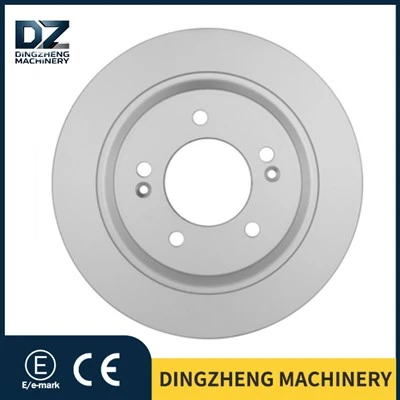
First, let’s keep it real: what even is brake disc runout? Ditch the textbook – runout is just how much your brake disc wobbles when it spins on the hub. If you spin it and one edge sticks out a little more than the other, that’s lateral runout (the side-to-side wiggle), and there’s also thickness variation (radial, like it’s thicker in one spot) but we’re focusing on runout here ’cause that’s the most common culprits for that steering wheel shake at 60-70 mph everyone hates.
Now, before you grab tools, let’s get one thing straight: where you measure runout matters. A lot of people measure right on the friction surface, but if you’ve got a rusty hub or a warped wheel, your reading’s gonna be garbage. We see this all the time – a customer sends a set of rotors back saying “runout is way too high” only to find they measured on a dirty hub that was never cleaned. So first, prep is non-negotiable.
Step 1: Gather your stuff, and I’m not talking fancy lab gear. You don’t need a $500 dial indicator, though that’s helpful. Most basic brake kits come with a cheap dial indicator (or a dial gauge, whatever you call it) that clips onto a stand, and if you don’t have that? A feeler gauge works in a pinch, but stick with a dial for accuracy. You’ll also need a ratchet to spin the wheel, a wire brush to clean the hub and rotor mating surface, a brake cleaner can (not a degreaser – you don’t want gunk left), and a lug wrench. Oh, and for front wheels vs rear? It’s almost identical, just rear drums are different, so we’re talking disc brakes here.
Step 2: Get the car lifted safely. This ain’t a time to use that $10 scissor jack from a gas station. Use a proper jack, put it on the frame rails (not the pan – you’ll bend it), then jack stands on the axle tubes, make sure it’s solid – wiggle the wheel to double-check. I’ve seen a wheel slip mid-spin, it’s messy, don’t do that. Loosen the lug nuts before you lift, always – way easier, no fighting a tight nut when the car’s up.
Step 3: Clean EVERY mating surface. This is the secret no one tells you. When a rotor mounts to the hub, it’s not just the rotor’s center – the hub’s face has rust, old brake gasket goo, whatever. If you bolt a dirty rotor on, it’s gonna sit off-center, and your runout reading’ll be wrong. Grab that wire brush, scrub the hub until it’s shiny metal, then hit both the hub and the rotor’s center bore/mating face with brake cleaner to blast out the dust. No grease here either – that’ll make the rotor slip later, double trouble.
Step 4: Mount the rotor, but don’t tighten lug nuts yet. Wait, why? If you tighten a lug nut crookedly (cross-threaded, or only tightening one at a time), the rotor’ll get pulled off-center, making your runout test fake. Hand-tighten all lugs, then use a star pattern (crisscross) to snug ’em up – not max torque, just enough to hold the rotor in place. For reference, most cars are 80-100 ft-lbs, but we’re not wheel-torquing here, just getting it seated right.
Step 5: Set up your dial indicator. This is the part people mess up. The indicator stand has to clip to something that doesn’t move – not the brake caliper, not the wheel stud, the spindle. If you clip it to the caliper, when the caliper moves (it does, a little), your reading is wrong. Here’s the trick: position the indicator’s plunger so it’s pressing GENTLY against the friction surface of the rotor, about ¼ inch in from the outer edge. Too close to the edge, and if the rotor’s warped a little, you’ll get a wonky reading; too close to the center, and you might hit the hub. Reset the dial to zero right there.
Step 6: Spin the rotor slowly, and watch. Don’t just flick it – spin it smoothly by hand, and follow the indicator’s needle. The difference between the highest and lowest reading is your total lateral runout. Now, what’s the magic number? Most OEM specs are 0.003 inches (that’s 0.076 mm) for passenger cars. If it’s more than 0.005 inches (0.127 mm), that’s when you’ll start feeling shake in the steering wheel. For trucks, it’s a little higher – 0.004 inches max – ’cause they’re heavier, can handle a bit more wiggle.
Wait, hold on – if you measured and it’s over spec, what next? Don’t go resurfacing the rotor yet, especially if it’s a cheap one. Here’s where our work as a brake disc supplier matters: our rotors are precision-machined to hold runout to 0.002 inches on average, so if you get a new rotor from us, it’s ready to go. But if it’s old? First, double-check your prep. Did you clean the hub? Did you tighten lugs in a star pattern? I’ve seen a customer’s runout read 0.008 inches, turned out they forgot to scrub the hub, fixed that and it dropped to 0.002. If it still checks out after double-prep, you have two options: resurface (turn) the rotor, but only if there’s enough material – most rotors have a “minimum thickness” cast into the edge, don’t go below that. Or replace it, and here’s a tip: always replace rotors in pairs. You don’t want one side with 0.006 runout and the other with 0.002, that’ll cause uneven pull and brake wear.
Also, common myths to kill: “runout only happens if the rotor is bad” – nope, hub rust, bent wheel, even a loose bearing can cause it. A lot of new techs will blame the rotor, but half the time it’s the hub. And “you need a fancy digital gauge” – no, that dial indicator from the auto parts store works just fine, as long as you set it up right.
Now, as a brake disc supplier, we test every single batch of rotors before they ship, but we also know that when techs or DIYers skip the prep, even our perfect rotor can end up with a fake high runout reading. That’s why we include a quick runout check sheet with every order, so you can cross-reference your test numbers with our specs. We also make sure every rotor’s center bore is precision-machined, not just rough cast, so when you mount it, it seats right, no shimming needed (another old trick people do wrong – shims usually cause more issues than they fix).
Wait, another real-world tip: if you’re testing rear disc brakes, the same steps apply, just don’t use the parking brake drum’s surface as a reference – clean the hub there too, and make sure the parking brake is off when you spin the rotor. I’ve had guys leave the e-brake on, spin the rotor, and wonder why the runout is way too high – that’s a rookie mistake, avoid it.
What about if you’re a shop tech? This is even more important. We’ve had shops return dozens of rotors because their runout tests were off, just ’cause they clipped the indicator to the caliper. If you clip it to the spindle, your numbers are accurate, and you won’t waste time and money returning parts that are perfectly good. That’s why we emphasize proper setup with every customer – runout isn’t a guess, it’s a measurement, but only if you do the setup right.
Also, let’s talk about why this matters beyond just steering shake. High runout makes your brake pads wear unevenly – one pad will have a spot that rubs too hard, the other barely touches, so you’re changing pads way more often than you should. It also puts extra stress on the brake caliper, wheel bearings, and even the steering components, which can lead to bigger issues down the line. So checking runout isn’t just a “feel good” step, it’s part of proper brake maintenance.
Wait, what if you don’t have a dial indicator? Let’s say you’re on a side of the road and your brake’s shaking, no tools. The old trick is to mark the top of the rotor, spin it, and see if there’s a gap between the rotor and the caliper’s brake pad clip – if it opens and closes as you spin, that’s runout. It’s not super precise, but it’s enough to tell you if you need to get it checked when you get home. But for a real test, the dial indicator is non-negotiable.
Let me wrap this up for you, whether you’re a DIYer swapping brakes, a tech at a shop, or someone ordering new rotors from a supplier: runout check all comes down to three things – prep the hub and mating surfaces so your mount is straight, mount the rotor without crooking it, and set up your indicator so you’re measuring the rotor, not a moving part. The spec’s easy: 0.003 inches for front passenger, 0.004 for rear or trucks, anything over that? Double-check your setup first, then act on it.
At [Your Company Name], we stand behind every rotor we send, so if you order a set and find your runout numbers are off after proper testing, we’ll hook you up. Whether you’re a shop needing bulk orders or a DIYer needing a single pair, we make sure our rotors meet strict runout specs so you don’t have to stress about a step that should be simple.
If you need more details on testing, or want to talk about bulk orders for your shop, reach out to our team to get started. Don’t let bad runout ruin your brake job – do it right, and you’ll have smooth brakes for thousands of miles.
CHEVROLET Series Brake Discs References
- Automotive Brake Technology Handbook, Society of Automotive Engineers (SAE) International, 2021
- Brake System Service and Maintenance Guide, National Institute for Automotive Service Excellence (ASE), 2022
- Rotor Runout Measurement Best Practices, Automotive Parts Manufacturers Association (APMA), 2020
Laizhou Dingzheng Machinery Co., Ltd.
As one of the most professional automotive brake disc manufacturers and suppliers in China, we’re featured by quality products and good price. Please rest assured to buy cheap automotive brake disc for sale here from our factory. We also accept customized orders.
Address: Luan Jia village, Tushan town, Laizhou city, Shangdong
E-mail: AMY@cndingzheng.com
WebSite: https://www.dingzhengbrake.com/
