Can ASRS Be Integrated with WMS? A Supplier’s Perspective from the Trenches
If you’ve spent any time in warehouse operations lately, you’ve probably heard two terms thrown around like they’re the ultimate problem-solvers for order fulfillment headaches: ASRS and WMS. For years, these tools have operated in separate lanes—ASRS (Automated Storage and Retrieval Systems) handling heavy, repetitive storage tasks, WMS (Warehouse Management Systems) coordinating daily operations, inventory tracking, and order picking. But over the past five years, I’ve fielded this exact question from dozens of warehouse managers, operations directors, and even small business owners testing their first automated upgrade: “Can these two actually work together without breaking everything?” Automated Storage and Retrieval System
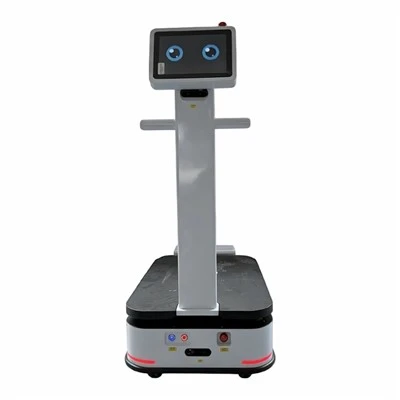
As someone who’s been in the ASRS supply business for 12 years, installing, troubleshooting, and tweaking these systems for everything from e-commerce fulfillment centers to cold storage facilities, I’m here to cut through the jargon. The short answer is yes—but it’s not just about plugging a few cables and calling it a day. It’s about understanding how each system works, their overlapping needs, and the common missteps that sink even the best-integrated setups. Let’s break this down like we’re in a weekly team huddle, no fluff, no fancy industry language that only engineers use.
First, Let’s Remember What Each System Actually Does (The Unexaggerated Version)
I’ve seen clients get tripped up here because they’re too busy chasing “automation magic” to map their actual workflows. Let’s start with basics:
- ASRS is the hardware that moves inventory—think stacked cranes, robotic shuttles, vertical lift modules (VLMs), or even the old-fashioned carousel systems, all designed to store pallets or totes at heights no human can safely reach, and retrieve them in minutes instead of hours. It’s built for speed and space efficiency, but it’s a brute-force tool; it doesn’t “know” which inventory is running low or which order is time-sensitive. That’s where WMS comes in.
- WMS is the brain of the warehouse. It tracks every SKU, manages order batches, assigns picking routes, updates inventory levels in real time, and creates pick lists for human workers or robots on the warehouse floor. It’s the system that tells you, “We need 50 units of SKU 123 by 3 PM, so grab them from the top rack.”
For most of the 2000s and early 2010s, this split made sense. ASRS was mostly for large pallets in big distribution centers, and WMS was standalone software. But as e-commerce blew up and SKU counts multiplied (one client last year had 18,000 active SKUs), siloed systems became a bottleneck. If your WMS would tell a picker to grab a tote from the ASRS, but the ASRS didn’t sync that request, the picker would show up empty-handed and orders would get delayed. That’s the pain point I started hearing around 2015, right as we saw the first big push for integration.
The Core of Integration: It’s Not Just Data Sharing
A lot of people think integration means “send data from WMS to ASRS.” That’s part of it, but the real magic is bidirectional communication. Let’s use a real example from a client we worked with last year: a mid-sized apparel e-commerce warehouse that was losing $45,000 a month to order delays because their ASRS and WMS were out of sync.
Before integration, their WMS would generate an order for a customer’s hoodie, mark it for picking, and send a job ticket to the ASRS. But the ASRS didn’t have real-time inventory counts—so it sometimes tried to retrieve a hoodie that had already been pulled for a different order. The pickers would wait 20 minutes for the ASRS to “find” the empty slot, and the order would miss its 2-day shipping window.
When we integrated their systems, we set up two-way sync:
- From WMS to ASRS: The WMS sends a request for a specific SKU, including its lot number, expiration date, and priority level (like a next-day order vs. a standard order). The ASRS uses that to prioritize where to pull from—so a high-priority order gets a faster crane route.
- From ASRS to WMS: The ASRS sends a confirmation when a tote or pallet is retrieved, plus an update on remaining inventory. If a slot is empty, the ASRS flags that immediately so the WMS doesn’t try to pull from it again.
Six months later, that client’s order delay rate dropped 78%, and their labor costs for picking fell by 22%. That’s not a numbers trick—that’s integration working the way it was designed to.
The Most Common Mistakes We See (And How to Avoid Them)
Even with a solid technical setup, integration fails when clients skip three key steps. I’ve seen this happen so often I can spot it in a first consultation:
1. Treating Integration as an Afterthought (Not Part of the Initial Design)
I once had a client who bought an ASRS and a WMS separately, then tried to bolt them together. The ASRS was built for heavy pallets, and the WMS was a small-business platform that couldn’t handle the ASRS’s data bandwidth. It took us three weeks to rework the API (application programming interface) that connects them, and the client lost two weeks of peak holiday season.
The fix: When you’re choosing an ASRS, ask suppliers (like me, if you’re talking to us) if we pre-build compatible APIs with the most common WMS platforms—like Fishbowl, Manhattan Associates, or NetSuite. Don’t wait until installation to bring up integration. We can adjust the ASRS’s hardware and software specs to match your WMS before it even arrives at your warehouse.
2. Ignoring Your Unique Workflows (One Size Doesn’t Fit All)
A cold storage facility has way different needs than a 3PL (third-party logistics) that handles 50 brands a month. Last year, a cold storage client tried to use the same integration setup we built for a grocery 3PL, and it didn’t work. The cold storage WMS needed to track temperature logs for every pallet, but our default integration only shared SKU and location data. We ended up adding a module that syncs temperature data from the ASRS’s environment sensors to the WMS, so if a pallet’s temperature drops too low, the WMS flags it before it’s stored.
The fix: When you’re discussing integration with your ASRS supplier, map out your entire workflow in advance. Do you handle expired goods that need FIFO (first-in, first-out) tracking? Do you have multiple order types (bulk pallets vs. small totes)? Write those down, and make sure the integration is built to accommodate them—not just standard industry cases.
3. Forgetting About Ongoing Maintenance
Integration isn’t a set-it-and-forget-it thing. When a new WMS update comes out, or you add a new SKU type to your ASRS, you have to adjust the connection. I had a client last quarter who updated their WMS to a newer version, and the API broke. Their pickers were delayed for a day because they didn’t tell us until it happened.
The fix: Work with a supplier that offers ongoing integration support. We schedule quarterly check-ins with our clients to test the connection, update APIs when needed, and adjust for changes in their warehouse. It’s not a big cost—usually a small monthly retainer, but it keeps you from costly downtime.
What About Smaller Operations? Can a Small Warehouse Integrate ASRS and WMS?
A lot of small business owners think integration is only for big DCs with 100,000 sq ft. But that’s not true. Last year, we installed a compact vertical lift module (VLM)—a type of ASRS for small totes—for a online pet supply shop with 12 employees. We integrated it with their QuickBooks WMS (a common small-business tool), and now their picking time is cut in half, and inventory errors are down to almost zero.
The key here is choosing the right ASRS and WMS pair. You don’t need a $1M system; a compact ASRS for 1,000 totes can sync with a cloud-based WMS for small warehouses. Just make sure your ASRS supplier offers low-bandwidth, easy-to-integrate setups for smaller operations.
Final Verdict: It’s Not Just Possible—it’s Necessary
I’ve been doing this long enough to know that warehouses that silo their ASRS and WMS are going to fall behind. Consumers expect faster shipping, SKU counts keep growing, and labor costs keep going up. Integration fixes all of those: it cuts picking time, reduces inventory errors, and lets you use your ASRS’s space to its full potential.
That said, it’s not a project to take lightly. You need to plan ahead, choose compatible systems, and build in ongoing maintenance. If you skip those steps, you’ll end up with two expensive tools that work against each other instead of for you.
Let’s Talk About Your Setup
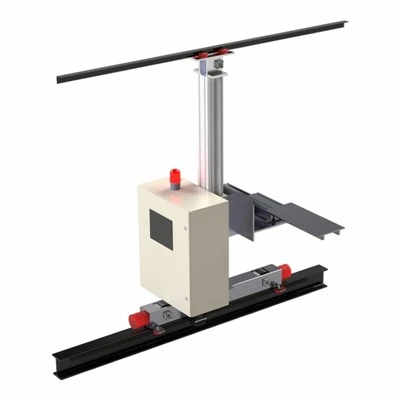
If you’re currently running a warehouse with separate ASRS and WMS systems, or you’re thinking of adding automation and want to make sure you integrate it right, I’d be happy to chat. I’ve worked with operations of all sizes—from 1,000 sq ft online shops to 100,000 sq ft distribution centers—and I can walk you through what’s worked (and what’s failed) for similar setups. There’s no one-size-fits-all answer, but there’s definitely a solution that fits your needs.
Automated Storage and Retrieval System References
- Warehouse Education and Research Council. (2022). ASRS-WMS Integration: Best Practices for Modern Warehouses.
- Material Handling Industry of America. (2023). Small Business Automation Guide: Integrating Compact ASRS and WMS.
- International Society of Logistics. (2021). Bidirectional Communication Protocols for Automated Warehouse Systems.
Shenzhen Ginnee Intelligent Warehousing Robotics Co., Ltd.
As one of the most professional automated storage and retrieval system suppliers in China, we’re featured by quality products and low price. Please rest assured to wholesale durable automated storage and retrieval system in stock here and get quotation from our factory. We also accept customized orders.
Address: Room101, No.162 JunXin Road, Niuhu Community, Guanlan Strect, Longhua District, Shenzhen, Guangdong Province, China.
E-mail: huangyongmei@szginnee.com
WebSite: https://www.ginneerobotics.com/
