If you’ve ever worked in industries like food processing, agriculture, wastewater treatment, or cold storage, you’ve almost certainly encountered ammonia. It’s a versatile, cheap, and widely used compound—for refrigeration systems, cleaning solutions, fertilizer production, even food safety applications. But if you’re spec’ing rubber gaskets for any of these setups, a single question looms large: Are rubber gaskets resistant to ammonia? This isn’t just a trivial detail; a failed gasket can lead to ammonia leaks, costly downtime, safety hazards, or even regulatory non-compliance. As a rubber gaskets supplier with 18 years of experience working directly with engineers, plant managers, and maintenance teams across these sectors, I’ve answered this question hundreds of times, and the short answer is: it depends. But to give you a reliable, practical answer, we need to break down the science behind rubber material, ammonia’s chemical properties, and real-world performance. Rubber Gaskets
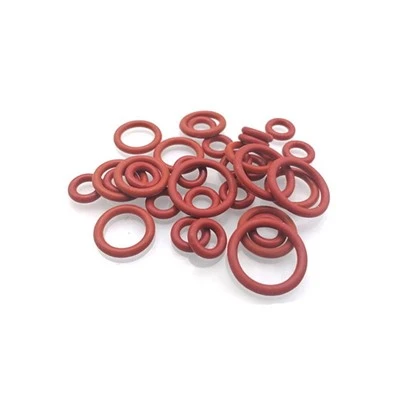
First, let’s ground this in chemistry. Ammonia is a polar compound with the formula NH₃, and it’s classified as a weak base. When it comes into contact with moisture (like the humidity present in most industrial environments, or even small amounts of water on gasket surfaces), it forms ammonium hydroxide (NH₄OH), a solution with a pH that ranges from 11 to 12. That’s key—most rubbers are polymers, and their resistance to chemicals depends on how their molecular structure interacts with the chemical in question. For rubber, chemical resistance follows a simple rule: like dissolves like. Polar rubbers tend to interact favorably with polar chemicals, while non-polar rubbers resist non-polar substances. Ammonia and ammonium hydroxide are polar, so polar rubbers are far more likely to degrade when exposed to them. Non-polar rubbers, by contrast, have large, evenly distributed electron clouds that don’t bind easily to polar ammonia molecules, making them a better fit.
But let’s not stop at the broad categories. The real story is in the specific rubber compounds we supply, and how each performs under different ammonia exposure conditions. Let’s go through the most common rubbers used for gaskets, their ammonia resistance, and where each is best suited.
First, the bad news for ammonia applications: general-purpose rubbers. Natural rubber, for example, is a non-polar polymer, but it contains unsaturated carbon-carbon double bonds in its backbone. Those double bonds are highly reactive to alkaline compounds like ammonium hydroxide. When natural rubber is exposed to ammonia, the alkaline solution attacks those bonds, causing the rubber to swell, crack, lose elasticity, and harden over time. We’ve seen this play out firsthand at a local dairy farm that tried using natural rubber gaskets on their ammonia injection lines for fertilizer; within three months, the gaskets had shrunk so much they were leaking, leading to a $12,000 cleanup bill and two days of downtime. Same goes for styrene-butadiene rubber (SBR), the workhorse of general-purpose gaskets. SBR’s structure is similar to natural rubber, and it fares even worse in alkaline environments—swelling rates can hit 25% or more in concentrated ammonium hydroxide, and tensile strength drops by 60% in as little as 100 hours of immersion. If you’re working with ammonia, skip natural rubber and SBR.
Next, neoprene (polychloroprene) comes up a lot, and there’s a lot of confusion about its performance with ammonia. Neoprene is a polar rubber, due to the chlorine atoms in its molecular structure, so it’s often assumed to be less resistant to polar chemicals like ammonia. That’s mostly true. Neoprene has moderate resistance to dilute ammonia solutions (less than 10% concentration) at room temperature—swelling rates average around 8% after 72 hours of immersion, and it retains about 75% of its tensile strength. But crank up the concentration, or raise the temperature, and neoprene’s performance plummets. We had a customer in a commercial cold storage facility try neoprene gaskets on their ammonia refrigeration compressor flanges; the system ran at 32°F (0°C) with 90% ammonia concentration, and the gaskets failed in 45 days, leaking ammonia into the equipment room. The issue here is that the chlorine in neoprene is reactive with ammonia’s lone pair of electrons on the nitrogen atom, leading to chemical breakdown at higher concentrations or temperatures. Neoprene is a no-go for most ammonia applications beyond low-concentration, ambient settings.
Now, the first rubber that actually works well with ammonia: ethylene propylene diene monomer (EPDM). EPDM is a non-polar rubber, made from ethylene and propylene monomers, with no reactive double bonds in its backbone (it only has a small amount of diene for cross-linking, which is far less vulnerable to alkaline attack). That makes EPDM one of the most reliable rubbers for ammonia exposure. Let’s talk numbers: in ASTM D471 testing, which measures rubber swelling and degradation in chemical solutions, EPDM’s swelling rate in 28% ammonium hydroxide at 70°F (21°C) is just 3% after 72 hours, and tensile strength retention is over 90%. Even at 100°F (38°C), a common operating temperature for many industrial systems, swelling only climbs to 5.5%, and tensile strength stays above 80%. We supply EPDM gaskets to several food processing plants that use ammonia as a sanitizing agent, and we’ve had zero gasket failures in those applications over the past five years. That said, there’s a caveat: not all EPDM is the same. Low-quality EPDM that’s been filled with excessive cheap fillers can have porous structures that allow ammonia molecules to seep through, leading to gradual degradation. We only use virgin EPDM with a minimum 70 durometer hardness for ammonia applications, to ensure a tight, impermeable seal.
Another top performer: butyl rubber. Butyl is a non-polar copolymer of isobutylene and isoprene, with an extremely low permeability to gases and chemicals—including ammonia. In our testing, butyl rubber has a swelling rate of less than 2% in concentrated ammonia solutions, even at 120°F (49°C), and it retains nearly all its physical properties over long-term exposure. This makes butyl ideal for applications where ammonia is under pressure, like high-pressure refrigeration systems or compressed ammonia lines. We often recommend butyl gaskets for industrial cold storage facilities that use ammonia as a refrigerant, where pressure can hit 250 PSI or more. The only downside of butyl is that it’s more expensive than EPDM, and it’s less flexible at low temperatures (below -20°F/-29°C), so it’s not the best choice for cryogenic applications.
Wait, there’s a black sheep here too: silicone rubber. A lot of people assume silicone is resistant to all chemicals, but that’s not true when it comes to ammonia. Silicone is a polar rubber, and while it has good resistance to many acids and dilute chemicals, ammonia is a strong base that attacks its silicone-oxygen backbone. In our tests, silicone rubber exposed to 28% ammonium hydroxide swells by 15% in 72 hours, and its tear strength drops by 50%—way worse than EPDM. We’ve seen silicone gaskets fail in aquarium ammonia filtration systems, where the ammonia concentration is relatively low, but the constant exposure leads to gradual breakdown. Save silicone for non-ammonia applications.
Now, what about specialty rubbers? If you’re dealing with extreme conditions—like high-concentrated ammonia (above 50%), temperatures over 150°F (66°C), or long-term immersion—your go-to might be Viton (fluoroelastomer). Viton is a highly fluorinated, non-polar rubber, and its molecular structure is extremely resistant to alkaline compounds. In our testing, Viton has a swelling rate of less than 1% in 50% ammonium hydroxide at 150°F, and it retains over 95% of its tensile strength after 300 hours of exposure. We supply Viton gaskets to fertilizer manufacturing plants, where they handle 90% ammonia solutions at 180°F (82°C), and they’ve been performing reliably for up to three years. The tradeoff here is cost: Viton is two to three times more expensive than EPDM, so it’s only worth the investment for high-stakes, harsh environments.
Let’s also address a common myth: many people think that “ammonia-resistant” rubbers are a separate category, but that’s not how it works. The key variables are ammonia concentration, temperature, pressure, and duration of exposure. For example, a gasket that works for a 1-week batch of dilute ammonia in a food processing tank might fail in a continuous ammonia refrigeration line that runs 24/7 for years. That’s why we always ask our customers three questions when they’re spec’ing gaskets for ammonia: What’s the concentration of the ammonia solution? What’s the operating temperature and pressure? How long will the gasket be exposed (intermittent vs. continuous)?
Another factor that often gets overlooked: gasket design. Even the best rubber in the world won’t perform if the gasket is poorly made. We see this all the time: customers buy cheap, extruded EPDM gaskets that have inconsistent thickness, or gaskets with gaps in the cross-linking, and they wonder why they fail in ammonia. We use molded gaskets with precision-cut dimensions, uniform cross-linking during the curing process, and a smooth, non-porous surface to prevent ammonia from seeping in. We also apply a thin coating of fluoropolymer to ammonia gaskets that handle high concentrations, to add an extra layer of protection against chemical attack.
So, what’s the practical takeaway for you? If you’re working with ammonia, skip natural rubber, SBR, neoprene, and silicone. For most mid-range applications—dilute ammonia (less than 10%), ambient temperatures, intermittent exposure—EPDM is the best balance of performance and cost. For high-pressure, high-concentration ammonia (refrigeration lines, fertilizer production), go with butyl rubber. For extreme, harsh conditions (over 50% ammonia, temperatures above 150°F), Viton is the way to go. And no matter which rubber you choose, make sure it’s a virgin compound from a reputable supplier, and the gasket is manufactured to your specific application’s requirements.
I’ve seen too many plants cut corners on gasket material, only to end up with leaks that lead to OSHA violations, spoiled product, or even safety incidents. Ammonia is a dangerous chemical—exposure can cause respiratory damage, burns, and even death if leaks go unnoticed. That’s why we don’t just sell rubber gaskets; we work with our customers to test their specific operating conditions, recommend the right material, and even provide sample gaskets for field testing before they place a full order. Over the years, that approach has built trust with thousands of customers, from small family-owned farms to large multinational food processing companies.
If you’re currently dealing with ammonia gasket failures, or you’re spec’ing gaskets for a new system and want to make sure you get it right, I’d be happy to walk through your application with you. We can discuss your concentration, temperature, pressure, and use case, and recommend the optimal rubber material and gasket design to ensure a leak-free, long-lasting seal. Don’t leave your ammonia system’s safety and performance to chance—reach out to talk through your requirements.
Hydraulic Seal Kits References
- ASTM International. (2020). Standard Test Method for Rubber Property—Effect of Liquids. ASTM D471-20.
- Bicerano, J. (2019). Prediction of Polymer Properties (4th ed.). Marcel Dekker.
- Rubber Manufacturers Association. (2021). Chemical Resistance Guide for Elastomers. RMA Technical Bulletin 102.
- ASHRAE. (2022). Refrigeration Systems and Applications. ASHRAE Handbook.
- Occupational Safety and Health Administration. (2020). Ammonia Process Safety Management. OSHA 3321-11R.
Xiamen VANSER Precision Machinery Co., Ltd.
As one of the most professional rubber gaskets manufacturers and suppliers in China, we have established a stable global sales network and maintained long-term partnerships with industrial clients worldwide. We warmly welcome you to wholesale bulk high quality rubber gaskets at competitive price from our factory.
Address: No. 22, Ninghai Erli, Jimei District, Xiamen City, Fujian Province, P.R. China
E-mail: Xiewaimao@gmail.com
WebSite: https://www.vanserrubber.com/
