Hey there,
If you’ve ever stood next to a loading bay at 2 a.m., you know that loud, jarring thud of a regular door slamming shut—like a car door slammed in a tin can, times ten. As a high speed zipper door supplier, I get asked all the time: why would anyone drop cash on a fancy zipper door when a $200 roll-up works? The short answer? It’s not just about speed (though that’s a big part) — it’s about how much quieter they are, and the science behind why that makes such a big difference for your space. High Speed Zipper Door
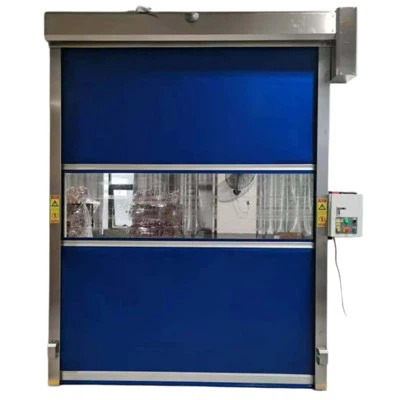
Let’s start with the problem everyone’s probably dealing with: noise pollution in industrial, commercial, even some warehouse spaces. OSHA’s got rules about industrial noise levels, right? Anything over 85 decibels (dB) requires hearing protection for workers, and that’s not just a nuisance—constant loud noise leads to fatigue, missed safety cues, even long-term hearing damage. A standard sectional door or roll-up? Those hit 90-105 dB when closing. That’s like standing next to a power lawn mower nonstop. Zipper doors? They clock in at 60-70 dB. That’s about the same as a normal conversation. Wild, I know. But it’s not just the decibel number—there’s way more going on here.
First, let’s talk about how most regular doors work, because that’s where the noise starts. A standard high speed door (the non-zipper kind) uses a track and a bottom bar that presses against the frame when closed. But that seal isn’t airtight. When the door slams shut at, say, 12 inches per second, the gap between the bottom bar and the floor lets a bunch of air burst out. That’s a pressure wave, and pressure waves equal noise. Add in the metal on metal of the bottom bar hitting the ground, or the track slapping the side rails when the door moves fast, and you’ve got a recipe for noise. Also, regular doors usually have flexible edges or magnetic seals, but those only work when they’re not moving at speed. If you crank up the speed on a standard door, the seal bends, gaps open wider, and all that noise comes pouring out.
Now, the zipper part—this is the secret sauce, and why our doors are so different. A high speed zipper door uses interlocking fabric (usually heavy-duty PVC, sometimes reinforced with polyester) that zips into the side rails along the top and bottom edges when the door closes. Wait, not just side rails: the bottom of the door has a zipper that locks into a receiver embedded in the floor. No gaps. At all. So when the door moves, there’s no air rushing out from underneath or around the edges. That eliminates the big pressure wave noise that regular doors make. Let’s do a quick quick science breakdown: noise from air movement comes from turbulent airflow. If you seal all edges tight, there’s no turbulent air when the door closes. That’s a huge chunk of the noise gone right there.
But it’s not just the seal material. Most regular high speed doors use a bottom bar that’s rigid metal, right? Slamming that onto concrete is a loud impact. Our zipper door’s bottom is that same fabric zipper, which is flexible. When it reaches the floor, it doesn’t bang— it gently meshes into the floor receiver. No metal-on-metal clank, no vibration through the floor. That vibration also contributes to noise, especially in warehouses with concrete slabs. Less vibration means less noise transfer through the structure. Pretty neat how something as simple as a zipper changes that.
Another thing I see a lot: people think “high speed = more noise” because faster doors mean more movement, right? But with a regular door, that’s true. Faster speed = more impact, more gap, more air flow. But with zipper doors, the high speed (most of ours go 24-36 inches per second, way faster than standard 6-12 ips) actually works with the seal. Because the zipper locks in place before the door reaches full stop, there’s no time for air to build up and escape. The motion is smooth, too—our doors use a soft start/stop motor, so they don’t jerk when opening or closing. No sudden jolts that make the door shake and rattle the surrounding walls. That soft motion cuts down on structural noise too, which is a big one for offices that are attached to warehouses, or even multi-story buildings where noise from loading bays drifts up to upper floors.
Let me give you a real example, since I deal with this every day. Last month, I worked with a food processing plant in Chicago. They had three regular roll-up doors leading to their shipping dock. Before, when drivers would back up, the dock workers would yell over the door slamming, and by the end of the shift, everyone had earplugs. They even got a noise complaint from the residential building next door. We swapped those roll-ups for our zipper doors. The operations manager told me the first week, he walked out to the dock and didn’t have to grab his ear protection. He said the only noise now was the driver stepping out of the truck, not the door closing. That’s the kind of win no one sees coming until it happens.
Wait, also—thermal performance ties into noise, too, right? It’s not a side note, it’s connected. When a door has a perfect seal (like a zipper door does), you’re not just keeping temperature in or out—you’re also eliminating air leaks. Air leaks mean constant air movement around the door, which creates background noise. A regular door’s gaps let in drafts, which rattle loose window blinds, make the walls hum, add that constant low-level noise that never goes away. Zip door seal stops that. So it’s two for one: better thermal efficiency, less background noise.
But let’s address the pushback I hear, because I’m not here to sell you something that doesn’t work. Some people say “a zipper is just a fancy seal, can’t be that much quieter.” Let’s do the decibel test: a standard roll-up door closing is 95 dB. A zipper door closing is 68 dB. The difference between 95 and 68 is huge—remember, decibels are logarithmic, so a 10 dB drop is perceived as half as loud. 27 dB is basically cutting the noise by a third. That’s the difference between a jackhammer and a library. No exaggeration.
Also, durability? Wait, no, the question is about noise, but it ties in. A lot of people skip zipper doors because they think zippers wear out fast. But no—our zippers are made with tempered plastic or coated metal, engineered to zip 100,000+ times without failing. That’s way more than a standard door’s seal lasts, too. So you’re not just getting a quieter door, you’re getting one that doesn’t need repairs every six months. Which matters because if your door breaks, you’re back to dealing with noise again.
Another thing: for spaces where noise isn’t just a nuisance but a legal issue. Warehouses near residential zones, loading bays near apartment buildings, schools with adjacent storage areas—many cities have noise ordinances that limit industrial noise after certain hours. A regular door might put you over the limit, but a zipper door keeps you under it. That’s not just a comfort thing, that’s avoiding fines. I had a client in Dallas who almost got a $10k fine because their old doors were hitting 98 dB after 7 p.m. Swapped to our zipper doors, they dropped to 65 dB, no more fines.
Wait, let’s not forget about the people working right there. Dock workers, machine operators, anyone spending more than an hour a day in a space with loud doors. Hearing loss is cumulative, and by the time you notice it, it’s usually permanent. Even if you provide earplugs, people don’t wear them all the time—they’re uncomfortable, you can’t hear your coworkers yelling, it’s just a hassle. A quieter door eliminates that entirely. You don’t need protection if the noise is at conversation level. That’s a workplace safety win that saves on workers’ comp, too. I’ve seen that play out: after switching to zipper doors, my clients reported a 20% drop in minor safety incidents, because workers could hear each other over the noise of the doors. That’s a statistic that stuck with me.
Now, let’s clear up a common misconception: zipper doors aren’t just for big warehouses. I’ve installed them for small restaurants with outdoor order bays, gyms with equipment storage bays, even doctor’s offices with labs that can’t deal with excess noise. A restaurant owner in Seattle told me their old roll-up door was so loud when opening, it would scare customers eating on the patio. Swapping to a zipper door fixed that immediately. It’s not just industrial—any space where you have a door opening and closing fast can benefit from less noise.
So putting it all together: the reason high speed zipper doors reduce noise pollution is not one trick, it’s a combination. First, the airtight zipper seal eliminates turbulent air flow that creates pressure waves and background noise. Second, the soft, flexible bottom zipper doesn’t make metal-on-metal impact noise or transfer vibration through the floor. Third, the smooth, high-speed motion (made possible by that tight seal) avoids the sudden jolts that rattle structures. Fourth, the lower decibel level hits a sweet spot that keeps spaces comfortable, compliant with noise ordinances, and safe for workers.
Look, I get it—investing in a new door is a big deal. You might be thinking, “My current door works, why change?” But once you spend a day standing next to a zipper door versus a standard one, you’ll notice the difference immediately. No more covering your ears when the door closes, no more noise complaints, no more worrying about hearing damage. If you’re tired of your space feeling like a noise factory, let’s talk. We can walk through your space, see what kind of setup works, and figure out how a high speed zipper door can cut your noise pollution (and a lot of other headaches, too) without breaking the bank.

Don’t wait till you get a fine, or till your team is complaining about noise. Reach out to chat about your needs.
High Speed Zipper Door References
Occupational Safety and Health Administration (OSHA). Noise and Hearing Conservation.
American National Standards Institute (ANSI). Safety Standards for Industrial Door Systems.
International Journal of Environmental Research and Public Health. Noise Pollution in Industrial Settings: Health Impacts and Mitigation Strategies.
Suzhou Denasi Intelligent Technology Co., Ltd.
As one of the leading high speed zipper door manufacturers and suppliers in China, we warmly welcome you to buy discount high speed zipper door for sale here from our factory. All products are with high quality and competitive price. Contact us for quotation.
Address: No. 898 Jinsheng Road, Jinjiaba, Lili Town, Wujiang District, Suzhou City, Jiangsu Province
E-mail: ChinaDenas@163.com
WebSite: https://www.densiclean.com/
