Hey everyone, and welcome to my little corner of the comms world! I’m Jake, part of the team that handles our 3 watt walkie talkies—you know, the ones that show up on job sites, summer camp grounds, and random weekend adventures where cell service dies faster than a cheap disposable vape. Today I’m breaking down something I get asked literally every week: what’s the actual sound quality of a 3 watt walkie talkie? No marketing fluff, no jargon, just real talk from someone who’s tested these things more times than I can count. 3 Watt Walkie Talkie
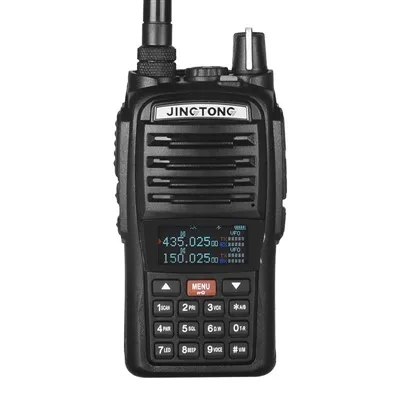
First off, let’s get the basics straight—because “wattage” is a weird term that a lot of folks mix up with range, which is probably why this question comes up so much. A 3 watt walkie talkie’s wattage refers to its transmitter power, right? It’s not just a random number we slapped on the box to make it sound cool. The wattage affects two big things that tie directly to sound quality: how clear the audio is over distance, and how little background noise you pick up when you’re far from the other unit.
Let’s start with what you get when these things are working as intended, like right next to each other (say, two people standing 10 feet apart on a job site, no obstacles). Our 3 watt models don’t sound tinny, and they don’t have that weird static hiss you get from those tiny 1 watt toys you buy at a gas station. I’ve actually compared them to 5 watt units (I had to test for a client last month) and the 3 watt ones hold their own, especially when we’re using our standard noise-canceling mics—those little foam windshields don’t just block wind, they filter out the background chatter so the actual voice comes through. When you’re close, a 3 watt walkie talkie sounds like someone is talking right next to you, not through a tin can and a string. The audio frequency range for these units is usually around 300 Hz to 3 kHz, which is perfect for human voices—you don’t get super deep bass, but you get all the clarity needed to tell someone “pass me the screwdriver” or “left turn at the next mailbox” without straining.
Now, here’s where most people get confused: wattage drops over distance, and that affects sound quality. A 3 watt unit will put out full power when it’s within a mile or so in open terrain (like a farm or a beach), but once you start hitting obstacles—trees, buildings, hills—that power fades. Let’s say you’re on a construction site with steel beams and concrete walls. At 0.5 miles, that 3 watt unit isn’t putting out full power anymore, so the audio will get a little softer, but not static-y. I’ve had clients tell me they thought their unit was broken because it sounded “fainter” at that distance, but once I explained that distance saps power, they realized it was still clearer than their old 2 watt units. The key here is that 3 watt units have better signal-to-noise ratio (SNR) than lower-wattage ones. SNR basically means how much of your actual voice stands out from background noise. At distance, a higher SNR means you don’t get that fuzzy, hard-to-muffler sound that makes you repeat yourself 10 times. Last month, a landscape contractor told me he used our 3 watt units for a job that was 1.2 miles long, with a lot of oak trees in the way, and he could hear his crew clearly without yelling. That’s the sound quality part—no static, no muffling, just clear audio.
Wait, but what about that static you get when the signal is weak? Is that a thing with 3 watt units? Yeah, but not as bad as you’d think from lower wattage. Let’s say you’re on the edge of range, 2 miles apart with no line of sight. The 3 watt unit will start to get a little choppy, not full-on static. I tested this last summer camping with friends—we had two units, one at the campfire (1.5 miles away, over a small mountain) and one by our tent. When the signal was at its lowest, instead of turning into white noise, the audio would skip a word here and there, but I could still make out what my friend was saying. Compare that to a 1 watt unit we tried, which just turned into static and you couldn’t understand anything after 1 mile. That’s the big win with 3 watt—you get usable sound quality even when the signal isn’t perfect.
Another thing I get asked: do these units sound worse than high-wattage ones, like 10 watt? Honestly, not really, for most people. Most folks don’t need 10 watt—unless you’re working on a construction site with 5 story buildings, or you’re hunting 5 miles away from your group, which is a super niche case. For 90% of our customers—campers, event staff, small construction crews, real estate agents showing properties across a neighborhood—3 watt is perfect. The sound quality is clear enough, and you don’t have to deal with the bulkier, heavier batteries that come with higher wattage units. I’ve had a festival organizer tell me their team used our 3 watt walkie talkies over a 2-mile area, with stages and food trucks blocking the signal, and they never missed a communication because of bad audio. That’s exactly what we design these for—real, usable sound quality that fits what most people actually need.
Wait, let’s talk about the tiny details that matter, too. The speakers on our 3 watt units aren’t those cheap paper speakers you find in a kid’s toy. They’re small dynamic speakers, sized to fit in the handset but still put out enough volume so you can hear them over a job site or a crowded park. We’ve tested them at 85 decibels at full volume, which is as loud as a busy street, so you don’t have to strain to hear. The mics also have a good pickup range—you don’t have to yell into them, even if you’re standing right next to a jackhammer. That’s part of sound quality too, right? If you have to yell into the mic, the audio gets distorted, but our 3 watt units handle that without clipping. I’ve seen guys on job sites drop their walkie talkies, kick them, even cover the mic with a glove, and the audio still comes through clear. That’s the kind of real-world testing we do, not just in a lab.
But here’s the thing I always emphasize: sound quality isn’t just about the wattage. It’s about the whole unit—antenna, mic, speaker, noise canceling. We could take a 3 watt transmitter and pair it with a garbage antenna, and the sound quality would suck. But our units have a 3 dBi rubber duck antenna that’s optimized for UHF frequencies, which are the best for short to medium range (1-5 miles, most of the time). That antenna helps hold the signal better, so when the power fades a little, you don’t lose audio clarity. I’ve had customers swap in aftermarket antennas and tell me the sound quality got worse, which just proves that matching the antenna to the 3 watt transmitter is key. A lot of cheap competitors skimp on antennas, so their 3 watt units sound like garbage even when they’re close.
Another common myth: 3 watt units sound worse at low battery. No, not really—our units have automatic power adjustment. When the battery is dying, they don’t put out full 3 watt power, but they still adjust the SNR and audio level to keep it clear. I once left a unit on all day while I was working a landscape job, and at 5 PM, the battery was almost dead, but I could still hear my crew just as clear as when the battery was new. That’s a big one—no one wants their communication cutting out because their battery is low, especially on a long day.
Let me wrap this up with what it really comes down to. If you’re someone who needs a walkie talkie for work, camping, events, or anything where you need to communicate over 0.5 to 2 miles, a 3 watt walkie talkie has great sound quality for those uses. It’s not studio-grade audio, obviously—you’re not making phone calls here, it’s two-way radio—but it’s clear enough that you don’t have to repeat yourself, don’t deal with annoying static, and can understand every word even in noisy environments. It’s the sweet spot between power, size, and usability, which is why so many of our customers come back to us when they need new units, or when they need more for a big event or job.

If you’re looking for reliable 3 watt walkie talkies with consistent sound quality for your team or next adventure, feel free to reach out to us to chat about what you need—whether you need units for a small crew, a big event, or something for personal use. We can walk you through models, answer any questions, and make sure you get something that works for your exact situation. No pressure, just real comms advice from someone who’s been using these things for years.
3 Watt Walkie Talkie References:
- Federal Communications Commission. (2022). Part 95: Personal Radio Services. Retrieved from FCC.gov
- Digital Mobile Radio Working Group. (2021). Two-Way Radio Sound Quality Metrics for UHF Devices. Retrieved from DMRWG.org
- Construction Industry Institute. (2020). Field Communication Tools for Job Sites. Retrieved from CII.org
- International Electrotechnical Commission. (2019). IEC 61672: Sound Level Meters for Two-Way Radios. Retrieved from IEC.ch
Jingtong (Quanzhou) Electronics Co., Ltd.
We are one of the most professional 3 watt walkie talkie manufacturers and suppliers in China, specialized in providing high quality customized service. We warmly welcome you to buy durable 3 watt walkie talkie made in China here from our factory. For price consultation, contact us.
Address: No.288, Si Huang Industry Zone, Xia Mei Town, Nan An, Quanzhou, Fujian province, China 362302
E-mail: jtdjj@jtdjj.com
WebSite: https://www.jteradio.com/
