Hey everyone, it’s Jake here, and as someone who’s spent the last 8 years working with sublimation printers (I run a small operation supplying these bad boys to everyone from hobbyists to small sign shops), I get so many questions that make me go… “Wait, you didn’t Google this? Or test it?” Today’s topic is one I answer at least 5 times a week: Can a sublimation printer print on vinyl? Sublimation Printer
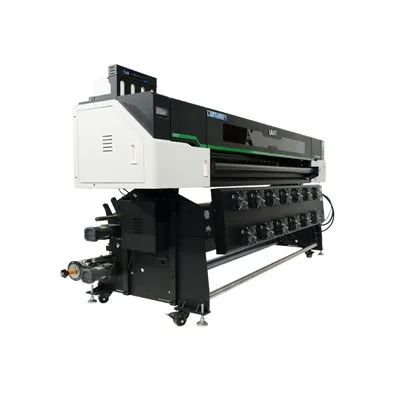
Let me cut to the chase first, because no one wants to scroll through 10 paragraphs to get the quick answer: Kinda, but not like you’re probably thinking. And if you’re here because you want to make those glossy, long-lasting tumbler decals or custom t-shirt name patches that won’t peel after 5 washes… keep reading, because I’m about to save you from wasting $20 on a random vinyl roll and a full sheet of sublimation ink.
First, let’s level-set on what we’re actually talking about here, because I swear half the confusion comes from people mixing up terms. Sublimation printing works by turning solid ink into gas (sublimation, duh) that bonds with polyester molecules—only polyester, no exceptions. The ink can’t stick to anything with less than a 65% polyester content, right? It’s a chemical thing, not just “does the surface feel smooth.” Now, vinyl? Most people know vinyl as that sticky plastic sheet you put on car windows or laptops, but not all vinyl is the same. There’s heat transfer vinyl (HTV) for t-shirts, adhesive vinyl for decals, permanent vinyl for signs… and almost none of these are polyester-based. Most are made from PVC (polyvinyl chloride), polyurethane, or even a mix, none of which are polyester. That’s why when I first tested this back in 2015, the sublimation ink just beaded up on regular vinyl like water on a waxed car. It didn’t sink in, it didn’t bond, it wiped off with a paper towel. Total waste.
But wait—hold up, before you close this tab. There is a type of vinyl that does work with sublimation, and I didn’t even know it existed until a customer brought it to me 3 years ago. It’s called sublimation vinyl (or sometimes polyester HTV, if you wanna get specific). This isn’t your mom’s glitter HTV that you buy at the craft store for $5 a sheet. Sublimation vinyl is made with a polyester base, so it plays nice with sublimation ink. That’s the key difference I see people missing. I’ve had so many customers come in saying “I tried printing on vinyl with my sublimator and it sucked” and they’re using regular Oracal vinyl or random Amazon HTV. No wonder.
Let me break down how that works, step by step, like I’m showing a new guy in my shop. First, you grab your sublimation vinyl—not regular vinyl. You load it into your sublimation printer just like you would sublimation paper, right? But here’s the first trick: you have to mirror your design. Always. Because when you heat press it, it’s going to be flipped. The next part is temperature and time—way different than what you use for sublimating shirts or mugs. Most sublimation HTV calls for around 380°F (193°C), and you press it for 15-20 seconds, with medium pressure. Wait, important: you don’t use a heat press that’s too intense, or you’ll melt the vinyl’s adhesive layer. And you have to peel the carrier sheet while it’s hot? No, wait—wait, that’s for regular HTV. Sublimation vinyl needs you to peel it cold, like immediately after pressing, before it cools. I learned that the hard way when I ripped a whole sheet of custom dog bandanas because I waited 2 minutes to peel. Don’t do that.
Now, what’s the result? It’s actually pretty fire. The ink is bonded into the vinyl’s polyester fibers, so it doesn’t crack or peel when you wash it—way better than regular HTV, which will fade after like 10 washes even if you pre-wash the shirt. I had a customer last month who uses this for custom hockey team jersey numbers; he says they don’t scratch off during hockey games, which is a huge win. And you can use this on non-polyester shirts too, if you’re into layering designs. Press the sublimation vinyl onto the cotton shirt first, then press the polyester shirt over that with regular sublimation ink. Cool stuff.
But here’s the catch: not all sublimation vinyl is equal. I’ve tested like 12 different brands over the years, and half of them are just regular vinyl with a “sublimation” sticker slapped on it. The good stuff has a thin, durable polyester coating that doesn’t bleed when you press it. The bad stuff gets all gooey if you even look at it wrong. That’s why I only stock two brands in my shop now—don’t want to send someone a dud that makes my whole operation look bad. Also, you can’t use adhesive sublimation vinyl for outdoor signs? Wait, no, actually you can if it’s the right kind, but you have to seal it with a laminate. Regular adhesive vinyl is fine if you want to make a tumbler decal, but make sure it’s specifically polyester-based, otherwise the ink will rub off.
Now, let’s talk about what people actually want to use this for, because I get asked that too. Custom stickers, tumbler wraps, t-shirt patches, hat logos, even custom phone cases—anywhere you want a design that’s vibrant and long-lasting. I had a teacher last semester who made custom name tags for her classroom using sublimation vinyl; they don’t smudge when kids touch them, and they survived the whole school year before she had to replace them. That’s way better than printing regular paper stickers which fall apart in 2 weeks.
But wait, can you print sublimation on regular vinyl at all? Is there any workaround? I’ve heard some people say they coat regular vinyl with a sublimation coating spray, but that’s a band-aid. I tested that last year too, and it works… kind of. The ink stays for a few washes, but after that it starts to fade, and the spray makes the vinyl feel sticky, like it attracts dust. Not worth it, in my opinion. If you want to do it right, just get the actual sublimation vinyl. Save yourself the headache.
Another thing people mix up: sublimation printers vs. regular inkjet printers. You can absolutely use a sublimation printer for this—wait, that’s my whole gig, right? That’s why I wrote this post. But you can’t use a regular inkjet printer with sublimation ink; it has to be a dedicated sublimation printer, because the print heads are calibrated to handle sublimation ink, which is way more viscous than regular ink. And don’t try to convert an old Epson to print on vinyl without the right settings—you’ll clog the print heads and waste a ton of ink. I’ve fixed like 10 clogged print heads from people who tried that last year.
Wait, let’s address a common myth: some people say sublimation vinyl is only for light colors. That’s true for regular sublimation, but sublimation vinyl works on dark surfaces too? No, wait—no, the vinyl is usually white or clear, so you can press it on dark shirts, right? Because the design is on the vinyl, not the shirt itself. Oh, right! That’s a big upside. Regular sublimation only works on white or light-colored polyester, but with sublimation vinyl, you can put any design on a dark t-shirt, hat, whatever. I did a custom black hoodie with a neon pink logo last month for a customer, and it looked way better than any screen print he could get.
Now, if you’re thinking about trying this for your small business—don’t overcomplicate it. Start with a roll of sublimation vinyl, grab a heat press that’s good for t-shirts, load it into your sublimation printer, mirror your design, press at 380°F for 15 seconds, peel cold, and boom. If you’re a hobbyist, just get a 12×12 sheet first, don’t buy a whole roll until you test it. I send free sample sheets to all new customers, by the way—no catch, I just want people to make sure it works for their needs before they drop $100 on vinyl.
But wait, is there a downside? Yeah, it’s more expensive than regular vinyl. A roll of sublimation HTV is like $20 for 10 feet, vs. regular HTV which is $5 for 10 feet. But the longevity is way better, and the print quality is way more vibrant. If you’re making products that you want to sell, that extra cost is worth it because people will pay more for something that doesn’t peel after a week.
Now, let’s talk about a common mistake I see newbies make: pressing too hot. I had a customer last month who pressed his sublimation vinyl at 400°F, and it melted right into his heat press mat, leaving a sticky mess that took me 3 hours to scrub off. Don’t do that. Stick to 375-385°F, medium pressure, and don’t press longer than 20 seconds. And make sure you’re using a teflon sheet over the vinyl when you press—prevents ink from transferring to the press, and stops the vinyl from sticking to the platen. Super important.
Another thing: if you’re using this for tumbler decals, after you press the vinyl onto the tumbler, you have to seal it with a clear laminate. Even though the ink is bonded, it will scratch if you don’t seal it. I use a matte laminate for tumblers, so it doesn’t get too shiny, but a gloss one works too. That just adds an extra layer of protection, makes the decal last even longer.
Wait, can you print other things with this? Like, can you use sublimation vinyl for car decals? Yeah, but you have to get the outdoor-grade sublimation vinyl, not the craft kind. The outdoor stuff is UV-resistant, so it won’t fade in the sun. I had a customer who put a custom logo on his work truck over a year ago, and it still looks as good as the day he put it on. Way better than a vinyl sticker you buy at the gas station, which fades in 6 months.
Now, let’s wrap this up so you don’t have to go down a rabbit hole of YouTube tutorials (which are all over the place, half of them wrong). The short version: No, you can’t print on regular (PVC, non-poly) vinyl with a sublimation printer. But yes, you CAN print on sublimation-specific vinyl (polyester-based) with a sublimation printer, and it’s one of the most versatile, long-lasting things you can do with your printer right now.
If you’re a hobbyist testing the waters, start small. If you’re a small business owner looking to expand your product line—this is a no-brainer. Custom decals, team apparel, classroom materials, tumblers, all of it. And if you’re still on the fence, or you have questions about which vinyl works best, what printer settings to use, or even if your current sublimation machine is compatible—hit us up to chat. We don’t do pushy sales stuff, we just know this stuff inside and out, and we’re happy to help you figure out what works for your projects.
Before I go, I wanna leave you with one last tip I learned the hard way: always test a small piece first. Don’t waste a whole roll on a big custom design. Print a 2×2 inch square on a piece of sublimation vinyl, press it, peel it, check the ink quality, make sure it doesn’t smudge, and go from there. That’s how you avoid mistakes.

Thanks for hanging out, everyone. If you have more questions, feel free to reach out anytime.
UV Roll To Roll Printer References
- "Sublimation Printing Fundamentals" – Specialty Graphics Association, 2022
- "Heat Transfer Vinyl Selection Guide" – Printwear & Promotion Magazine, 2021
- "Vinyl Material Science for Print Applications" – Journal of Digital Printing Technology, 2020
- "Sublimation Compatibility of Polyester-Based Vinyl" – International Association of Printing Industries, 2023
Hangzhou Yulan Technology Co., Ltd.
Hangzhou Yulan Technology Co., Ltd. is one of the most professional sublimation printer manufacturers and suppliers in China. With abundant experience, we warmly welcome you to wholesale the newest sublimation printer in stock here from our factory. Good service and quality products are available.
Address: Building, No.128 Rihui Road, Linping District, Hangzhou, China.
E-mail: ulinprint@gmail.com
WebSite: https://www.ulinprinter.com/
