If you’re reading this, chances are your drive motor’s feeling a little long in the tooth—maybe it’s slowing down, guzzling way more power than it should, or breaking down mid-job way too often. As a drive motor supplier, I talk to folks every week who’re stuck between upgrading their existing motor, buying a whole new one, or just patching up the old thing again. Let’s cut through the noise: upgrading a drive motor isn’t just swapping parts—it’s matching what you need to what’ll actually make your operation run smoother, cheaper, and longer. No fancy jargon, just real talk from someone who’s spent years building and helping businesses upgrade these things. Drive Motor
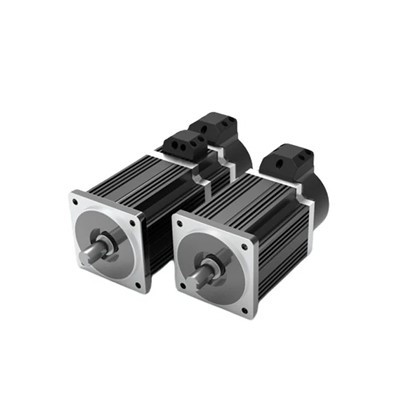
First, let’s nail down why you’d even want to upgrade. I’ve seen it all: a warehouse manager whose old forklift motor was eating through battery life so bad they had to charge twice a shift; a conveyor operator whose motor kept overheating and shutting down mid-package sort; a small manufacturer whose new production line needed more torque than their 10-year-old motor could give. If your motor’s hitting one or more of these, it’s time: it’s wasting too much energy (like, 15-20% more than a modern motor, depending on the type), it can’t keep up with your growing workload, parts are impossible to find for the old model, or safety’s a risk—overheating can start fires, y’all. Upgrading isn’t just a upgrade for upgrade’s sake; it’s fixing a problem you’re already dealing with.
Now, before you even touch a wrench, do your homework. This isn’t grabbing any random motor off a shelf. Start by writing down what your motor actually does day-to-day, not just the specs on the old one. Ask yourself: What’s the average load? If you’re a packaging line, maybe your motor runs 8 hours straight with a consistent load—no spikes. If you’re a forklift, you’ve got those sudden heavy lifts, so torque matters more than steady speed. Then, check the physical space. I can’t tell you how many times someone’s ordered a motor that fits the power specs but is an inch too wide for the old mount. Measure everything: shaft diameter, mount bolt pattern, overall length, even the cable connections. You don’t want to have to rewire your whole machine because you picked a motor with a different plug.
Next, pick the right type of upgrade. Not all upgrades are a full motor swap. Sometimes it’s smaller, cheaper fixes. Let’s break it down, plain and simple:
-
Partial upgrade (parts swap): If your motor’s main body is still good, but the controller or bearings are shot—this is your move. Controllers are the brains, right? An old analog controller can’t handle modern efficiency gains, swapping it for a digital one can cut energy use by a ton. Bearings are the workhorses; if yours are noisy or seizing, replacing them with sealed, high-temperature bearings (super common for industrial motors) is way cheaper than a full motor.
-
Full motor swap (the go-to for most folks): If your old motor’s outdated, underpowered, or falling apart, a full swap’s the way. Here, you’ve got two main types: AC motors vs. DC motors. Wait, don’t zone out here—let’s make it easy. DC motors were the old standard, common in forklifts and small equipment. They’re cheaper to buy upfront, but they have brushes that wear out every few years, so maintenance’s a pain. AC motors? Modern ones—especially permanent magnet AC (PMAC) motors—are way more efficient, no brushes, way less maintenance. Yeah, they’re a little pricier, but over 3-5 years, you’ll save enough on energy bills to make up for it. For example, a forklift with an old DC motor might get 4 hours of battery life; swap to a PMAC motor, and you’re looking at 6+ hours. That’s not a small win for a warehouse.
Wait, but what about high-torque needs? If you’re moving heavy stuff—like construction equipment or big conveyor rollers—you’ll want a motor with high starting torque. Some upgrades let you tweak torque without ditching your mount, which is a huge time saver.
Now, the step-by-step of actually upgrading, because I’ve seen people mess this up and end up with a motor that doesn’t work. Let’s go through it like you’re doing it in your shop:
First, shut everything off—no exceptions. Lockout/tagout, whatever your safety protocol is. I don’t care if you’re in a hurry; a live motor can bite, hard. Disconnect power, remove the old motor’s cables, and label them. Trust me, labeling saves 20 minutes of guesswork when you’re hooking up the new one.
Next, remove the old motor. If it’s been there a while, the mount bolts might be rusted—use a penetrating oil, not a sledgehammer. Once it’s off, inspect the mount and the shaft. If there’s rust or wear on the shaft, you might need to sand it or use a shaft adapter to fit the new motor’s shaft. Don’t skip this; a loose fit will make your new motor vibrate, which kills it fast.
Then, fit the new motor. If you got the specs right, it should bolt right in. If not, don’t force it—sometimes you can get a custom adapter plate (I make these for clients all the time) to fit the old mount to the new motor. That’s way cheaper than modifying the machine. Now, connect the cables: power, sensor wires (if your new motor has them), ground. Double-check the wiring—wrong phase can burn out a motor in 2 seconds. I’ve had a client do that last month, and he had to wait a week for a replacement.
Once it’s wired, test it slow. Don’t crank the throttle all the way. Run it at low speed first, listen for weird noises, check for overheating. If it’s running smooth, then test it under actual load—don’t just run it empty. If you’re nervous, hook up a power meter to make sure it’s using less energy than the old one. That’s your proof the upgrade’s working.
Now, common mistakes I see people make all the time, so you can avoid them:
- Buying the cheapest option: Yeah, a $50 motor might seem like a steal, but if it’s low efficiency or no brand support, it’ll die in a year. I’ve seen folks skip a $20 efficient motor to get a $40 cheap one, then spend $200 in repairs. Spend a little more upfront for a reputable motor, save later.
- Ignoring environmental factors: If your motor’s in a dusty sawmill, or a humid food processing plant, you need a motor with a sealed housing. Open-frame motors will get clogged with dust, burn out fast. I can’t tell you how many sawmill clients have come to me with burnt motors because they skipped the sealed upgrade.
- Not planning for maintenance: Even a good motor needs a little love. If you upgrade, add a monthly check: wipe dust, check connections, grease bearings. That’ll double the motor’s lifespan.
Wait, what about retrofits for old machines that are hard to replace? I work with a lot of old equipment—like 20-year-old conveyor systems that still work fine, just need a motor upgrade. Sometimes you can get a “drop-in” replacement motor that fits the exact old mount, no modifications. That’s perfect for people who don’t want to redo their whole machine.
Another thing: if you’re upgrading for efficiency, there are actually tax incentives sometimes? Wait, no—wait, make sure. In a lot of places, upgrading to high-efficiency motors qualifies for energy rebates. I help clients fill out the forms all the time, so that extra cost of the motor? You might get 10-15% back from your utility company. That’s a big deal for small businesses.
Let me throw in a real example to make this concrete. A guy named Joe runs a small print shop. He had a 15-year-old DC motor running his paper conveyor. It was overheating all the time, would shut down mid-batch, and he was going through 2 sets of brushes a year—costing him $150 each, plus downtime. He upgraded to a PMAC motor. The total cost? $800, including installation. His energy bill went down $40 a month, and he hasn’t had to touch the motor in 18 months. He made his money back in 16 months, and now he’s saving $480 a year. That’s not even counting the downtime he used to lose.
Now, if you’re at the point where you’re thinking about upgrading, don’t guess what you need. Every operation’s different. Maybe you need a small motor for a small pump, or a big one for a forklift. Whatever it is, I’ve got the expertise to help you figure out the right fit—no hard sell, just honest advice. I don’t push you to buy something you don’t need.
So here’s the thing: a drive motor upgrade doesn’t have to be a big, scary project. It’s just about matching the motor to your actual needs, doing the prep work, and avoiding the dumb mistakes that cost you time and money. If you’re ready to stop wasting energy, dealing with breakdowns, or replacing parts every few months, let’s chat. We can go over your machine, your load, and figure out exactly what upgrade’ll work for you—no jargon, no hidden fees, just a motor that does what you need it to, for longer.
Don’t wait till your motor dies on you mid-big job. Upgrade now, and you’ll save yourself the headache later. Hit me up to talk through your drive motor upgrade needs, and we’ll get you set up with the right solution.
DC Motor References
- Electrical Construction & Maintenance. “Motor Upgrades: Boost Efficiency, Cut Costs.” EC&M, 2022.
- U.S. Department of Energy. “Motor Master: A Guide to Industrial Motor Efficiency and Replacement.” DOE, 2021.
- National Electrical Manufacturers Association. “PMAC Motors for Industrial Applications.” NEMA, 2020.
- Machine Design. “Common Drive Motor Upgrade Mistakes and How to Avoid Them.” Machine Design, 2023.
Zibo Auric Mechanical and Electrical Technology Co., Ltd.
As one of the leading drive motor manufacturers and suppliers in China, we warmly welcome you to buy advanced drive motor for sale here from our factory. All customized motors are with high quality and competitive price.
Address: B419, High-tech Entrepreneurship Park, High-tech Zone, Zibo City
E-mail: cui@auricmotor.com
WebSite: https://www.auricmotor.com/
