If you’ve ever worked on a residential plumbing upgrade, a commercial irrigation system, or a small industrial piping project, odds are you’ve come across both PVC and CPVC pipes and connectors. As a piping connectors supplier who fields this question at least a dozen times a week from contractors, plumbers, and DIY homeowners, I get why it’s such a common, confusing ask. Many people mix up PVC and CPVC as if they’re interchangeable after seeing similar fittings at the hardware store, but the answer isn’t a simple yes or no— and getting it wrong can lead to leaks, property damage, or even safety hazards. Let’s break this down the way I explain it to our customers every day, rooted in material science, code requirements, and real-world use cases. Piping Connectors
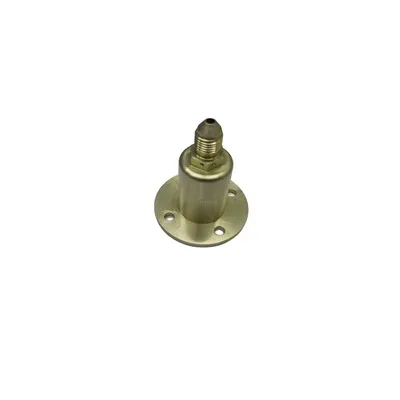
First, let’s clarify exactly what PVC and CPVC are, because the difference is where the confusion starts. PVC stands for polyvinyl chloride, a rigid plastic used for cold-water supply, drainage, venting, and irrigation. It’s formulated to withstand temperatures up to about 140°F (60°C) max for continuous use, and it’s not rated to handle hot water or steam. CPVC, on the other hand, is chlorinated polyvinyl chloride, made by adding chlorine molecules to the PVC formula, which makes it heat-resistant. CPVC can safely handle temperatures up to 200°F (93°C) and is designed explicitly for hot and cold potable water in residential plumbing. That tiny chemical change has huge implications for how each material performs under pressure, heat, and stress.
Now, the core question: can you use a PVC piping connector on a CPVC pipe? The short answer is almost always no, and that’s not just a random rule— it’s tied to three key factors: material compatibility, pressure rating, and code compliance. Let’s start with material compatibility. PVC and CPVC have different chemical compositions, so their adhesives (the solvents used to bond pipes and connectors) are not interchangeable. PVC cement is formulated to soften and fuse PVC molecules, while CPVC cement is made to work with the denser, chlorine-modified CPVC material. But even if you tried to force a PVC connector onto CPVC, the materials themselves won’t bond properly. A PVC connector’s molecular structure is less dense than CPVC, so the joint will be weaker than the pipes themselves, and it can crack or separate under normal water pressure.
Then there’s pressure and temperature rating. Every piping component, whether pipe or connector, has an ASTM rating that tells you its maximum safe working pressure at a given temperature. A standard schedule 40 PVC connector, for example, has a working pressure of 400 PSI at 73°F (room temperature). But that rating drops sharply as temperatures rise: at 140°F, it’s only 210 PSI, and at 180°F, it plummets to just 60 PSI. CPVC connectors, by contrast, are rated for 400 PSI at 73°F and can hold 100 PSI at 180°F— exactly the temperature range for residential hot water. If you use a PVC connector on CPVC hot water lines, the heat will weaken the PVC material over time, even if the initial bond holds. Within a year or two, the connector can become brittle, crack, and cause a leak that can damage walls, floors, or personal belongings. I’ve seen this first-hand: a few years back, a DIY plumber in Denver tried to use PVC connectors for his home’s hot water upgrade, and the connector split on a winter night, flooding his basement and ruining his furnace and washer. That’s the kind of preventable mistake that comes from assuming all plastic pipes are the same.
Wait, but what about cold water applications? Can you use a PVC connector on CPVC for cold lines? Even there, it’s not recommended, for two big reasons. First, most local plumbing codes require that all components in a potable water system be listed and labeled for their specific use. That means a CPVC line must be fitted with a CPVC connector, not a PVC one, to meet code requirements. If a city inspector finds a mix of materials, you’ll have to rip out the fitting and redo the joint, adding time and labor costs. Second, even for cold lines, the connector’s long-term performance matters. PVC and CPVC have different expansion and contraction rates. Cold water lines aren’t just static— they’ll cycle between 50°F winter water and 70°F summer water, and when exposed to freezing temperatures, the pipes can expand. A PVC connector and CPVC pipe will expand and contract at slightly different rates, which puts stress on the joint over time. That stress can lead to micro-cracks that develop into leaks, even if the initial bond looked perfect.
But here’s the thing: it’s not a one-size-fits-all rule, and we do get questions about niche applications where the line feels blurry. For example, can you adapt a PVC line to a CPVC line, maybe for a small connection? Even then, the answer is no— unless you use a transition fitting that’s explicitly made for that purpose. Transition fittings are specialized components that have one end bonded to PVC and the other bonded to CPVC, with a metal or plastic core that accommodates the different material properties. But that’s not the same as using a standard PVC connector on CPVC. Those transition fittings are tested and rated to handle both materials’ pressure and temperature ranges, which standard PVC connectors aren’t.
Another common myth we hear: “My hardware store sells both PVC and CPVC fittings, so they must be interchangeable.” That’s a mistake hardware stores make too, sometimes. Many stores stock a wide range of fittings, but they don’t always label their material ratings clearly. As a supplier, we prioritize making sure every connector we sell is clearly marked with its material (PVC or CPVC) and its ASTM rating, because we’ve seen too many customers grab the wrong one by accident. I always tell contractors to double-check the labeling before buying: a CPVC fitting will almost always be a light gray or off-white, while PVC is a creamy white, but color coding isn’t universal, so never go by color alone. Look for the “ASTM F437” marking on CPVC and “ASTM D1784” on PVC— those are the industry standards that confirm the material is designed for its intended use.
So why do so many people ask this question? It’s usually because of cost or availability. PVC connectors are often cheaper than CPVC connectors, so someone trying to save a few bucks might be tempted to cut corners. Or they might be in a pinch and can’t find a CPVC fitting at the store, so they grab a PVC one instead. But those short-term savings almost always lead to long-term problems. A new CPVC connector might cost a dollar or two more than a PVC one, but fixing a leak from a bad joint can cost hundreds or even thousands of dollars in water damage, not to mention the labor to redo the job. For contractors, that kind of mistake can also lead to callbacks, which hurt their reputation and eat into their profits.
Let’s also talk about safety, especially for potable water systems. CPVC is non-toxic and doesn’t leach chemicals into water, which is why it’s the material of choice for hot and cold drinking water in most residential buildings. PVC, while safe for drainage and cold water, can release chemicals when exposed to high temperatures, which is a problem if it’s used for hot drinking water. Even for cold drinking water, mixing a PVC connector with a CPVC line can create a joint that doesn’t meet NSF/ANSI standards, which certify that materials are safe for contact with drinking water. That’s a big deal for any project that requires compliance with those standards, from new home construction to public works projects.
Now, I’m not here to say PVC is a bad material— it’s perfect for its intended uses: drainage, irrigation, vent lines, and non-potable cold water. But CPVC is a different animal, and its connectors are designed specifically for that use. The key takeaway here is: never use a PVC piping connector on a CPVC pipe, no matter the application. If you’re working on a project that uses CPVC, make sure every connector, adapter, and fitting is rated for CPVC. If you’re in a pinch and need to adapt PVC to CPVC, use a transition fitting that’s specifically made for that purpose, and confirm it’s rated for both materials.
At our company, we see this mistake far too often, and we’re here to help avoid it. Whether you’re a homeowner working on a small bathroom remodel, a plumbing contractor on a commercial project, or an industrial maintenance team updating your piping system, we stock a full range of CPVC connectors, transition fittings, and accessories that meet all industry codes and safety standards. We also offer free technical support to help you pick the right component for your project, answer questions about compatibility, and make sure you’re not making a costly mistake. If you’re working on a piping project and have questions about materials, ratings, or the right connectors for your needs, reach out to our team to connect with our product specialists. We’re not just here to sell parts— we’re here to help you get the job done right, the first time.
Piping Connectors References
- ASTM International. (2022). Standard Specification for Chlorinated Poly(Vinyl Chloride) (CPVC) Plastic Pipe, Schedule 40 and 80, for Hot-Water Distribution. ASTM F437.
- ASTM International. (2021). Standard Specification for Poly(Vinyl Chloride) (PVC) Plastic Pipe, Schedules 40, 80, and 120. ASTM D1784.
- International Plumbing Code (IPC). (2021). Chapter 6: Water Supply and Distribution. International Code Council.
- National Sanitation Foundation (NSF). (2023). Standard 14: Plastic Piping Systems and Components. NSF International.
Jiangxi Zhiyi Machinery Manufacturing Co., Ltd.
As one of the most professional piping connectors manufacturers and suppliers in China, we also support customized service. Please rest assured to wholesale bulk piping connectors in stock here from our factory. If you have any enquiry about quotation, please feel free to email us.
Address: Jiahai Industrial Park, No.2799 Tianxiang Avenue, High-tech Zone, Nanchang City, Jiangxi Province.
E-mail: zgjxzy@163.com
WebSite: https://www.chinazhiyi.com/
