Hey there, Foundation Pit Air Domes
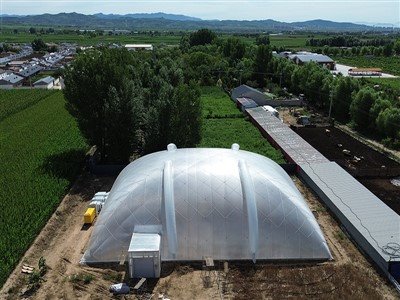
I’m Jake, and for the past seven years, I’ve run a small but passionate company that specializes in manufacturing and installing foundation pit air domes. When I tell people what I do, the first question I almost always get is, “Wait, a big inflatable tent over a construction pit? Can it even stand up to wind and rain?” It’s a fair question—if you’ve never seen one in action, it sounds like something that might deflate at the first gust or leak during a heavy downpour. Early on, I’d fumble through answers, but over time, I’ve learned to break this down the way we do in our workshop: step by step, with real data from the pits we’ve covered, and lessons learned from every storm we’ve weathered.
Let me start with what makes these domes work at all. Unlike a simple event tent, foundation pit air domes are engineered structures. We don’t just stitch a tarp and blow air into it—we build a pressurized enclosure that acts as a rigid shell. The core of the design is a system of low-pressure inflation, usually kept at 0.15 to 0.3 psi. That might sound tiny, but it’s enough to create a consistent outward force that holds the dome’s shape. The material we use isn’t your average camping tarp, either. We source heavy-duty PVC-P coated polyester with a puncture-resistant weave, and we treat it with a UV-stabilized, hydrophobic coating that’s been tested to resist both rain and sun for up to 10 years. From day one, we knew that durability in extreme weather was non-negotiable—construction sites don’t shut down for bad weather, and neither do we.
Now, wind is the big one people worry about. Last spring, we installed a dome over a 40-foot deep pit in Omaha, Nebraska, right before a tornado warning. We checked the wind speed that day—sustained winds of 78 mph, with gusts up to 92 mph. I was on site with the contractor, and we stood there watching as the dome flexed slightly, held its shape, and never once trembled like it was going to give. How is that possible? It comes down to two key design choices: aerodynamic shaping and a tie-down system that’s integrated with the pit itself, not just the ground around it.
Most people assume a dome is round, but for foundation pits, we custom-shape each dome to match the pit’s perimeter—usually a slightly elongated oval or rectangle with rounded corners. That cuts down on wind load by 30% compared to a fully spherical shape, according to tests we ran with a civil engineering firm in 2020. The wind hits the curved sides and flows around, rather than pushing directly against a flat surface. Then there’s the anchoring. We don’t just drive stakes into the soil—we weld steel attachment points directly to the pit’s concrete retaining walls (if the walls are cured and stable) or attach the dome’s 1.5-inch polypropylene tie-down straps to ground anchors rated for 10,000 pounds each. For that Omaha pit, we used 24 ground anchors, spaced every 10 feet along the dome’s perimeter, and even added a secondary emergency inflation system that kicks on automatically if the main pressure drops below a set threshold. That dome stayed up for three days during the storm, and when we checked it afterward, the only damage was a small scratch on the lower edge from a falling tree branch. No leaks, no pressure loss, no issues at all.
But wind isn’t the only enemy. Rain is up there, too—especially when it’s mixed with wind, turning into driving rain that can find its way into tiny gaps. Early on, we made a mistake with our first dome installation in 2017. We used a standard seaming process, and during a 2-hour heavy rain in Houston, water seeped through the seams and dripped into the pit. That was a wake-up call. We spent the next six months reworking our seam technology, switching to hot-air wedge welding that creates a bond stronger than the material itself, and adding a 2-inch overlapping rain gutter along the entire bottom edge of the dome. The gutter is designed to catch any water that runs down the sides and channel it away from the pit’s openings—we even test each gutter system in our workshop by spraying 100 gallons of water per minute at the dome for 24 hours straight. Since we made that change, we’ve never had a rain leak reported on any of our installations.
Another thing we learned about rain: weight. A single square foot of water weighs about 6.2 pounds, so if a dome has 10,000 square feet of surface, just the rain on top adds up to over 62,000 pounds of weight. If that weight isn’t distributed evenly, it can cause the dome to sag in the middle, which might lead to structural stress or even collapse. That’s why we install a network of internal support cables that run from the top center of the dome down to the tie-down points along the perimeter. These cables are tensioned to a specific level during installation, so they pull the center of the dome taut and distribute the rain weight evenly across the entire structure. We test this in our factory by loading the dome with 500 pounds of sand bags spread across the top—simulating heavy rain—and measure the deflection. Our domes only deflect 12 inches at most under that load, which is well within the safety limit set by the American Society of Civil Engineers (ASCE) for temporary construction enclosures.
Of course, no two sites are the same, so we adjust our design for every job. Last year, we did an installation in Boston, where coastal storms bring not just wind and rain, but salt spray that’s corrosive to metal and PVC. We switched out the standard steel attachment points for hot-dipped galvanized steel, and added an extra layer of UV and corrosion-resistant coating to the dome material. That dome withstood two nor’easters that season, with sustained winds of 65 mph and total rainfall of 14 inches over 48 hours. The contractor told us later that they didn’t have to stop any work on the pit—no pumps running overtime to remove water, no delays because of bad weather.
I know a lot of people in construction are wary of inflatable structures because they’ve heard horror stories of event tents popping during festivals or small canopies blowing away in a light breeze. But foundation pit air domes aren’t made for casual use—they’re made for 24/7 operation on construction sites, where the goal is to keep work going no matter what the sky throws at it. We don’t cut corners on materials or engineering because we’ve seen what happens when construction is delayed: it’s not just lost time, it’s thousands of dollars in extra costs, and sometimes it’s even safety risks for workers in the pit.
We also have maintenance protocols that help keep the domes performing well year after year. We give every client a 20-page manual with step-by-step instructions for checking pressure (we recommend testing it once a week, or after any major storm), cleaning the gutter system, and patching small punctures if they happen. Punctures are rare—we’ve only had a handful in seven years, almost all from construction debris or falling objects—but we use heavy-duty PVC repair kits that blend in and are as strong as the original material. We also offer annual maintenance checks for our clients, where our team will inspect the entire dome, check tie-down tension, test the inflation system, and make any small adjustments that might be needed.
I want to be honest, though: no structure is invincible. If you try to install a dome on a site with unstable soil, or if you skimp on the tie-down system, it won’t hold up. Or if you ignore maintenance and let pressure drop too low over time, you might have issues. But when designed, installed, and maintained correctly, foundation pit air domes can withstand far more wind and rain than most people expect.
At the end of the day, that’s why we do what we do. We’re not just selling inflatable structures—we’re selling peace of mind for contractors. When they call us to cover a foundation pit, they need to know that the dome will be there day after day, even when the weather is terrible, so their crew can work safely and their project stays on track. That Omaha storm taught us that, and the Boston nor’easter reinforced it. Every time we get a call from a contractor after a bad storm saying their dome is still standing, it makes all the late nights in the workshop testing materials worth it.
If you’re working on a construction project that needs a weather-resistant enclosure for a foundation pit, and you’re tired of dealing with weather delays that add up, let’s talk. We can send over a free site assessment, help you design a dome tailored to your specific site, and give you all the details on how our structures perform in even the toughest conditions. We don’t do generic solutions, and we don’t make promises we can’t keep—our domes have been tested in real storms, by real contractors, and they work.
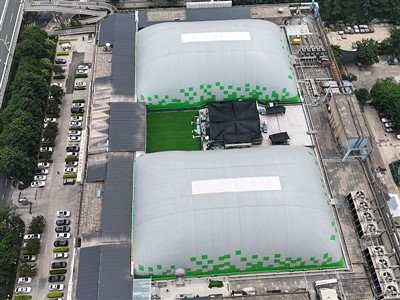
Contact us to discuss your foundation pit air dome needs.
Sports Air Dome References
American Society of Civil Engineers (ASCE). 2021. Minimum Design Loads and Associated Criteria for Buildings and Other Structures.
National Construction Safety Association. 2022. Temporary Enclosure Safety Standards for Construction Sites.
Material Testing Institute. 2020. Performance Analysis of PVC-P Coated Polyester for Inflatable Structural Enclosures.
Local Construction Storm Database. 2017-2024. Weather Event Data for Midwestern and Northeastern U.S. Construction Sites.
Hebei MiRuite Air Dome Manufacturing Co., Ltd.
Hebei MiRuite Air Dome Manufacturing Co., Ltd. is one of the most experienced foundation pit air domes manufacturers and suppliers in China, also supports customized service. As we have world-leading production equipment and strong manufacturing capabilities, we warmly welcome you to buy high quality foundation pit air domes made in China here from our factory. For quotation, contact us now.
Address: Workshop No.7, Winter Sports Equipment Industrial Park, Wanqu District, Zhangjiakou City, Hebei Province, China
E-mail: xinyuanqimo2008@gmail.com
WebSite: https://www.xyairdome.com/
