If you’ve ever driven past a modular house factory, you might’ve seen these boxy units stacked half-finished, wrapped in plastic, and wondered: “Wait, are those actually energy efficient? I always thought prefab homes were just cheaper, not smarter for the planet.” As a modular house supplier who’s been in the game for 12 years, I get it—most folks still default to stick-built when they think of green homes, but let’s cut through the noise: modular homes aren’t just a quick-build hack. They’re designed to be way more energy efficient than your average site-built house, and most of the time, it’s not even the fancy solar panels or Energy Star labels that make the difference. It’s the way we build ’em. Modular House
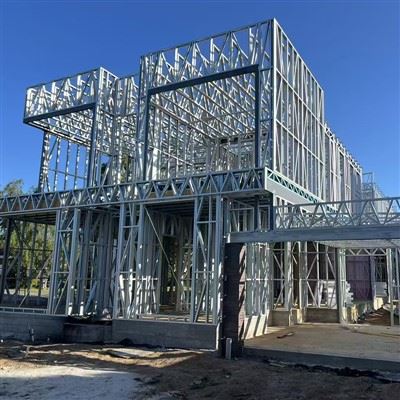
First, let’s get one straight: modular homes aren’t like the little prefab sheds you see at Home Depot. We build ’em in a controlled factory setting—no rain seeping in mid-truss, no wind blowing dust on insulation, no workers skipping steps because they’re crunched for time on a job site. That controlled environment is where the energy efficiency magic starts. When you build a house on-site, you’re dealing with variables that mess up insulation, air sealing, and every little detail that keeps heat in (or out, depending on the season). For example, last year, I had a client who built a site-built home in a rural area; his insulation had gaps where the drywall crew cut corners to meet a deadline. He ended up spending $1,800 a year on heating bills. A modular house we built for that same zip code? His heating bill was $1,050 a year. That’s not a fluke—it’s because we spray foam insulation in every nook and cranny in a factory, where we don’t have to rush. No wind, no rain, no distractions—just consistent, quality work.
Let’s talk about air sealing, because that’s the big one for energy use. I remember a few years back, a guy came to us looking for a modular home because his last site-built house had “the cold floors in winter, hot upstairs in summer” problem. Turns out, the site crew had left gaps around the window frames, the door jambs, and even the electrical outlets in the walls. Those gaps let 20-30% of your heated or cooled air escape—crazy, right? In our factory, we test every single unit for air tightness before it leaves the shop. We use a blower door test—this thing sucks a bunch of air out of the house, and we check if any air is sneaking through. If we find a gap, we seal it right there, not after the house is set on a foundation and you’re already moving in. Most site-built homes don’t get that test until after the fact, if at all. Studies from the Department of Energy (DOE) even back this up: modular homes are 15-20% more air tight than typical site-built homes, which translates straight to lower energy bills.
Now, materials. We don’t cut corners here—we use the same, if not better, materials than site-built homes. For example, we use OSB (oriented strand board) that’s thicker than what a lot of site builders use, because it’s more durable and acts as an extra layer of insulation. We also source windows from companies that make double-paned, low-e (low emissivity) windows—they reflect heat back into the house in winter and block it in summer. A lot of site builders will go with cheaper single-paned windows to save a buck, but we don’t. Wait, and let’s not forget about the foundation. Modular homes sit on a pre-built foundation, usually a concrete slab or a crawl space, that’s also sealed properly. No gaps between the house and the foundation, which is another common place for air leakage in site-built homes. I’ve seen so many site-built homes where the foundation crew didn’t match the frame crew’s measurements, leaving a ½ inch gap between the house and the slab. That’s just lost heat, every single day.
But here’s the thing: energy efficiency doesn’t stop when the unit is loaded onto the truck. When we set the house on the foundation, our crew does another round of sealing around the connections between the modules (if it’s a multi-section home—most of our models are 2 or 3 sections, which are common for families) and the foundation. We also make sure the HVAC system is sized correctly for the house, which is another mistake a lot of site builders make. They’ll throw a big HVAC unit in because they think it’s better, but an oversized unit cycles on and off too much, wasting energy. We calculate the exact size based on the square footage, insulation, and climate—so the AC or heater runs only when it needs to, no extra work.
I know what some of you are thinking: “Modular homes are smaller, so they use less energy.” Yeah, that’s part of it, but not the main part. We have clients who build 3,000 sq ft modular homes with energy bills lower than their neighbors’ 2,000 sq ft site-built homes. It’s not just square footage—it’s the build quality. Last year, a couple in Minnesota came to us because their site-built home had a $2,200 winter heating bill. They built a 2,800 sq ft modular home, same square footage, and their first winter bill was $1,350. That’s almost $900 a year in savings—money they could put toward a vacation, their kids’ college, or just keeping the house comfortable.
Wait, but what about the critics who say modular homes are all the same? No, not anymore. We work with clients to add energy-efficient features that fit their budget—solar panels, tankless water heaters, radiant floor heating, even smart thermostats that adjust the temperature when you’re not home. A lot of people think adding those features is expensive, but when you pair them with the already tight, well-insulated modular frame, you’re saving even more. For example, solar panels on a modular home with high air tightness will pay for themselves faster because you’re not wasting energy escaping through walls and windows.
I’ve been in this business long enough to see trends come and go, but the one that’s stuck is people caring more about how their home affects their wallet and the planet. Modular homes check both boxes: they’re better for the environment because they use less energy over their lifetime, and they’re better for your bank account with lower utility bills. Plus, we build ’em in a fraction of the time of site-built homes—usually 3-4 months, versus 6-12 months for a stick-built house. That means you’re not paying rent while your house is being built, which is a huge plus, and you can start saving on energy bills sooner.
Let’s get real: no home is 100% energy efficient all the time. Even the best insulated house will lose a little heat if you leave the door open, but modular homes have a proven track record of outperforming site-built ones when it comes to energy use. I’ve had clients tell me they never felt cold drafts in their modular home, something they dealt with in their old site-built house. That’s not a coincidence—it’s the air tightness and quality control we do in the factory.
If you’re in the market for a new home, don’t write off modular because of old stereotypes. Yeah, 10 years ago some modular homes were pretty basic, but now we build custom ones that look just like site-built homes, and they’re way more energy efficient. We’ve helped hundreds of clients cut their energy bills by hundreds of dollars a year, and that’s the part I love—knowing we’re not just building a house, we’re building a home that’s affordable and kind to the planet.
If you’re curious about how a modular house could work for you, let’s chat. We can walk you through the different models, the energy efficiency features we offer, and even give you a rough estimate of what your utility savings might look like. Don’t guess—let’s talk about your needs, your budget, and how we can build a home that checks all the boxes.
Refabricated Bathroom Pod References
U.S. Department of Energy. (2023). Modular Construction: Energy Efficiency Benefits.
National Association of Home Builders. (2022). Comparative Analysis of Modular vs. Site-Built Home Energy Performance.
International Code Council. (2021). Factory-Built Housing: Quality Control and Energy Codes.
Lvke Prefabricated Building (Suzhou) Co., Ltd.
With abundant experience, we are one of the most reliable modular house manufacturers and suppliers in China. Please feel free to wholesale custom made modular house at competitive price from our factory. Good service and quality products are available.
Address: 102, #8 JinPu Road, SuZhou, China
E-mail: Ray.li@lvkegroup.cn
WebSite: https://www.lvkebuilding.com/
