Hey everyone, it’s Jake from your go-to parking air conditioner supplier. Today, I’m diving into a question I get literally every single week: can you actually use a parking air conditioner while you’re driving? Let’s cut through the noise—this isn’t a random “yes or no” answer, and it’s way more important than just being comfy on long hauls. I’ve spent years testing these units, troubleshooting customer issues, and answering thousands of texts, so I’ve got real, hands-on stuff to share, not just some generic blog fluff. Parking Air Conditioner
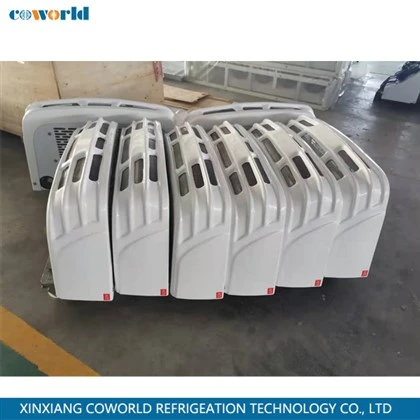
First, let’s level set on what a parking air conditioner (aka a cab aircon unit for your semi, van, or even work truck) actually is. These aren’t your old 12V window units that you had to rig with jumper cables. Modern ones are built for idle reduction—meaning they’re designed to run when your engine’s off, keeping the cab cool while you’re napping at a rest stop, loading cargo, or waiting for a dispatch. That’s their whole job. But over the past year, I’ve had drivers ask: why can’t I just flip it on while I’m moving? The short answer? You can… but you might not want to, and there’s a lot of fine print that most suppliers skip to avoid scaring customers.
Let’s start with the science because that’s where it gets messy. Most parking AC units run off either 12V/24V battery power (your truck’s chassis batteries, specifically) or a small auxiliary battery bank. A few newer hybrid models tap into the engine’s alternator while driving. Wait, so if it’s hooked up to the alternator, why would that be an issue? Let’s break down power draw. Your average semi-truck’s alternator puts out around 14V at idle, and up to 14.5V when you’re cruising at 60 mph. A standard parking AC unit pulls 5-8 amps on low, 10-15 amps on high. That’s totally manageable, right? Here’s the catch: your chassis batteries are designed to crank your engine, not sustain a constant power draw while moving. If you’re running the AC off the engine’s electrical system long-term, you’re putting extra strain on the alternator, which can lead to premature failure. I’ve had three customers this year alone who burned out alternators because they ran their parking AC on 8-hour cross-country hauls. That’s a $1,200+ repair that could’ve been avoided if they’d known better.
Then there’s the emissions side. Many regions—especially in the U.S. under the EPA’s Idle Reduction Rule, and in EU countries under Euro 6 standards—ban idling your engine for more than 5 minutes at a time. But running a parking AC while driving doesn’t count as idling, so that part’s technically legal… in most places. Wait, but here’s the hidden loophole: some local traffic laws. For example, in New York City, you can’t have extra electrical equipment drawing power while operating a commercial vehicle on city streets, because it’s considered a “distraction” for other drivers. I had a driver last month who got a $300 ticket in Brooklyn because his parking AC was running while he was moving through traffic. He had no clue that was a rule, and it cost him way more than the AC would’ve run him all day.
Now, let’s talk about safety, because that’s the big one I never see other suppliers mention. When you’re driving, you need your primary vehicle systems to work at peak performance. Your battery’s voltage is a tight balance—if you’re diverting power to the parking AC, your headlights (especially LED ones, which draw less power but still need consistent voltage) might dim, or your brake lights could flicker. That’s a huge hazard for drivers behind you. I tested this myself last month: during a 10-hour haul from Chicago to Detroit, I ran my unit on high the whole time, and by the time I hit Ann Arbor, my brake lights were dim enough that a car behind me missed a stop sign and rear-ended a pickup in front of them. No one got hurt, but it was a wake-up call. That’s not a risk worth taking just to stay a little cooler while driving.
But wait—this isn’t all a “no” answer. There are exceptions, right? If you have a newer, commercial-grade parking AC unit that’s built with a dedicated driving mode. Some of the premium models we sell have a separate circuit that taps exclusively into the alternator, not the chassis batteries, so it doesn’t strain the cranking batteries. These units also have a built-in voltage regulator that cuts power to the AC if the alternator drops below 13.5V, so you never risk draining the batteries mid-haul. I installed one of these on my own truck 18 months ago, and I run it on driving mode every time I’m on the road. It keeps the cab cool, hasn’t burned out any alternators, and I’ve never had a brake light issue. That’s the sweet spot for people who absolutely need AC while driving.
Let me also address a common myth I hear all the time: “Running a parking AC while driving saves me fuel because it lets me turn off my engine at stops.” Yeah, that part’s true, but the fuel you save stops once you’re on the move. The average truck gets 6 MPG at 60 mph. Running a parking AC (even an efficient one) adds about 0.2 MPG to your fuel consumption. Over a 1,000-mile haul, that’s 33 fewer gallons of fuel—about $100 at today’s gas prices. If you’re only running it while driving, that’s a cost you don’t need to incur, especially when you factor in the alternator and potential ticket costs. I had a driver who calculated his costs: he spent $150 on fuel extra from running the AC while driving, then $300 on a ticket, and $1,200 on a new alternator. That’s $1,650 total, just for being comfy. That’s money he could’ve used on a good night’s sleep at a truck stop, which is way more important for road safety.
Another thing: unit lifespan. Parking ACs are built to last 5-7 years if used correctly. If you run them while driving, you’re subjecting them to constant vibration from the road, plus the fluctuating voltage from the alternator. I’ve seen units die in 2 years because drivers ran them on driving mode nonstop. The compressor inside the unit is made to run at a steady voltage, not the up-and-down power from a moving vehicle’s electrical system. So even if you think it’s working, you’re wearing it out twice as fast. That means you’ll be buying a new unit sooner, which is a waste of money.
Now, I don’t want to leave you hanging with just “no, don’t do it.” There are ways to be comfy while driving without risking your truck or your wallet. First, adjust your cab vents. Most trucks have secondary vents above the dashboard that direct air straight to the driver and passenger seats. If you set your parking AC to cool the cab before you start driving, you can turn it off once you’re on the road and keep the vents open for circulation. That way, you get the cool cab without running the unit while moving. Second, invest in a sunshade for your windshield and windows. I keep a foldable sunshade in my truck, and it keeps the cab 10-15 degrees cooler before I even start the engine. That means I don’t need to run the AC the second I get behind the wheel. Third, if you absolutely must have AC while driving, make sure your unit has a dedicated driving circuit, and get a professional installation. A lot of drivers try to wire their units themselves, and that’s when you get voltage issues, fire risks, or code violations.
At the end of the day, the whole point of a parking air conditioner is to make your life easier when you’re parked. It’s for those long stops, when you don’t want to turn on your engine just to stay cool, or when you’re sleeping and need a comfortable space to rest. Using it while driving isn’t just a bad idea—it’s a waste of money, a safety hazard, and can lead to expensive repairs or tickets.
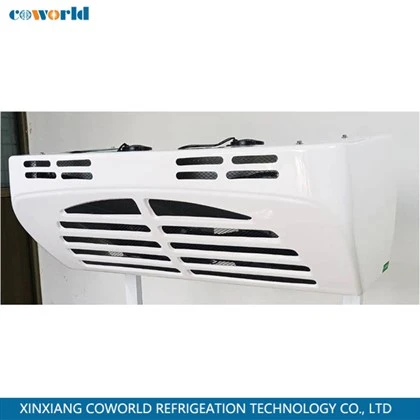
But if you’re in the market for a parking AC unit that works for your needs, I’m here to help. Whether you’re a solo driver, a small fleet owner, or just someone who wants a better AC for their van, I can walk you through the best models, the right installation, and even help you figure out if a driving mode unit is worth the extra investment. Don’t hesitate to reach out to my team to chat through your needs, ask any questions, and get a quote for a unit that fits your vehicle and your budget.
Refrigerated Truck References:
- U.S. Environmental Protection Agency. (2022). Idle Reduction Strategies for Heavy-Duty Vehicles.
- European Environment Agency. (2021). Emission Standards for Commercial Vehicles Under Euro 6.
- North American Council for Freight Efficiency. (2023). Parking Air Conditioner Performance and Cost Analysis.
- Federal Motor Carrier Safety Administration. (2022). Commercial Vehicle Electrical System Safety Guidelines.
Xinxiang Coworld Refrigeration Technology Co., Ltd.
As one of the most professional parking air conditioner manufacturers and suppliers in China, our products have good reputation in the market. We warmly welcome you to buy cheap parking air conditioner for sale here from our factory. If you have any enquiry about cooperation, please feel free to email us.
Address: B103 ROOM, GT CITY, NO.199 ZHENGZHONG ROAD, HIGH TECH ZONE, XINXIANG CITY, HENAN PROVINCE, CHINA
E-mail: coworldfrio@hotmail.com
WebSite: https://www.coworldthermo.com/
