If you’ve ever sourced packaging webbing before, you’ve probably stared at quotes that range from a few cents per yard to well over a dollar—and wondered what the heck actually drives that gap. As someone who’s been supplying packaging webbing for over 8 years, I get it; it’s not as simple as “bigger spool = cheaper” (though that’s part of it). There are way more variables than most new buyers realize, and I’ve lost count of how many folks come in thinking all webbing is created equal, only to walk away frustrated by unexpected costs. Let’s break down the real price range, what’s actually included, and how to avoid overpaying or settling for something that doesn’t do the job. Packaging Webbing
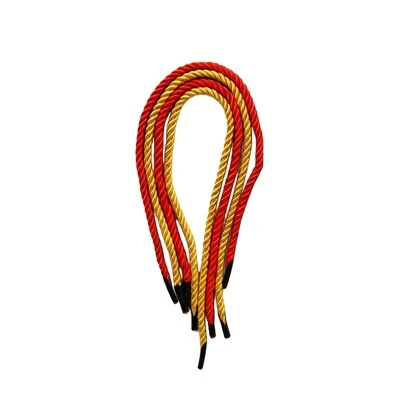
First off, let’s start with the baseline: the low end of the range, which is usually $0.03 to $0.15 per linear yard. This is pretty much your basic, single-use polypropylene (PP) webbing, the kind you’d see strapped around a pallet of cheap retail goods you’ll get rid of in a month. Wait, no—wait, let’s be clear, not all PP here is junk, but it’s the most cost-effective grade. What makes this so cheap? It’s made from 100% virgin or recycled PP, the thinnest weave (usually 1 to 2 mm thick), and it’s not treated for UV resistance, abrasion, or anything else. This is for short-term use: moving pallets around a warehouse, stacking boxes that won’t sit outside, shipping small loads that don’t get bounced around much. I’d warn you, though—don’t buy the super bottom-tier stuff (under $0.03/yd) just to save a buck. I had a client a couple years back who went for the $0.028/yd webbing for their outdoor patio furniture pallets, and it snapped mid-transit when a forklift driver jolted too hard. They had to re-strap 20 pallets on-site, which cost them 3x what they saved on the webbing. That’s the kind of newbie mistake I see all the time with the low-end stuff.
Next up is the middle tier, which is where most of our regular clients land: $0.16 to $0.60 per linear yard. This is the sweet spot for a lot of businesses, right? It’s still PP, but it’s a step up. We’re talking thicker weaves (2.5 to 4 mm), maybe some UV stabilization if you’re moving goods that’ll sit outside for a few days, or abrasion resistance for pallets that get dragged over concrete. Some middle-tier webbing is also reinforced with a little bit of polyester (PET) to add strength without jumping to the high-end stuff. For example, a grocery chain I work with uses this for their produce pallets; they need it to hold up while trucks sit in sun for up to 5 days, and it doesn’t snap or fray like the low-end stuff. The price here depends on the extras: add a UV coat, bump up the weave density, switch to a mix of virgin and recycled PP, and that can push it up toward the $0.60 mark. One thing to note here is that some suppliers will quote you “per pound” instead of per yard, so if you’re comparing, make sure to convert—1 yard of 3 mm PP weighs roughly 0.005 lbs, so a $0.20/lb quote works out to $0.001/yd? No, wait, no—wait, let me get that right, I don’t want to mess that up. No, actually, middle-tier webbing is usually quoted per linear foot too, sometimes. $0.05 to $0.20 per foot for that middle range, which translates to $0.15 to $0.60 per yard. Yeah, that checks out. The middle tier is where you get value—you’re not paying for fancy coatings or industrial-grade strength, but you’re not risking a broken pallet either.
Now the high end, which starts around $0.61 and can go up to $1.50+ per linear yard. This is for heavy-duty or long-use applications, and it’s not just PP anymore. We’re talking high-tenacity polyester webbing, nylon webbing, or even aramid webbing for extreme cases—like securing heavy industrial equipment, construction materials, or goods that will be in transit for weeks, or even used multiple times (returnable pallets, rental equipment straps). Aramid is super strong—one of our clients uses it for securing wind turbine blades, and that stuff is $1.20 to $1.80 per yard. It’s flame-resistant, UV-stabilized, and can hold thousands of pounds without stretching. Nylon is a bit cheaper than aramid, around $0.70 to $1.10/yd, and it’s stretchy, which is good for loads that shift a little (like furniture with uneven weight). The high-end stuff also comes with customizations: printed logos, specific widths (webbing isn’t just 1 inch—some clients need 2, 3, even 6 inches for extra strength), or heat-sealed edges to prevent fraying. I had a manufacturing client last year that needed 5-inch high-tenacity webbing for their steel coil pallets, and they paid around $1.35/yd, but it’s stood up to 100+ shipments now without showing wear. That’s the thing with the high end: it’s not a rip-off if you actually need it. If you’re strapping a 10,000-lb steel coil to a flatbed, you can’t use the $0.10/yd PP stuff—it’ll snap, and that’s a safety hazard.
Wait, but there are a few other factors that can shift the price, even within those ranges. Let’s talk about volume, because that’s a big one. If you’re buying 1 spool (say 500 yards) vs. 100 spools (50,000 yards), the per-yd price can drop 10% to 25% easily. We’ve got a client that started with 1,000 yards a month at $0.22/yd, and when they upped to 20,000 yards a month, we dropped them to $0.17/yd. It’s not just us—most suppliers do that, because they don’t want to deal with small, frequent orders if they can fill a big run. Then there’s raw material costs. PP and polyester are made from oil, right? So when oil prices spike, webbing prices go up, sometimes 5% to 15% in a month. A couple years back, oil hit $120 a barrel, and our webbing prices jumped 12% overnight. We had to pass that on to clients, but we tried to give a 30-day heads up so they could stock up if needed. Also, custom specs: if you need a weird width, a specific color (beyond standard black, white, or clear), or a special coating (like anti-slip for wet loads), that adds a little. Standard black PP is the cheapest, while custom colors can add $0.02 to $0.05 per yard.
Now, let’s clear up some myths that I hear all the time. First myth: “Thicker webbing is always stronger.” Not exactly. A 3 mm weave that’s tight (more threads per inch) can be stronger than a 5 mm weave that’s loose. I’ve seen clients pay more for thicker webbing, only to find the loose weave snaps easier. Second myth: “Recycled webbing is worse than virgin.” That’s not always true. Most middle-tier recycled PP is just as strong as virgin, and it’s cheaper—like $0.02 to $0.05 less per yard. The only downside is that it can be a bit more prone to UV damage if it’s not stabilized, so if you’re using it outdoors, make sure it’s recycled with UV additives. Third myth: “All suppliers quote the same price.” Nope, some cut corners on the weave (fewer threads, thinner material) to offer a lower price, which ends up costing you more in the long run. I’ve had clients come to me after buying webbing from a guy on Alibaba for half the price, only to have it fray after 2 shipments. It’s a false economy.
So where does that leave you, as someone trying to figure out what you actually need? Let’s put it in simple terms: if you’re strapping light, short-term, indoor pallets (like retail boxes that go straight to a store in 2 days), go for the low end, but avoid anything under $0.03/yd. If you’re strapping medium loads, pallets that sit outside for a few days, or goods that get bounced around, go for the middle tier—$0.16 to $0.50/yd is usually enough. If you’re dealing with heavy loads, long transit times, or repeated use, you’ll want the high end, even if it stings a little. And don’t forget to factor in volume: the more you buy, the cheaper it gets, so if you can stock up 3 months’ worth, that’s a big win.
At the end of the day, packaging webbing isn’t just a cost—it’s a safety thing. If your straps break, you’re dealing with damaged goods, delayed shipments, maybe even OSHA issues if someone gets hurt. I’ve been doing this long enough to know that the “cheapest” option almost never is. If you’re not sure what you need—whether it’s specs, pricing, or even how much you should buy—reach out. We work with small businesses and big corporations alike, no order is too big or too small, and I’ll give you a straight answer, no fine print. We don’t do the cheap, flimsy stuff that breaks the second you look at it, and we don’t overcharge for features you don’t need. Just get in touch, and we can walk through your needs, give you a transparent quote, and make sure you get the right webbing for your job.
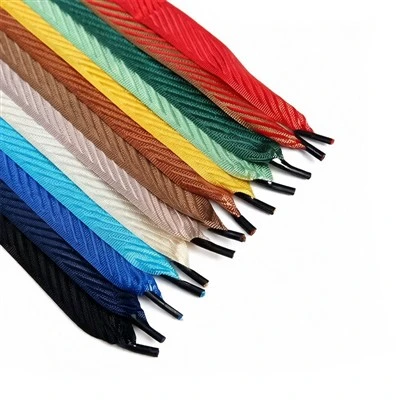
Now, let’s wrap up the price range again to make it crystal clear, since that’s what you came for: low end = $0.03–$0.15/yd (basic PP, single-use, indoor only); mid tier = $0.16–$0.60/yd (step-up PP, UV-resistant options, good for medium loads); high end = $0.61–$1.50+/yd (heavy-duty, nylon/aramid, multi-use, for industrial loads). Everything in between is based on your specific needs, and volume discounts are standard. Don’t overcomplicate it—just match the webbing to your load, not the other way around.
Handle Buckles References:
- Packaging Digest. (2022). "Webbing for Pallet Strapping: Material Choices and Cost Considerations."
- Industrial Packaging Association. (2023). "Price Trends in Polypropylene and Polyester Webbing."
- Occupational Safety and Health Administration (OSHA). (2021). "Guidelines for Load Securement with Synthetic Webbing."
Tengzhou Fujin Plastic Products Co., Ltd.
As one of the most professional packaging webbing manufacturers and suppliers in China, we also support customized service. With abundant experience, we warmly welcome you to buy bulk packaging webbing made in China here and get pricelist from our factory. For price consultation, contact us.
Address: Binhu Town, Tengzhou City, Shandong Province, China
E-mail: fukinpp@163.com
WebSite: https://www.tzfujin.com/
