Hey there! If you’ve ever worked in the agriculture spare parts game, you know how brutal a bad delivery can be. Last year, I had a customer—farmer running a 5,000-acre corn operation in Iowa, wait, no, actually up in Minnesota, he needed a new combine hydraulic pump for harvest season. His old one crapped out two weeks before he was supposed to cut 2,000 acres of soybeans. We shipped it with a cheap bubble wrap, tossed it in the back of a standard van, and it arrived cracked. The delay cost him like $12,000 in lost crops. That’s when I realized: transporting ag machinery parts isn’t just about sticking something in a box and sending it. It’s specific, it’s critical, and if you mess it up, you’re not just losing a part—you’re messing up a farmer’s entire year. I run a small ag spare parts supplier, been at this for 11 years now, and I’ve fixed way too many shipping messes to count. Today, I’m spilling the real stuff—no fancy textbook jargon—on how we get parts to our customers without turning them into doorstop junk. First off, you can’t treat all ag parts the same. A tiny spark plug is different from a 200-pound tractor transmission, right? So let’s break this down by the do’s, the don’ts, the hidden gotchas, and what we’ve learned the hard way that actually works. Agriculture Machinery Spare Parts

Let’s start with the most basic thing: prepping the part like it’s going to war (because it is). Most of us grab bubble wrap or a box and call it a day, but that’s lazy. Let’s say we’re packing a precision component—like a injector nozzle for a diesel engine. If that little thing gets even a spec of dust or a tiny chip, it’s toast; no amount of cleaning fixes it, and farmers will throw it right back at you. For those super sensitive parts, we first wrap them in a layer of anti-static foam—way better than regular bubble wrap, and cheap too—because static can fry electronics (even the tiny ones in modern tractors). Then we add a thick layer of custom-cut foam padding that fits the exact shape of the part, no empty space. Empty space equals movement, and movement equals breakage. I once watched a 40-pound sprocket rattle around a generic box until its teeth were bent, just because we didn’t fill the gaps. So fill every nook with crumpled kraft paper or that leftover foam from old shipments—whatever works, just don’t leave air pockets. For metal parts that don’t have electronics, like a cultivator tine or a gear, we hit ‘em with a light coat of corrosion inhibitor first. Ag parts sit outside in rain and mud all the time, so even a little moisture in the box during shipping can turn a good part into a rusted hunk. We used to skip that, until a customer in North Dakota got a set of plow shanks covered in rust and couldn’t use them until he sandblasted them—delayed his spring planting by three days, which is a huge deal up there.
Next up, choosing the right packaging. Cardboard boxes seem like a no-brainer, but not all boxes are made equal. The standard single-wall box is fine for small parts, but anything over 50 pounds? You need double-wall, no exceptions. I’ve had a double-wall box get dropped from a pallet and still hold tight, while a single-wall box split open like a soda can and spilled a transmission filter all over a warehouse floor. Also, label the boxes clearly—we put big, bold “FRAGILE” stickers, but not just the boring ones everyone ignores. We add custom stickers that say “AG EQUIPMENT PART – DO NOT DROP” because shippers see “FRAGILE” and treat it like a glass vase, but our sticker means “this is worth money, handle with care.” And for parts that stick out—like a long hydraulic hose or a drill rod—we don’t bend ‘em. Ever. Bend a hydraulic hose, and the interior layers split, leading to leaks when the farmer uses it. Instead, we make or buy PVC tubes that are exactly the length of the hose, slide it in, cap both ends, and then pad the outside. No bending, no kinks, period. That’s a mistake we made early on: shipping a 10-foot drill rod bent in a box, and the customer had to straighten it, which made it weak and dangerous to use. Now we never do that.
Then there’s mode of transport. For small, same-state orders (like a part going 50 miles down the road to a local farm), we use our own small delivery van. We control every step—we load it, we unload it, we don’t toss boxes, we strap them down so they don’t slide around while driving. For longer hauls, 500 miles or more, we use specialized freight companies that handle agricultural equipment parts, not just random courier services. A lot of general couriers treat ag parts like they’re regular packages, stacking heavy stuff on top of them, which is a death sentence. We once used a big-name courier for a tractor alternator, and they stacked a 100-pound generator on top of the box—crushed the alternator’s housing, $800 loss. Now we only work with freight companies that have a track record with ag parts, that mark their trucks with “AG PARTS” so their drivers know to handle ‘em gentle, and that don’t stack heavy loads on top of smaller, sensitive boxes. Also, timing matters. Harvest season is September to November, spring planting is March to May—those are the busiest times for farmers, and they can’t wait for a slow shipment. We book our freight 2 weeks in advance during those times, not the day before, because if you wait, all the good carriers are booked, and you’re stuck with the one that rushes your stuff.
Wait, one big thing people miss: documentation. You’d think that’s just for customs, but no. We put a packing slip inside every box, and another one taped to the outside, that lists every part, its part number, and how to handle it. Also, we mark the weight of the box on the outside—carriers charge by weight, but if they see a box marked 150 pounds, they don’t try to carry it with one hand and drop it. That sounds silly, but it works. We had a driver pick up a box marked 15 pounds that was actually 50, and since we didn’t mark it, he threw it like a football—broke the part. Now we never skip marking weight and contents.
And let’s talk about tracking. We use real-time tracking for every shipment, not just the old “delivered on X date” garbage. If a box is stuck in a warehouse in Chicago, we can check it, call the carrier, and fix it before it’s too late. A customer in Kansas once had a loader bucket part stuck in a freight hub for 3 days during planting season—we saw the delay in tracking, called the carrier, got it prioritized, and it made it on time. If we didn’t track, that customer would’ve been stuck with a broken loader, which would’ve cost him thousands. Tracking isn’t just for us—it’s for the customer, so they know when to expect the part, and can schedule their mechanic to install it, not wait around all day.
Now, the don’ts. Don’t use old, beat-up boxes. I know it’s tempting to reuse that box from last month’s shipment, but if it’s torn or has weak corners, toss it. Don’t skimp on padding. That extra $5 in bubble wrap or foam is nothing compared to the cost of a broken part. Don’t ignore special instructions. If a part has a specific handling note—like “do not lay flat”—we tape that to the box, and make sure the carrier writes it on their manifest. We had a battery pack for a electric tractor once, and it said “keep upright at all times” on the part. We told the carrier, but they still laid it flat, and the acid leaked—ruined the battery. Now we make those instructions huge on the box, like 3-inch letters, so no one misses it.
Another thing: last year, we started using climate-controlled shipping for parts that can get ruined by extreme temps. Like, a diesel injector that’s cold enough can crack if it’s in a freezing truck for 3 days, or a rubber seal that gets too hot in a freight truck in Texas can melt. We don’t do it for every part, but for sensitive ones, it’s worth the extra cost. We had a customer in Texas get a set of rubber track pads last summer during a 105-degree heatwave—shipped regular, the pads warped, he couldn’t install them. We switched to climate-controlled, and haven’t had that problem since.
Here’s the real tea: at the end of the day, transporting ag parts is about caring more than the average shipper. Most places see it as a commodity, but we see it as a lifeline for farmers. That’s why we’ve spent 11 years refining this process, fixing every mistake we’ve made, and listening to our customers. If you’re a farmer sick of waiting for broken parts, or someone needing reliable ag spare parts, hit us up to chat. We’ll make sure your parts show up when you need ‘em, in one piece, no headaches.
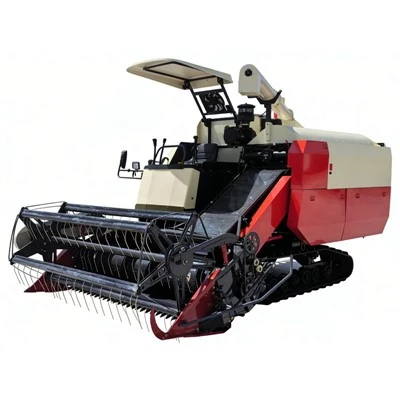
Now, let’s get this right—don’t make the mistake I made back in ‘12 with that combine pump. Don’t cut corners. Prepping, packaging, transport mode, tracking, it all matters. Every part we ship is a piece of a farmer’s operation, and we treat it like that. So next time you need an ag spare part, remember this: it’s not just a box. It’s the difference between planting on time and losing a crop. It’s the difference between a tractor running and sitting in the shed. We get that, and that’s why we do it the right way, every single time.
Farm Tractor References:
- USDA Agricultural Machinery Transportation Guidelines, 2021.
- International Association of Agricultural Equipment Distributors (IAAED) Shipping Best Practices, 2022.
- Occupational Safety and Health Administration (OSHA) Guidelines for Handling Heavy Agricultural Components, 2020.
Huzhou Liangyi Agro Machinery Co., Ltd.
As one of the most professional agriculture machinery spare parts manufacturers and suppliers in China, we have world-leading production equipment and strong manufacturing capabilities. Please rest assured to wholesale advanced agriculture machinery spare parts from our factory. Contact us for more cheap products.
Address: High-Tech Industrial Zone, Huzhou City, Zhejiang Province, China
E-mail: Liangyi_agro@126.Com
WebSite: https://www.cnliangyi-agro.com/
