Let’s cut to the chase: as someone who’s spent the last 12 years sourcing and selling motorcycle inner tubes (yes, I still get grease under my fingernails from helping load shipments when my team is swamped), I’ve seen more damaged tubes than I can count. I’ve pulled one too many flat tow-truck jobs because a rider didn’t spot a tiny flaw before it turned into a mid-road disaster, and I’ve also had customers send back “unused” tubes that were actually damaged in storage because they didn’t know what to look for. This isn’t just about avoiding a flat—this is about keeping you safe on a bike you rely on for everything from daily commutes to weekend backroad adventures. Let’s break down the real, actionable signs of a damaged motorcycle tube, not the vague stuff you’ll see on random forum posts. Motorcycle Tube
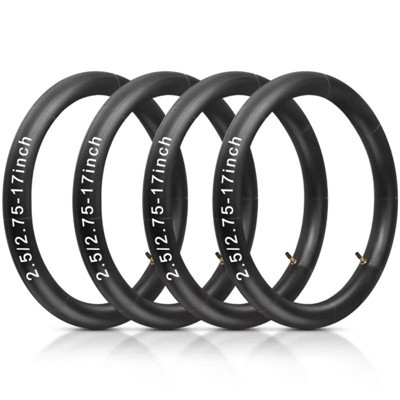
First, let’s get one thing straight: not all damage happens the same day you mount the tube. Some flaws sneak up on you over weeks, some show up immediately, and some are so tiny you’ll miss them until you’re 10 miles from home. I once had a customer call me panicking at 7 a.m. saying his new tube blew out on the highway—turns out the factory had a tiny burr on the valve stem that he didn’t check, and it had rubbed a hole in the tube within 20 miles. That’s the kind of avoidable mistake I want to help you fix.
Let’s start with the most obvious, but most overlooked, sign: visible abrasions or cuts on the tube surface. This is the one you can spot before you even inflate the tube, if you take 60 seconds to inspect it. When do these happen? They can occur during manufacturing (rare, but it does— I’ve caught three bad batches in the last year), during shipping when tubes are stacked with sharp cardboard edges or other metal parts, or when you’re mounting the tube yourself. Here’s the thing: not every scratch is a death sentence. A superficial, thin scratch that’s less than a quarter-inch long, running parallel to the tube’s length, and doesn’t feel like it’s dug deep enough to break through the rubber might be fine—if you’re mounting it correctly. But a cut that’s jagged, deeper than the thickness of a credit card, or runs perpendicular to the tube’s seam? That’s a problem waiting to happen. I once let a customer send back a tube with a half-inch cut on the side because he thought it was fine—he ended up stranded an hour later when that cut blew out at 55 mph. Pro tip: run your clean, dry fingers all over the tube (once it’s off the rim, obviously) after you take it out of the packaging. If you catch any snags or rough spots, don’t use it. It’s not worth the risk.
Next, the valve stem is by far the most common point of damage, and it’s the one that catches the most riders off guard. I’ve seen three types of valve stem damage: cracks, splits, and leaks at the base. Let’s start with cracks. If your valve stem has a tiny, hairline crack anywhere along its length—especially where it attaches to the tube’s body—don’t even think about inflating it. That crack will widen as you add air, and eventually, the valve will blow right out. I had a customer last month who tried to glue a crack in his valve stem with super glue; it lasted 10 miles before the valve let go, and he crashed his cruiser into a curb. Splits are even worse—these are usually the result of over-tightening the valve cap, or forcing the stem through a rim hole that’s too small. If the valve stem is split down the middle, it’s useless. And the leaks at the base? If you inflate the tube and you can hear a hissing sound right where the valve meets the tube’s rubber, that’s a sign the rubber around the valve stem is cracked or has a weak seal. Sometimes that’s because the tube was stored in direct sunlight for too long (sunlight breaks down rubber compounds), or the valve wasn’t bonded correctly during manufacturing. I once had a shipment come in where 12 out of 50 tubes had faulty valve seals—we caught it during inspection, and sent replacements right away, but the customer who almost got those bad tubes would have been furious.
Now, the less obvious signs: leaks that don’t come from cuts or valves, and bulges in the tube. Bulges are weird, and most riders don’t know what they are until they feel a lopsided wheel. A bulge happens when a spot on the tube’s rubber has stretched too far—usually because you overinflated the tube, or you mounted a tube that was too small for your rim size. Think about it: if your tube is rated for 120 psi, and you pump it to 150 psi to “fix” a soft spot, the rubber will start to bubble out in the weakest areas. That bulge is a ticking time bomb. It can rupture at any time, especially when you hit a pothole or go over a speed bump. I once had a mountain biker come to me with a bulge in his road bike tube—he’d mounted a motorcycle tube (don’t ask) that was way too small for his rim, and the bulge was so big it looked like a small balloon sticking out of the tire. He replaced it immediately, and told me later that would have been a bad crash on his way to a race.
As for leaks that aren’t from cuts or valves: if you inflate your tube, let it sit for 24 hours, and it’s completely flat when you come back, that’s not normal. Wait—no, let’s clarify: that’s normal only if you have a tiny pinhole. But if it goes from full pressure to flat in 12 hours, and you can’t find any cuts or valve issues, that’s a sign of internal damage. Where does that come from? Usually, when you pinch the tube between the rim and the tire bead during mounting. I call that “pinch flat damage.” You know that sound you hear when you’re forcing a tire onto the rim, and you hear a little pop? That’s the tube pinching, and it can create a tiny, internal hole that doesn’t show up until you’ve ridden it for a few days. I see this all the time with new riders who try to mount their own tires without the right tools. The hole is so small that when you first inflate the tube, it holds air, but as you ride, the pressure and movement make the hole expand, and suddenly you’re stuck on the side of the road. The fix? When you mount a tube, inflate it just enough to take shape (like a deflated balloon), and run your fingers all around the inside of the tire bead to make sure the tube isn’t tucked under the bead anywhere. That’s the number one way to avoid pinch damage.
Another sign that’s easy to miss: discoloration or brittleness in the tube rubber. If your tube looks chalky, or has turned a dull gray (instead of the deep black of new rubber), that’s a sign it’s been degraded by heat, UV light, or old age. Motorcycle tubes are made of natural rubber or synthetic compounds, and they break down over time—even if they’re never used. I’ve had customers bring me tubes that were stored in their garage for five years, and they’re so brittle that if you bend them, they crack in half. How do you avoid this? Don’t buy tubes that have been sitting on a shelf for more than two years. I make sure my inventory is rotated every six months, so every tube we ship is fresh, with a manufacturing date no older than 12 months. If a tube feels sticky or gooey when you touch it, that’s also a sign of degradation—heat has made the rubber too soft, and it will leak or blow out easily.
Wait, let’s talk about a common mistake that riders make that causes tube damage: mismatched tube size. I can’t tell you how many times I’ve seen a rider buy a tube that’s rated for a 17-inch rim for their 18-inch rim, or a tube for a 150-series tire for a 110-series. Mismatched size is one of the top causes of premature tube failure. If the tube is too small, it will stretch beyond its limit when inflated, leading to bulges and tears. If it’s too big, it will bunch up inside the tire, creating folds that rub against the tire bead until they wear through. I once had a customer who bought a “one size fits all” tube from a big-box store, and it bunched up so bad that when he hit a rock, the tube tore right down the middle. The good news? It’s easy to check the size: look on the sidewall of your tire for the numbers—like 120/70 R17 for a front tire, or 150/70 R17 for a rear. The tube you buy needs to match both the rim size (the last number) and the tire width, or it won’t fit right. If you’re not sure, just reach out—we’re happy to help you pick the right size for your bike.
Let’s wrap this up with a quick checklist you can use next time you handle a tube, whether it’s a new one or a spare you’ve been sitting on:
- Inspect the surface for cuts, abrasions, or snags—run your clean fingers all over it.
- Check the valve stem for cracks, splits, or leaks at the base.
- Look for bulges or lumps in the tube’s body.
- Check the rubber: is it brittle, chalky, or discolored? If yes, skip it.
- Confirm the size matches your tire and rim—no “one size fits all” shortcuts.
I’ve been in this business long enough to know that most of the damage we see is avoidable. Riders get busy, they cut corners, they assume a tube is fine because it looks good on the packaging. But a little time spent inspecting your tube can save you hours of towing, hundreds of dollars in repairs, and the biggest headache of all: being stranded on the side of the road in the middle of nowhere. If you need fresh, high-quality motorcycle tubes that are manufactured to strict standards, inspected before they leave our facility, and sized correctly for every make and model, don’t hesitate to reach out to our team. We don’t sell generic tubes—we sell tubes that are built to handle the demands of commutes, off-road adventures, and everything in between. Drop a line to start a conversation, and we’ll help you find the right tubes for your bike, no matter what you ride.
References
Motorcycle Tube Motorcycle Inner Tube Performance and Durability Standards, Motorcycle Industry Council, 2022.
Rubber Compounding for Automotive and Motorcycle Tubes, Society of Automotive Engineers (SAE), 2021.
Off-Highway Motorcycle Tire and Tube Mounting Best Practices, American Motorcyclist Association (AMA), 2023.
Jiangxi Vimia Tyre Co., Ltd.
We’re well-known as one of the leading motorcycle tube manufacturers and suppliers in China. We warmly welcome you to wholesale bulk high quality motorcycle tube in stock here from our factory. If you have any enquiry about quotation, please feel free to email us.
Address: Zone C, Industrial Park, Jinxi County, Fuzhou City, Jiangxi Province
E-mail: 17779452635@139.com
WebSite: https://www.cnvimia.com/
