Hey there, Industrial Centrifugal Fan

If you’re reading this, chances are you’re either dealing with a wonky industrial centrifugal fan that’s not pulling its weight, or you’re looking to future-proof your setup so you never have to deal with that headache. As someone who’s been supplying industrial centrifugal fans for over a decade, I’ve seen firsthand how a poorly optimized air duct system can turn a perfectly good fan into an overworked, energy-hungry paperweight. It’s not just about the fan itself—most people sleep on the ductwork, and that’s where 80% of your efficiency gains (or losses) live. Let’s break this down like we’re in a shop talk, no fancy jargon (okay, maybe a little, but I’ll translate it).
First, let’s get one thing straight: your centrifugal fan isn’t a magic box that just pushes air around. It’s designed to move a specific volume of air at a specific pressure, and the duct system is the bridge between what the fan can do and what your facility actually needs. If that bridge is full of kinks, wrong-sized pipes, or random bends, your fan has to work way harder than it should. That means higher electricity bills, more frequent breakdowns, and even worse air quality for your workers. I’ve had customers come to me saying their fan was “broken” when really, the duct was so clogged with dust and sharp turns that the fan was only pushing 40% of its rated airflow. Fix the duct, and boom—problem solved. No need to drop cash on a brand new fan.
Let’s start with the basics that most people skip: duct sizing. I see this all the time—someone buys a fan, then just runs a random pipe to it, thinking “bigger is better.” Spoiler: bigger isn’t always better, and smaller is definitely worse. If your duct is too small, you’ll hit what’s called “high velocity friction loss” way faster than you should. Think of it like squeezing a garden hose: the narrower you make it, the more pressure you need to push water through, and the more it will back up. For industrial centrifugal fans, friction loss is measured in “static pressure,” and every 10 feet of straight duct can add up to a tiny amount, but a sharp 90-degree elbow can add as much as 10 feet of straight duct loss. That’s a huge difference.
Here’s the rule of thumb I tell my customers: match the duct diameter to the fan’s outlet size first, then adjust for the total duct length. If you have to run a duct that’s longer than 50 feet, go up one size. Wait no—wait, hold up, that’s a rough guide, but you should really use the fan’s performance curve. Every centrifugal fan comes with a curve that tells you exactly how much static pressure it can handle at different airflow rates. Your duct system’s total static loss (from friction, bends, filters, any other obstructions) has to be less than the fan’s available static pressure. If you don’t check that, you’ll be operating the fan in a part of the curve where it’s super inefficient, and it might even stall out. I once worked with a manufacturing plant that had a 10,000 CFM fan hooked up to a duct that was only 12 inches smaller than the outlet. Their static loss was 2.5 times what the fan could handle, so they were only moving 3,500 CFM. We re-did the duct sizing, went up one size, and boom—they hit 9,800 CFM, no new fan needed. That’s the kind of win that keeps me in business.
Next up: duct design. This isn’t just about size—it’s about how you route the ducts. Sharp turns, right-angle bends, and sudden expansions or contractions are the enemies here. Each of these creates what’s called “dynamic loss,” which is basically air turbulence that wastes energy. Imagine driving your car on a straight highway vs. slamming on the brakes every 10 feet—you’re going to use way more gas. Same with air. So instead of 90-degree elbows, use long-radius elbows. A long-radius elbow (like 1.5 times the duct diameter) cuts dynamic loss by almost half compared to a sharp 90. If you can, avoid turning ducts at all where possible. If you have to turn two ducts, align them so the airflow is smooth, not abrupt.
And don’t forget about transitions! When you go from a fan’s outlet (which might be a square or rectangular flange) to a round duct, or when you change duct sizes, do it gradually. A sudden expansion (like going from a 12-inch duct to a 18-inch duct in one step) can cause massive turbulence. Instead, use a gradual reducer or expander that has a slope of no more than 15 degrees for expansions, and 30 degrees for reducers. I’ve seen customers cut corners here, and that alone can add 30% to their total static loss. That’s like adding 100 feet of extra duct to your run—no thank you.
Another big one: minimizing obstructions inside the duct. Filters, grilles, dampers, any debris—all of these add static loss. Now, I’m not saying you should get rid of your filters, obviously you need them to keep the fan from getting damaged. But make sure you’re using the right filter for the job, not just the biggest one you can find. A high-MERV filter might catch more dust, but it also adds way more static loss. If you have a filter that’s so clogged it’s turning your duct into a barrier, replace it regularly. Same with dampers—if you’re using dampers to control airflow, use low-leakage dampers, and don’t leave them partially closed unless you have to. Partially closed dampers are a huge source of turbulence and loss. I once had a customer who had a damper closed 20% to “dial in” airflow, and that was adding 1.8 inches of static loss—enough to drop his fan efficiency by 12%. We opened it up and adjusted airflow another way, and he saved $1,200 a year on electricity. That’s real money, no fluff.
Now, let’s talk about air leakage. Industrial ducts aren’t airtight, especially if they’re old. Even small gaps in the seams or connections can let air escape, which means your fan is pushing air that never even reaches your process or your workers. For sheet metal ducts, which are the most common, a leak rate of less than 1% is ideal. But a lot of older ducts can have leak rates of 5-10%—that’s 500-1,000 CFM leaking out of a 10,000 CFM system. How do you check? Do a duct leakage test, or just walk around the facility near the ducts and feel for air escaping. If you can feel a breeze coming from a seam, that’s a leak. Seal them with mastic sealant, not just duct tape—duct tape won’t hold up to high temperatures or constant air pressure. Mastic is the way to go for long-lasting seals.
Then there’s duct insulation. Wait, insulation isn’t just for keeping air warm or cold—it also helps with efficiency. If your duct is carrying hot air (like in a furnace exhaust system) or cold air, condensation can form on the outside, which can damage the duct and even lead to mold. But also, insulated ducts have smoother inner surfaces, which reduces friction loss. I’ve seen uninsulated ducts have 15-20% higher friction loss than insulated ones, just because the rough surface slows the air down. Plus, if you’re moving air at extreme temperatures, insulation prevents heat gain or loss, so your fan doesn’t have to work extra to compensate. It’s a win-win.
Now, let’s get to something that’s easy to forget: fan placement. Where you put your centrifugal fan relative to the duct inlet and outlet makes a big difference. If the fan’s inlet is too close to a 90-degree elbow or a transition, the airflow into the fan will be uneven. That means the fan isn’t pulling air evenly across its blades, which reduces efficiency and can even shorten the fan’s life. The rule here is: at the inlet, you need at least 3 times the duct diameter of straight run before the fan, and at the outlet, at least 2 times the duct diameter. If you can’t do that, use a flow straightener—those little vanes that go inside the duct to smooth out the airflow. They’re cheap, easy to install, and can boost your fan efficiency by 5-10%. I had a customer in the food processing industry who was losing 8% efficiency because their fan was too close to a turn. We added flow straighteners, and they hit their target airflow without changing a thing.
Wait, let’s not overlook maintenance. Even if you design the duct perfectly, if you don’t maintain it, it’ll go downhill fast. Dust buildup inside the duct is a big one—industrial facilities like warehouses, mills, or manufacturing plants get tons of dust, and if that builds up on the inside of the duct, it makes the surface rougher, increasing friction loss. It can also create a fire hazard, which is a whole other problem. So schedule regular duct cleaning—at least once a year, more if you’re in a dusty environment. Also, check the fan’s blades regularly, because if they’re dirty or corroded, that can throw off the airflow balance, which in turn affects the duct. A quick blade cleaning can add 3% efficiency easily.
Let’s wrap this up with a real example. Last year, I worked with a metal stamping shop that had a 15,000 CFM centrifugal fan that was underperforming. They were paying $2,800 a month in electricity for the fan, and only getting 9,000 CFM of airflow to their dust collection system. We did a duct audit: found their ducts were 2 inches too small, had four sharp 90-degree elbows, a filter that was 6 months overdue, and 8% air leakage. We re-sized the ducts, replaced the sharp elbows with long-radius ones, swapped the filter for a lower-loss model, and sealed the leaks. The total cost was $1,200. Now, they’re moving 14,500 CFM, their electricity bill dropped to $1,900 a month, and the fan runs quieter too. That’s a return on investment in like a month. No new fan, no big budget, just fixing the duct.
Here’s the bottom line: optimizing your industrial centrifugal fan’s duct system isn’t rocket science, but it does require paying attention to the details. Skip the shortcuts (wrong size ducts, sharp elbows, dirty filters) and you’ll see better efficiency, lower energy bills, longer fan life, and a safer workplace. If you’re not sure where to start, or if you want to run an audit on your current setup, that’s what I’m here for. I’ve helped hundreds of businesses tweak their duct systems to get the most out of their fans, and I can help you too.
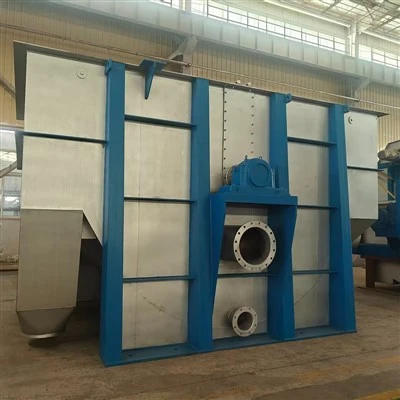
If you’re ready to stop wasting energy and get your fan performing like it should, get in touch to talk through your needs. No sales pitch, no pressure—just straight talk about how to make your system work for you.
Vertical Multistage Pump References
- ASHRAE Handbook – HVAC Systems and Equipment, American Society of Heating, Refrigerating and Air-Conditioning Engineers
- Industrial Ventilation: A Manual of Recommended Practice, American Conference of Governmental Industrial Hygienists
- Centrifugal Fan Performance Testing and Duct Design Guidelines, Air Movement and Control Association International
Xiaofeng Machinery Technology Co., Ltd.
As one of the most professional industrial centrifugal fan manufacturers and suppliers in China, we also support custom service. Please feel free to wholesale advanced industrial centrifugal fan made in China here from our factory. Quality products and reasonable price are available.
Address: No.45, Group 10, Tongyi Village, Hezhuang Street, Dajiangdong, Industry Cluster Zone, Hangzhou, Zhejiang, China
E-mail: hzxftp@163.com
WebSite: https://www.hzxfmt.com/
