As a titanium parts supplier, I get a lot of questions from clients about how we make sure every component leaving our facility actually holds up to what they need. Titanium’s dope—light, strong, corrosion-resistant—but cut corners on production, and you end up with something that’s useless, even dangerous. Testing quality isn’t just a box to tick; it’s how we earn your trust. Today, I’m walking through the real stuff we do to check our titanium parts, no fancy jargon that doesn’t mean anything. Let’s get into it. Titanium Parts
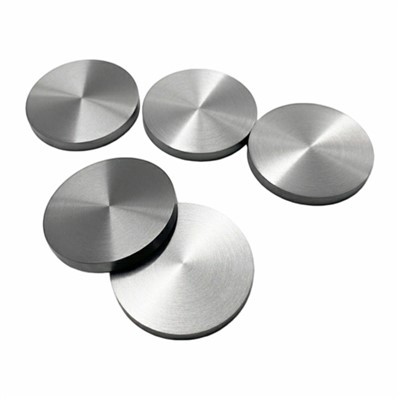
First off, you can’t just look at a titanium part and tell if it’s good. Surface stuff matters, but internal flaws are where the bad stuff hides. Let’s start with the basics we do every time: visual inspection. Not just a quick scan, either. We use bright, even lighting and magnification (like 10x loupes) to spot scratches, pits, or discoloration that don’t belong. Titanium should have a smooth, uniform silver-gray finish—if it looks splotchy, that could mean too much heat during machining or oxidation gone wrong. We also check for sharp edges or burrs; those are small, but they can cause stress cracks later, especially in parts for aerospace or medical uses. It’s boring, but it’s non-negotiable.
Next, the stuff that’s not visible: dimensional accuracy. If you’re making a titanium bracket for a car or a turbine blade for a jet, a tenth of a millimeter off can throw the whole system. We use coordinate measuring machines (CMMs) for complex parts—they map every point on the component, compare it to the CAD file we get from you, and flag any deviations. For simpler parts, we use calipers or micrometers, but even that gets detailed. We test thread pitches on fasteners, hole diameters, how flat mounting surfaces are. I once had a client send back a batch of titanium screws because their holes were 0.05mm too big—small enough to skip a basic check, but big enough that they couldn’t attach the parts. That’s why we don’t rush this step.
Then there’s material composition. Titanium isn’t pure; most parts are alloys like Ti-6Al-4V, which is 6% aluminum, 4% vanadium, the rest titanium. If you use the wrong alloy, the part might corrode when it’s submerged in salt water, or break under pressure. We use X-ray fluorescence (XRF) testing for this—this is quick, non-destructive, and we can do it right in our shop. We hold a small wand up to the part, it shoots X-rays, and tells us exactly what elements are in there. No guesswork. A while back, a supplier tried passing off low-grade titanium as Ti-6Al-4V, and XRF caught it before those parts left. That’s a win for us and a win for the client.
Now, mechanical testing—this is where we check if the part can actually do the job. Tensile strength is a big one: we pull a sample of titanium until it breaks, measure how much force it took. Titanium parts need to withstand tension (pulling), compression (squishing), sometimes bending. We also test hardness—Rockwell or Vickers, usually. Hardness tells us how resistant the part is to scratching or denting. If you’re making a titanium part for a construction machine that rubs against other parts, hardness matters a lot. For critical parts like medical implants, we also do fatigue testing: we repeat stress (like bending the part back and forth) thousands or millions of times, to make sure it doesn’t crack. That’s the kind of test that takes days, but it’s the only way to know a part won’t fail mid-use.
Corrosion resistance is another big one, especially if your parts are going outdoors, into water, or even inside the human body. Titanium is naturally good at this, but surface treatments (like anodizing) can change that, or some alloys might be more prone to corrosion in certain environments. We do salt spray testing—stick the part in a chamber that sprays 5% salt water, leave it for 48 or 96 hours, and check for rust or discoloration. If it holds up, it’s good for marine or outdoor use. For medical parts, we do biocompatibility checks too—make sure the titanium doesn’t react with body tissue. We work with third-party labs for that, because it’s super regulated, but it’s part of what we offer.
We also check for internal flaws with non-destructive testing (NDT)—stuff that doesn’t damage the part, so we don’t waste good components. Ultrasonic testing is the main one here: sound waves bounce off internal cracks, bubbles, or gaps (called voids) and show up on a screen. If there’s a void, that’s a weak point—under pressure, it’ll turn into a crack. We also use liquid penetrant testing: spray a red dye on the part, wipe it off, and developer shows dye trapped in surface cracks. Even tiny cracks that are too small to see with loupes show up this way. We do both for every batch of parts over a certain size—no exceptions.
Wait, what about parts that get finished, like anodized or coated? We test those coatings too. Adhesion is key—if the anodized layer peels off, the titanium underneath can corrode. We do a cross-hatch test: scratch a grid into the coating, press tape on it, pull it off, and see if any coating comes off. If it stays, the adhesion is good. For thicker coatings, we use a thickness gauge to make sure it’s not too thin (won’t protect) or too thick (might cause fit issues).
I know this all sounds like a lot, but it’s just how we do things. A lot of small suppliers might skip some tests to save time or money, but that’s not how we operate. Our clients count on us for parts that work—whether it’s a drone part that has to be light, a boat part that has to handle salt water, or a medical implant that has to be safe in someone’s body.

Now, here’s the thing: testing isn’t just for us. If you’re a designer or engineer, you know your part best. Tell us what it’s used for—will it be in a jet engine? A bike frame? A surgical tool? We can tailor our tests to match your needs. If you need a specific test we didn’t mention, we can hook it up. We work with trusted third-party labs for specialized stuff, so you know it’s done right.
Molybdenum Heating Elements If you’re looking for a titanium parts supplier that actually cares about quality, not just pumping out parts, hit us up. We don’t do one-size-fits-all testing—we customize to your project, because your success is our success. Skip the guesswork, get parts you can trust.
References
- “ASTM E140 – Standard Test Method for Hardness Conversion of Metals”, ASTM International, 2023.
- “ASM Handbook Volume 11: Failure Analysis and Prevention”, ASM International, 2002.
- “Kushner, A. et al. Non-Destructive Testing of Additively Manufactured Titanium Parts”, Journal of Materials Testing, 2021.
- “Biocompatibility of Titanium Alloys for Medical Implants”, ISO 10993-5:2019, International Organization for Standardization.
Address: Wangjing Science and Technology Park, Guangshun North Street, Chaoyang District, Beijing
E-mail: sales@moly-tungsten.com
WebSite: https://www.moly-tungsten.com/
