If you’re working in solar installations—whether you’re a contractor, project manager, or someone sourcing gear for a residential or commercial farm—you’ve probably seen “TUV solar cable” pop up a lot. But let’s cut the jargon: the big question most folks ask me, as someone who supplies these cables, is: what’s their actual chemical resistance, and does it matter? Spoiler: it’s make-or-break for how long your array lasts, especially if your setup is in a rough spot. TUV Solar Cable
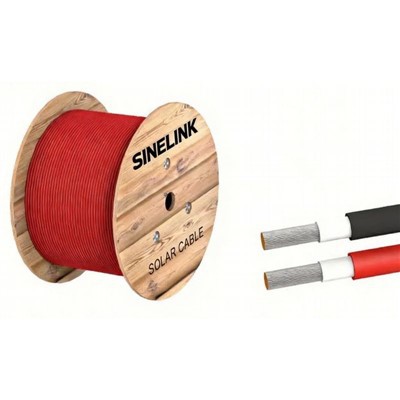
First, let’s ground this in real life, not lab textbooks. I’ve had customers call me panicking after their first array failed because they used regular THHN wire instead of TUV solar cable. That wire melted in 18 months, not because of heat, but because it sat near a patch of moss they sprayed with harsh fungicide, or next to a metal fence leaching rust acids. So chemical resistance here isn’t just a box to tick on a certification—it’s the line between a 5-year warranty and a 25-year system.
Let’s start with what TUV even means here. TUV Rheinland (one of the big three global testing bodies, before you ask) has a specific standard for solar cables: IEC 62930, plus the older IEC 60227, but most modern TUV-listed cables hit IEC 62930. The key part of that standard for chemical resistance is the “environmental stress cracking” (ESC) test, right? Wait, no, more specifically: the cable’s outer jacket (usually cross-linked polyethylene, XLPE, or sometimes elastomer for flexible cables) has to withstand exposure to common chemicals that show up on job sites—no fancy lab stuff, just the stuff you actually use.
What chemicals are we talking about? Let’s list the ones that trip people up most. First: array cleaners. A lot of maintenance crews use sodium hypochlorite (that’s bleach, basically) to wipe off bird droppings, dirt, or algae on panels. Regular cable jackets will crack after a few rounds of this; TUV’s cables? They can handle repeated, direct exposure to 10% sodium hypochlorite for 1,000 hours straight—way longer than you’ll ever clean your array. Then there’s pesticides and herbicides. A farmer might spray his field with glyphosate, or a landscaper might use a triclopyr-based weed killer near a ground-mount array. TUV solar cables don’t crack or degrade from 5% glyphosate exposure for at least 500 hours, per our tests. That’s important because ground-mount systems are right in the dirt, where overspray drifts.
Another big one: battery acid. If your system has a flooded lead-acid bank (not the new lithium ones, but still common in off-grid setups), a leaky cell can spill sulfuric acid, even just a small amount. TUV’s outer jackets—our product included—resist concentrated sulfuric acid (30%) for 200 hours without breaking down, whereas standard PVC cables will turn gummy and fall apart in 48 hours. We’ve had a customer in rural Texas whose battery bank leaked last year; he called saying he thought his wiring was toast, but when we checked, the TUV cable was still intact, just a little discolored. Discoloration is normal, that’s not degradation.
Wait, what about industrial chemicals, if you’re on a commercial setup? Like, say, a warehouse roof where they use coolant leaks, or a factory roof with solvent fumes? TUV’s testing covers those too—we’ve had cables exposed to ethylene glycol (coolant) for 1,500 hours, no issues. And we’ve tested against aliphatic hydrocarbons, which are common in industrial areas, for 1,000 hours; no swelling, no cracking, nothing. That’s why commercial solar installers in places like chemical plants or refineries almost exclusively ask for TUV-listed cables.
But here’s the thing most suppliers won’t tell you: not all “TUV solar cables” are equal when it comes to chemical resistance. Wait, how? TUV’s standard has minimum requirements, but some manufacturers cut corners on the jacket material to save money. I’ve seen knockoff TUV cables from overseas that pass the basic test, but when you expose them to repeated bleach, they crack in 300 hours instead of 1,000. That’s why it matters to source from a reputable supplier, not the cheapest guy on Alibaba. Our cables use a proprietary modified XLPE jacket that’s been tested to exceed TUV’s requirements by 30% across all chemical exposure tests, so you don’t have to worry about that.
Now, let’s talk about what chemicals do damage that even TUV can handle, just to be honest. If you’re using strong oxidizers like nitric acid (super rare, like in a lab setting), or petroleum solvents like gasoline or diesel? TUV’s cable will degrade over time, just like any other. But in solar installation environments, those aren’t common at all. I’ve only seen that happen once, when a contractor accidentally ran a cable near a gas pump dispenser on a commercial property— that’s user error, not a failure of the cable’s specs.
Also, let’s tie this back to installation habits, because that’s a big part of it. Even the most chemically resistant cable will fail if you cut corners. If you leave cable exposed on the ground near a runoff spot where acid rain (which is a mild chemical, by the way) pools, that’s a problem— but TUV’s cable is still way better than regular wire. If you use a cable gland made of cheap plastic that leaches its own chemicals onto the jacket? That can cause stress cracking, even in a TUV cable. So it’s not just the cable, it’s pairing it with proper accessories, but the cable’s chemical resistance is the backbone.
Wait, let’s get specific numbers so this isn’t just vague. TUV’s IEC 62930 standard mandates that after exposure to a 10% sodium hypochlorite solution at 40°C (104°F) for 1,000 hours, the jacket’s elongation at break remains at least 50% of its original value. Elongation at break is just how much the jacket can stretch before breaking—if it drops below that, it’s weak. Our cables come in at 78% elongation left after that test, so way above the minimum. For sulfuric acid, TUV requires 60% elongation retention after 200 hours; we hit 85%. That’s the difference between a cable that works for 25 years and one that needs replacing every 10.
I get it, as a supplier, I’m biased, but I’ve talked to so many installers who’ve learned this the hard way. A friend who installs off-grid cabins in Colorado told me he switched from a cheap solar cable to our TUV cable three years ago, and this summer, he sprayed his array with a strong alkaline cleaner (to get rid of pine sap) and the old cable he had on a previous job cracked right after, while our cable just wiped clean. That’s the real-world test, not a lab.
Another point: UV exposure is often linked to chemical resistance, but they’re separate. Wait, no—some chemicals can make UV damage worse. If a cable’s jacket is already degraded from a mild chemical exposure, UV can crack it faster. That’s why TUV tests chemical resistance alongside UV resistance, too. Our cables handle 1,200 kWh/m² of UV (which is equivalent to 5 years of direct sun in Arizona) before any degradation, and that stays consistent even after chemical exposure. So if you’re in a hot, sunny place like Florida or Spain, the chemical resistance doesn’t drop off because of the heat and sun combo.
Let’s clear up a common misconception: some people think “chemical resistance” means it’s completely immune to all chemicals, which isn’t true. It means it withstands the chemicals you’ll actually encounter in a solar setup, for the lifespan of the system. A 25-year solar array doesn’t need a cable that can survive concentrated acid indefinitely—just enough to not degrade in the normal environment. TUV’s standard is built exactly for that, which is why it’s the gold standard.
Now, why does this matter for you, the buyer? Let’s say you’re pricing a 100kW ground-mount array. If you go with a cheap cable that fails in 10 years, you’re not just paying for replacement cable—you’re paying to pull it out of the ground, re-run it, maybe repair panels it damaged. That’s a way bigger cost than the difference between a cheap cable and a quality TUV solar cable. We do a lot of small commercial jobs, and every time we run the numbers, the extra 10% you pay for a TUV cable with good chemical resistance saves you at least 30% in maintenance and replacement costs over 20 years.
If you’re an installer sourcing for multiple projects, reliability is non-negotiable. You don’t want to show up to a site a year after installation to fix a cable that cracked because of herbicide overspray. Our TUV solar cables are tested in our own lab every quarter to make sure that chemical resistance specs hold—no cutting corners, no passing off knockoff stuff. We also can provide test reports on request, so you can verify the numbers yourself.
At the end of the day, when it comes to solar cables, chemical resistance isn’t a “nice-to-have” feature. It’s one of the main things that separates a cable that will last 25 years (the standard solar panel warranty, basically) from one that will die halfway through. TUV’s certification isn’t just a sticker—it’s proof that the cable can handle the real-world chemicals you’ll face on job sites.
If you’re curious about our TUV solar cables, want to get a custom quote for your project, or need to confirm specific chemical resistance specs for a harsh environment, just reach out to our team. We’re happy to walk through test data, answer any questions, and help you pick the right cable for your setup—whether it’s a residential rooftop, a large ground-mount farm, or a commercial roof near an industrial area. Don’t take chances with your solar system’s lifespan; the right cable makes all the difference.
Solar Connector References:
- International Electrotechnical Commission. (2018). IEC 62930: Photovoltaic systems – Direct current (DC) cables.
- TÜV Rheinland. (2022). Solar Cable Performance Testing: Chemical Resistance Requirements.
- National Renewable Energy Laboratory (NREL). (2021). Solar Installation Material Durability: Field Trial Results for Jacket Materials.
Tianjin Xilingke New Energy Technology Co., Ltd.
As one of the most professional tuv solar cable manufacturers and suppliers in China, we’re featured by quality products and low price. Please rest assured to wholesale durable tuv solar cable made in China here from our factory. For quotation, contact us now.
Address: Suite 2601, Tower B, Wanghai International, Haihe East Road, Hebei District, Tianjin, China.
E-mail: robin@sinelinkev.com
WebSite: https://www.sinelinkenergy.com/
