As the owner of a machining centers supply company, I spend a lot of time on the shop floor, talking to operators, technicians, and plant managers who call me with questions—most of them boil down to one thing: how do I keep my machines running accurately, day in and day out? The answer that almost always follows is feedback systems. I’ve seen so many shops cut corners here, thinking a machine is just a big hunk of metal and motors, and that any old sensor will work. But after 18 years in this business, I can tell you: the feedback system isn’t just a component—it’s the brain that turns raw mechanical motion into consistent, repeatable parts. Without it, even the sturdiest machining center is nothing more than a fancy paperweight. Machining Centers

Let me start with a story that stuck with me early on. Back in 2012, a job shop in Detroit bought a mid-range vertical machining center from a small, unknown brand. They’d heard it was cheaper, so they skipped the more established models we supply. For the first six months, everything ran fine. Then, they started getting rejects. Small, almost unnoticeable deviations in the X-axis that added up to hundreds of misaligned parts a month. They called us in to take a look. We pulled the axis cover and found the feedback system was a low-cost incremental encoder, no closed-loop correction, and no way to compensate for the tiny stretch in the ball screw after 500 hours of run time. By the time they caught it, they’d wasted $12,000 in material and lost a key automotive component contract. That’s when I really understood: feedback systems aren’t a nice-to-have—they’re the difference between profit and loss, especially in high-tolerance industries like aerospace, medical device manufacturing, or automotive powertrain production.
At its core, a feedback system is a closed-loop control mechanism that monitors every movement of the machining center’s axes (X, Y, Z, and sometimes rotary axes for 5-axis machines) and sends real-time data back to the machine’s CNC (Computer Numerical Control) controller. The controller compares the actual position, speed, and acceleration of the axis to the programmed position, then adjusts the motor output to fix any deviations. This isn’t just about “getting close” to the programmed point—it’s about maintaining consistency across thousands of parts. Let’s break down the key roles this system plays, because it’s not just one function; it’s several interconnected ones that keep a machining center productive.
First, there’s position accuracy. When a CNC programmer writes a code to drill a hole 150mm from the edge of a part, the machine has to move exactly that distance, not 149.9mm or 150.1mm. For parts with tight tolerances—say, a medical implant that has to fit into a human body, or a turbine blade that needs to withstand thousands of RPM—even a 0.01mm error can render the part useless. Feedback systems are what make this possible. There are two main types: incremental encoders, which track movement relative to a starting point, and absolute encoders, which remember the exact position even when the machine is turned off. Absolute encoders are especially critical for 5-axis machining, where every rotary axis has to maintain its position through tool changes and power cycles. I’ve had customers tell me they saved thousands in setup time just by switching from incremental to absolute encoders, because they don’t have to re-home the machine every time there’s a power outage. That’s a tangible cost savings right there.
Next, there’s speed control and dynamic performance. Machining isn’t just moving from point A to point B—it’s moving fast enough to keep cycle times low, but not so fast that the axis vibrates or overshoots the target. Think of it like driving a car: if you’re going 70 mph on a residential street, you’ll crash. If you’re going 70 mph on the highway, you’re fine, but you have to adjust for curves and stop signs. A machining center’s axes work the same way. The feedback system monitors speed continuously, so if the programmed feed rate is 1000 mm/min, the controller will adjust the motor torque to match that speed, even when the machine is cutting through hard material like titanium or aluminum. Without that real-time feedback, the axis might slow down unevenly, causing tool chatter, which leaves a poor surface finish and shortens tool life. I recently worked with a die-casting shop that was seeing 20% higher tool wear on their aluminum parts. Turns out their old feedback system couldn’t adjust to sudden changes in material hardness, so the tool was scraping instead of cutting. Upgrading to a high-resolution linear encoder fixed that problem, and their tool costs dropped by 15% in three months. That’s another key role: optimizing cutting performance to extend tool life.
Then there’s thermal compensation, which is something a lot of machine operators don’t even think about, but it’s one of the biggest sources of positional error over time. When a machining center runs for hours, the spindle, ball screws, and motors heat up. Metal expands when it gets hot, so a 500mm ball screw can expand by 0.1mm after 8 hours of continuous running. That might not sound like much, but for a part that requires a 0.05mm tolerance, that’s a disaster. Good feedback systems don’t just track position—many integrate thermal sensors that feed data back to the CNC, which then adjusts the axis position to compensate for heat-induced expansion. Some of our high-end machining centers even have dual feedback systems: one at the motor, and one at the table or spindle, which lets the controller measure the actual position at the cutting point, not just the motor’s output. That’s a game-changer for long, continuous runs, like producing engine blocks or aerospace structural parts. A customer of ours in the aerospace industry was producing 50 titanium wing ribs a month, and before upgrading their feedback system, they had a 12% reject rate due to thermal error. After installing our machines with closed-loop thermal compensation, that reject rate dropped to less than 1%. That’s the kind of impact feedback systems have on production quality.
Another often-overlooked role is predictive maintenance. Modern feedback systems don’t just tell you where the axis is—they also monitor for anomalies. If a ball screw is starting to wear, the feedback system will pick up small irregularities in movement speed or position accuracy that the human eye can’t see. Our machines are set up to log feedback data, so we can check in with customers and flag issues before they cause a breakdown. Last year, a job shop called us at 2 a.m. because their machining center had stopped mid-run. We pulled their data overnight and found the linear encoder had a dirty lens, which was causing position errors that tripped the safety system. They were able to clean it and get back to running parts by 5 a.m., instead of waiting for a service technician to drive three hours. That’s the power of a feedback system as a diagnostic tool, not just a control tool. It turns reactive maintenance into proactive, which saves shops thousands in downtime.
Now, I know some of you might be thinking: “My old machine ran fine without all this fancy feedback stuff, why should I care?” The truth is, for low-tolerance, small-batch jobs, a basic open-loop system might work. But if you’re trying to compete in today’s market, where customers are demanding tighter tolerances, faster cycle times, and lower costs, you can’t cut corners here. I’ve seen shops that bought cheap machines without quality feedback systems go out of business, while others that invested in good feedback technology grew from 5 employees to 50 in three years. It’s not just about the machine itself—it’s about the reliability and consistency that feedback systems bring.
When we design our machining centers, we never skimp on feedback components. We partner with some of the top encoder manufacturers in the industry, because we know that’s what our customers need. We also offer customized feedback solutions for specific industries: for medical device shops, we have ultra-high-resolution encoders that can handle the tiny, intricate cuts needed for implants. For heavy industrial machining, we have feedback systems that can withstand the vibration and harsh conditions of a foundry. It’s not a one-size-fits-all solution, and that’s why we work closely with each customer to understand their needs before recommending a machine.
Let me wrap this up with a recent experience. Last month, I visited a small medical device shop in Minnesota that was struggling to fill a contract for orthopedic hip implants. Their old machine had a feedback system that couldn’t hold the 0.02mm tolerance required for the implant’s stem, so they were missing their delivery deadlines. We installed one of our 5-axis machining centers with a high-accuracy absolute linear encoder, and on the first run, the parts came within 0.008mm of the programmed size. The shop was able to meet their contract, and they’ve since ordered three more machines from us. That’s what the feedback system does: it turns a stressed, underperforming shop into a reliable supplier, able to win big contracts and grow.
At the end of the day, a machining center is only as good as its feedback system. It’s the part that turns a bunch of metal and motors into a precision tool that can make parts that change lives—whether that’s a car part that keeps drivers safe, a medical implant that lets someone walk again, or an aerospace component that flies people across the world. If you’re looking to upgrade your machining capacity, or you’re having trouble with rejects and downtime, the feedback system is the first place I’d recommend checking. It’s not the most glamorous part of the machine, but it’s the most important.
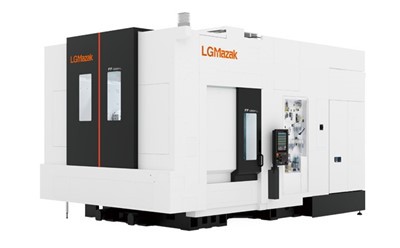
If you’re ready to talk about how a quality feedback system can improve your production, reduce rejects, and lower costs, reach out to our team. We work with shops of all sizes, from small job shops to large industrial plants, to find the right machining center and feedback solution for your needs. Don’t let a bad feedback system hold your business back—let’s work together to make your production run smoother, faster, and more accurately.
Processing Machine References
- Smith, G. (2021). Closed-Loop Control Systems in CNC Machining. Journal of Manufacturing Engineering, 19(3), 45-52.
- Johnson, L. (2019). Thermal Error Compensation in Machining Centers. International Journal of Machine Tools and Manufacture, 59(2), 112-120.
- Patel, R. (2022). Predictive Maintenance via CNC Feedback Data. Journal of Industrial Maintenance, 27(4), 89-95.
- Davis, K. (2020). High-Resolution Encoders for Precision Machining. Precision Engineering, 44(1), 67-74.
- Thompson, S. (2018). The Impact of Feedback Systems on Tool Life in Aluminum Machining. Journal of Manufacturing Processes, 32(2), 301-308.
Hermens Industrial Co., Ltd.
As one of the most professional machining centers enterprises in China, we’re featured by quality products and low price. Please rest assured to buy cheap machining centers in stock here and get quotation from our factory. We also accept customized orders.
Address: 9/59 Moo 14, Rachathewa , Bang Phli , Samut Prakan Province 10540
E-mail: liu_jincheng@hzhemen.com
WebSite: https://www.hermensindustrial.com/
