If you’ve ever driven along a rural highway lined with new drainage systems, or walked through a housing development where underground utility lines snake beneath freshly laid lawns, you’ve probably crossed paths with plastic corrugated pipe. As a supplier of plastic corrugated pipe production machines, I get asked this question at least once a week: do governments actually subsidize this kind of manufacturing? The short answer isn’t a flat yes or no—it depends on where you are, why the pipe is being made, and what the local policy priorities are. Over the past 12 years in this industry, I’ve walked factories across three continents, sat in on municipal planning meetings, and talked to hundreds of manufacturers who’ve navigated (or skipped) public funding for their lines of corrugated pipe equipment and materials. It’s a nuanced topic, and the line between “support” and “subsidy” is often blurry, so let’s break it down. Plastic Corrugated Pipe Machine
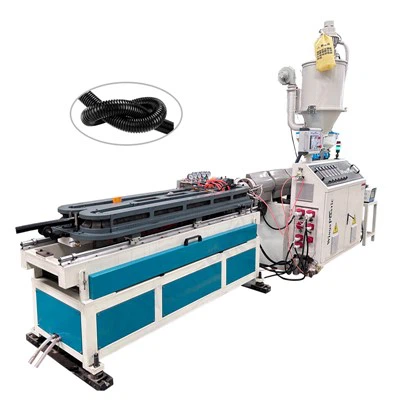
First, let’s define what we’re talking about. Plastic corrugated pipe comes in two main types: HDPE (high-density polyethylene) and PVC (polyvinyl chloride). HDPE is the go-to for drainage, culverts, and underground utility lines because it’s lightweight, resistant to corrosion, and flexible enough to withstand soil shifting. PVC is often used for smaller sewer and water lines. The machines I supply turn plastic resin granules into that corrugated profile—extruding the material, forming the ridges, and cutting it to size. When a government talks about subsidizing this production, it’s almost never just “paying factories to make pipe.” It’s almost always tied to a specific public goal: improving infrastructure, reducing stormwater runoff, supporting local manufacturing, or cutting carbon emissions.
In North America, for example, federal and state programs have shifted a lot in the last decade, especially after the 2021 Bipartisan Infrastructure Law (BIL). Before that, subsidies were often scattered at the state level, tied to specific projects rather than general manufacturing. Now, there’s funding earmarked for underground infrastructure, and a lot of that money flows to contractors who use HDPE corrugated pipe instead of concrete or metal, because it lasts longer and is cheaper to install. But how does that translate to subsidies for the pipe’s production? Let’s use an example: a mid-sized factory in Ohio that makes 12-inch HDPE corrugated pipe. Last year, they installed two new corrugated pipe extrusion lines (one of mine, actually) to keep up with demand from road and housing projects funded by BIL. They qualified for a 15% tax credit on new manufacturing equipment that boosts the production of materials used in federally funded infrastructure. That’s a subsidy, even if it’s not a direct cash grant. It reduces their capital cost, which lets them lower prices and take on more contracts. But it’s not universal. Some factories I work with in the southern U.S. don’t qualify because they don’t sell to municipal or federal projects—they cater only to agricultural clients, so they miss out on that tax break.
It’s not just infrastructure funding that drives subsidies. Environmental regulations have also created incentives for corrugated pipe production. In the European Union, the Circular Economy Action Plan (CEAP) has rules that require 25% of plastic in new goods to be recycled by 2030. That’s led to subsidies for factories that invest in machines to produce corrugated pipe from recycled HDPE. A supplier in Poland I visited last year had a 20% grant from the EU to retrofit their old corrugated pipe extruders to process post-consumer plastic instead of virgin resin. They couldn’t have afforded the retrofit without that money, and now they’re the only local manufacturer making 100% recycled HDPE pipe for EU-wide stormwater projects. That’s a clear subsidy tied to sustainability, and it’s directly tied to the type of machine I sell—these retrofits aren’t cheap, and without public support, most small to mid-sized manufacturers can’t take the risk.
Of course, there are catch here. Subsidies often come with strings attached. In Canada, for example, the federal government’s Clean Technology Investment Tax Credit offers a 30% credit for manufacturing equipment that reduces greenhouse gas emissions. But to qualify, the pipe produced has to meet strict emissions standards—meaning the factory has to use less energy during extrusion, and the resin has to have a specific recycled content. A few years ago, a client of mine in Ontario bought a new extrusion line that meets those standards, and they got the credit. But another client in Quebec had an older line that couldn’t meet the emissions rules, so even though they make the same corrugated pipe, they can’t access the subsidy. That’s a big divide in the industry right now: manufacturers who can upgrade their machines to meet new standards get a break, while those who can’t get left behind.
Outside of North America and the EU, the picture varies a lot. In India, for example, the government has a “Make in India” program that offers subsidies for manufacturing companies that produce key infrastructure materials. Corrugated pipe for rural drinking water projects is a priority there, so factories that make pipe for those projects get a 20% subsidy on production costs, not just equipment. A client in Gujarat told me last year that his factory saves around $50,000 a year in costs from that subsidy, which lets him keep his prices competitive for rural contractors. But in parts of Southeast Asia, subsidies are rare. In Vietnam, most plastic corrugated pipe manufacturers rely on private investment, not government funding. The government has talked about green infrastructure plans, but as of 2024, there’s no formal subsidy program for pipe production, only for specific projects that use the pipe. That means factories there have to absorb the full cost of new machines, which is why I’ve worked with a lot of small Vietnamese manufacturers who lease machines instead of buying them outright—it’s a way to avoid the upfront cost without government support.
There’s also a common misconception that plastic corrugated pipe is always subsidized, and that’s not true. I’ve had clients who run small factories making PVC pipe for agricultural drainage, and they’ve never qualified for any subsidies. Agricultural policies in most countries support farming, but they rarely support the manufacturing of the pipe itself. The subsidies are almost always tied to public infrastructure, sustainability, or local manufacturing jobs that a government wants to protect. If a factory is only making pipe for private residential projects, they’re usually on their own. Another example: a factory in Texas that makes corrugated pipe for industrial landscaping projects has never applied for a government incentive, because their clients don’t work with public funds, so there’s no financial benefit for them to do so.
So why does this matter for you, especially if you’re a manufacturer looking to expand or upgrade your plastic corrugated pipe line? The key takeaway is that subsidies aren’t a given, but they’re available if you’re operating in the right sector and meeting the right criteria. Let’s say you’re a manufacturer planning to add a new HDPE line to meet demand for municipal or federal projects—check your national and state/federal programs first. In the U.S., that’s the BIL’s tax credits for infrastructure-related manufacturing. In the EU, it’s the CEAP’s grants for recycled plastic products. In India, it’s Make in India’s support for rural infrastructure. Even small manufacturers can qualify, as long as they do the paperwork and meet the requirements.
But here’s what I tell every new client: don’t rely on subsidies to fund your equipment. They’re often slow to approve, and they can change with new administrations. A few years back, a client in Michigan planned a big equipment upgrade around a proposed state subsidy, and when the governor changed, the program was cut. He had to take out a last-minute loan to buy the machine, which put him in a tight spot for six months. I always advise clients to build their budget around the machine’s actual cost, then use subsidies as a way to lower their expenses after the fact, not as a primary funding source.
Now, you might be wondering how to navigate the different programs. Every country has different agencies handling these subsidies. In the U.S., it’s the Internal Revenue Service for tax credits, and the Department of Transportation for infrastructure-related funds. In the EU, it’s the European Commission’s regional development funds. The good news is that most government websites have simplified guides for manufacturers, or local business development offices that can help you fill out applications. For my part, I work with a lot of clients to help them understand which programs apply to their machine purchases— I’ve been in this industry long enough to know which tax credits or grants are worth pursuing, and which are just red tape.
At the end of the day, the question of whether there are subsidies for plastic corrugated pipe production isn’t a yes or no. It’s a matter of your location, your product type, and what you plan to use the pipe for. For factories making pipe for public infrastructure or green projects, there are often significant incentives to upgrade or expand production. For those making pipe for private, non-regulated markets, subsidies are rarely worth the effort. If you’re in the market for a new corrugated pipe production machine, and you’re looking to explore potential subsidies or funding options, I’m here to help. I’ve worked with hundreds of manufacturers across the globe to find the right equipment and navigate public funding programs, and I can walk you through the process to make sure you get the support you qualify for. Feel free to reach out to discuss your specific needs and options.
PVC Hose Machine References
- U.S. Department of Transportation, Bipartisan Infrastructure Law: Local Infrastructure Funding Overview, 2023.
- European Commission, Circular Economy Action Plan: Plastic Strategy Implementation Report, 2024.
- Government of India, Make in India: Manufacturing Incentives for Infrastructure Materials, 2022.
- National Association of Plastic Manufacturers, North America: Corrugated Pipe Production Subsidies Survey, 2023.
Qingdao Wings Plastic Technology Co., Ltd.
As one of the most experienced plastic corrugated pipe machine manufacturers and suppliers in China, we also support customized service. Please feel free to buy durable plastic corrugated pipe machine made in China here from our factory. For price consultation, contact us.
Address: C02 Of Anshengyi Road, No.2 Fuan Industry Zone,Jiaodong Town, Jiaozhou City, Qingdao City, Shandong Province, China
E-mail: kelly@wingsplastic.com
WebSite: https://www.wingsextruder.com/
